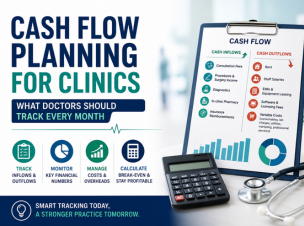
Having your own clinic is a dream that most doctors work extremely hard for. However, actually running it is often riddled with nightmarish challenges. The easiest way that doctors can truly grasp how their clinic is doing is by focusing on their cash flow planning. Cash flow planning helps doctors to grasp and analyse whether their “busy” clinic is actually funding salaries, rent, EMIs and future growth. And having a concise plan to track these things can really help you to build a sustainable, stress-free practice.
Why Cash Flow Matters
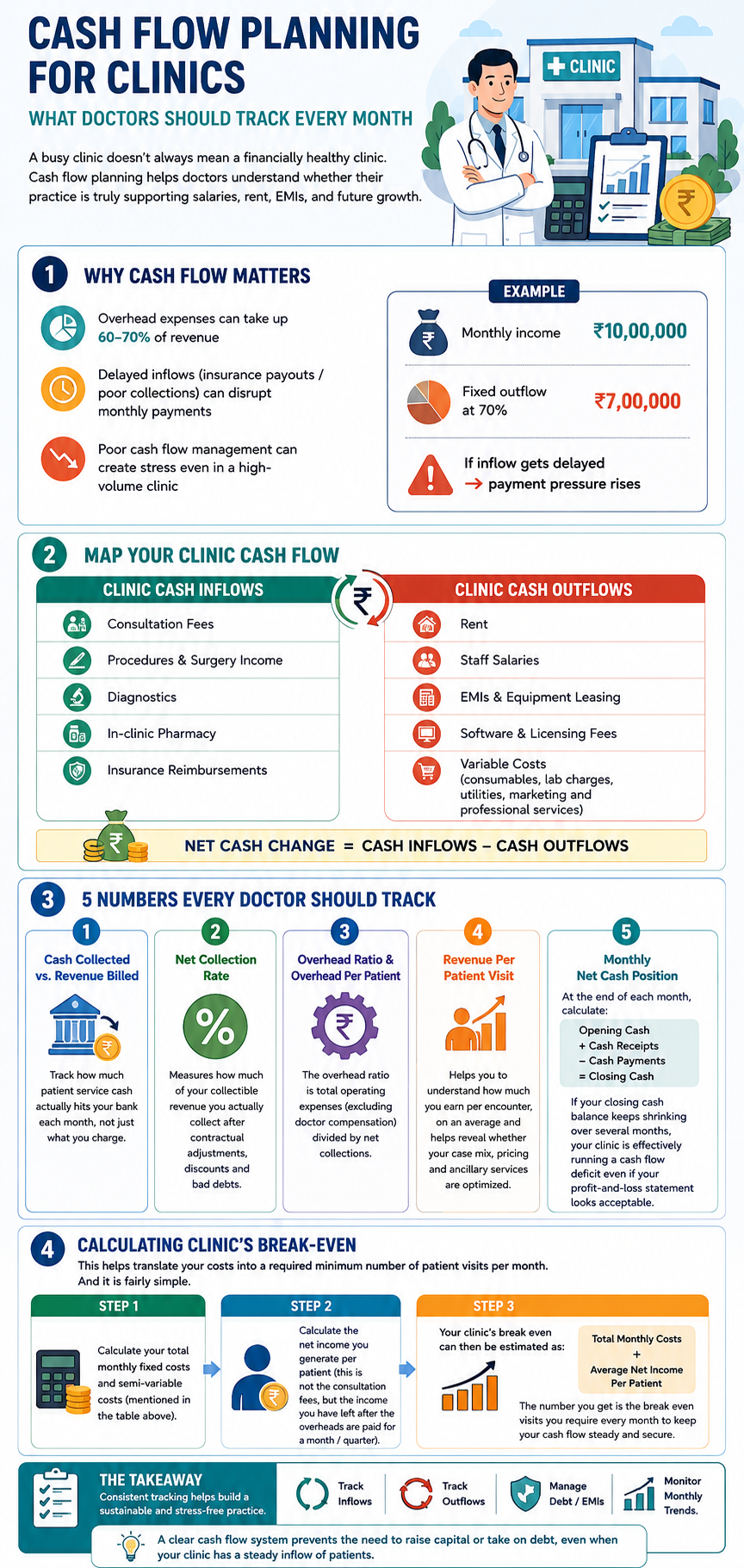
Overhead expenses can take up almost 60% to 70% of revenue in many medical practices. It is also grossly underestimated by many practices across the country. Imagine this, you have a fixed outflow of 70% of your average monthly income (say Rs 10,00,000) every month. However, for a month, your cash inflow is delayed or deferred (because of delayed insurance payouts, poor collections, etc). This single switch can severely affect your ability to manage the payments for the month. A mis-managed cash flow plan can turn a well-oiled machine into a stressful scramble.
How Does One Pay Attention to Clinic’s Cash Flow?
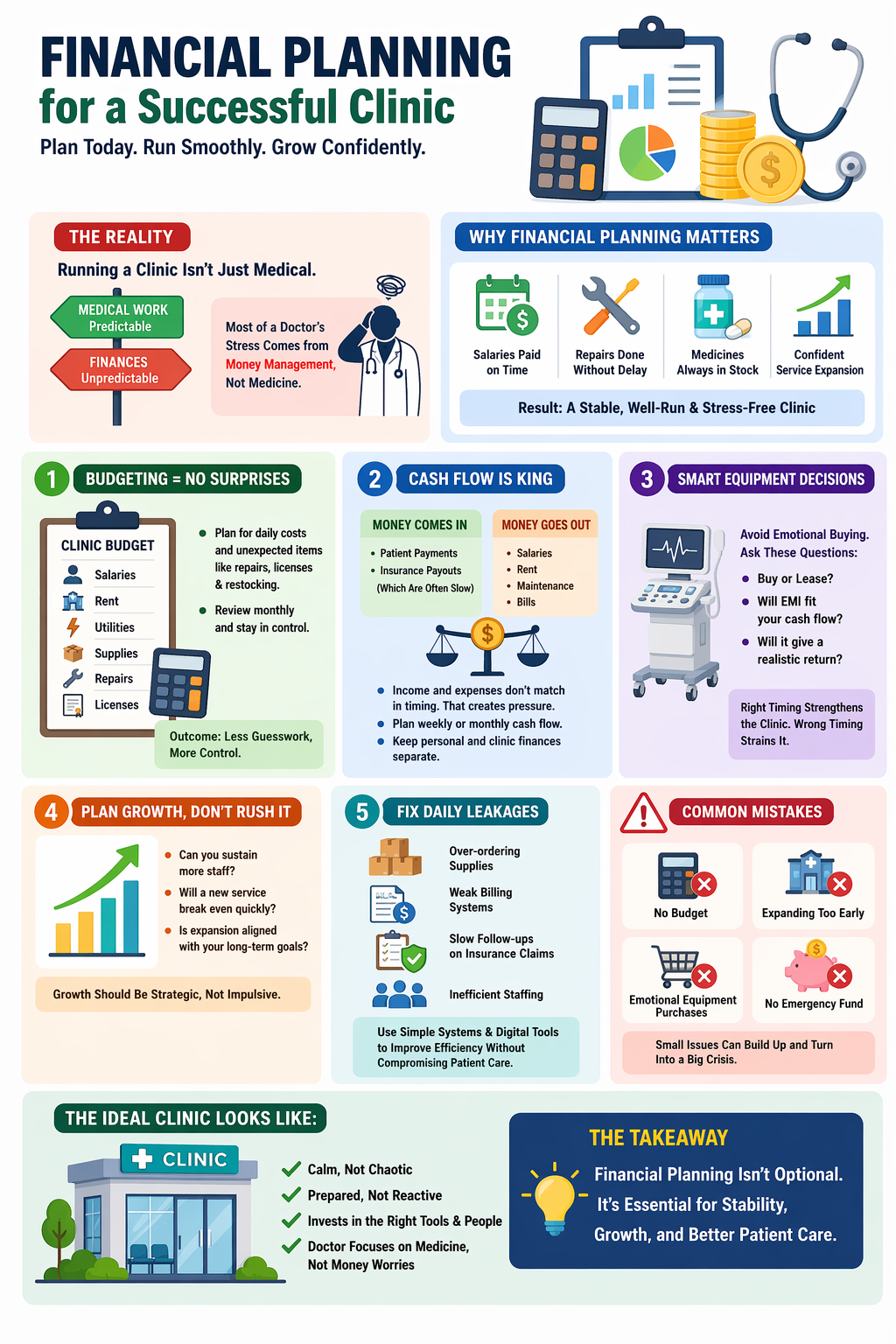
It’s clear that cash flow has the ability to make or break the proper functioning of a well-performing clinic. The question now becomes, how can you map your clinic’s cash flow well enough to avoid any mis-management of the cash flow? The first step is to intently map all the inflows and outflows of cash in a month. The most basic template will split cash receipts (what comes in) and cash payments (what goes out) so you can see your net cash change each month.
| Clinic Cash Inflows | Clinic Cash Outflows |
| Consultation Fees | Rent |
| Procedures & Surgery Income | Staff Salaries |
| Diagnostics | EMIs & Equipment Leasing |
| In-Clinic pharmacy | Software & Licensing Fees |
| Insurance reimbursements | Variable Costs (consumables, lab charges, utilities, marketing and professional services) |
What are the numbers a Doctor Should Track?
This simple analysis will help you to get a clear structure of your clinic cash flow. After this, there are a few key items that every doctor should track to ensure their clinic’s cashflow is in check. Here’s a comprehensive list of items to keep a constant eye on, as you set your Clinic’s Cash Flow system into place –
Cash collected vs. revenue billed: Tracking how much patient service cash actually hits your bank each month, not just what you charge is a great way to ensure you are converting net patient service revenue to cash efficiently.
Net collection rate: This measures how much of your collectible revenue you actually collect after contractual adjustments, discounts and bad debts.
Overhead ratio and overhead per patient: The overhead ratio is total operating expenses (excluding doctor compensation) divided by net collections.
Revenue per patient visit: Revenue per visit helps you to understand how much you earn per encounter, on an average and helps reveal whether your case mix, pricing and ancillary services are optimized.
Monthly net cash position: At the end of each month, calculate: opening cash + cash receipts – cash payments = closing cash. If your closing cash balance keeps shrinking over several months, your clinic is effectively running a cash flow deficit even if your profit‑and‑loss statement looks acceptable
Calculating Clinic’s Breakeven
Knowing your cash inflows and outflows helped you get the data that you need to analyse how the clinic is actually doing. Streamlining its monthly tracking will give you a further understanding of what your strong points and weak links are. And the final step to formulating your clinic’s cash flow system is knowing its breakeven. This can help translate your costs into a required minimum number of patient visits per month. And it is fairly simple.
- Calculate your total monthly fixed costs and semi-variable costs (mentioned in the table above)
- Calculate the net income you generate per patient (this is not the consultation fees, but the income you have left after the overheads are paid for a month / quarter)
- Your clinic’s break even can then be estimated as total monthly costs divided by average net income per patient. The number you get is the break even visits you require every month to keep your cash flow steady and secure.
These steps may seem daunting at first, but consistently practicing this can truly transform the way your clinic functions, a system to track your cash flow in place, and consistently oversee the changes in the inflows and outflows that are happening. Additionally, ensuring that your debt or EMIs are manageable and reducing is also crucial in the long run of your clinical practice. We hope that this article helped you take the right steps towards clinical cash flow planning and management.