

Boosting Healthcare Operations: Key Benefits of Appointment Management Systems
In today’s fast-paced healthcare world, managing appointments smoothly is essential for keeping everything running and providing great patient care. That’s where clinical appointment management software comes in – it’s a real game-changer for healthcare providers looking to simplify scheduling. It’s not just about booking appointments; it helps boost efficiency, cut down on no-shows, and improve overall patient satisfaction. Let’s dive into the key features that make this software a must-have for any modern healthcare practice.
1. Appointment Scheduling
Effective appointment scheduling is all about balancing patient needs and clinic availability, keeping things on track and ensuring patients aren’t kept waiting for too long.
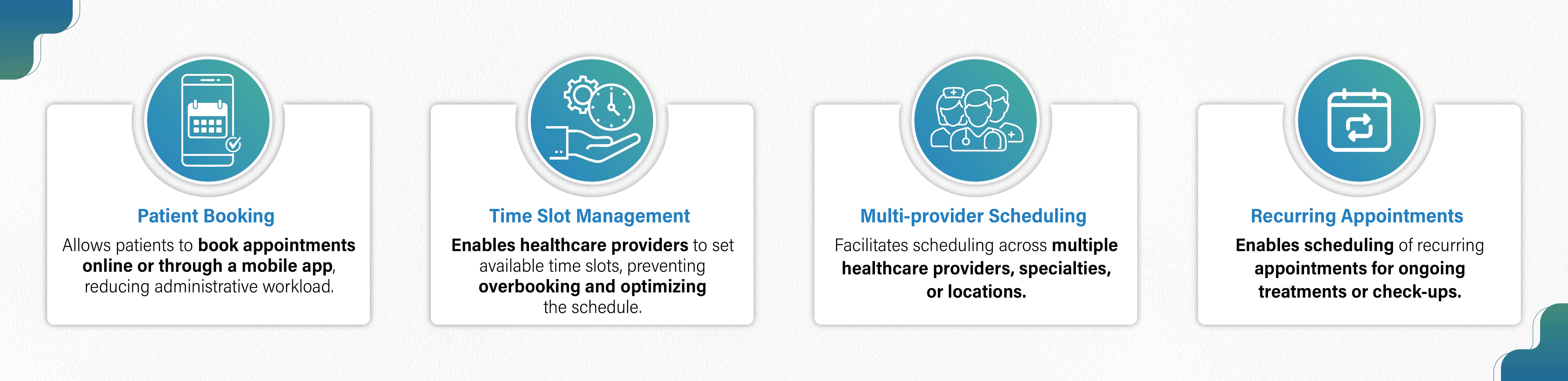
This software makes it super easy for healthcare providers to schedule appointments quickly and accurately, whether it’s for a routine check-up, follow-up, or a specialized consultation. With just a few clicks, you can check available time slots, set up reminders, and assign patients to the right healthcare professional—simple and efficient!
2. Automated Reminders & Notifications
Automated reminders and notifications make life easier by ensuring patients never miss an appointment, while keeping schedule running smoothly and efficiently.
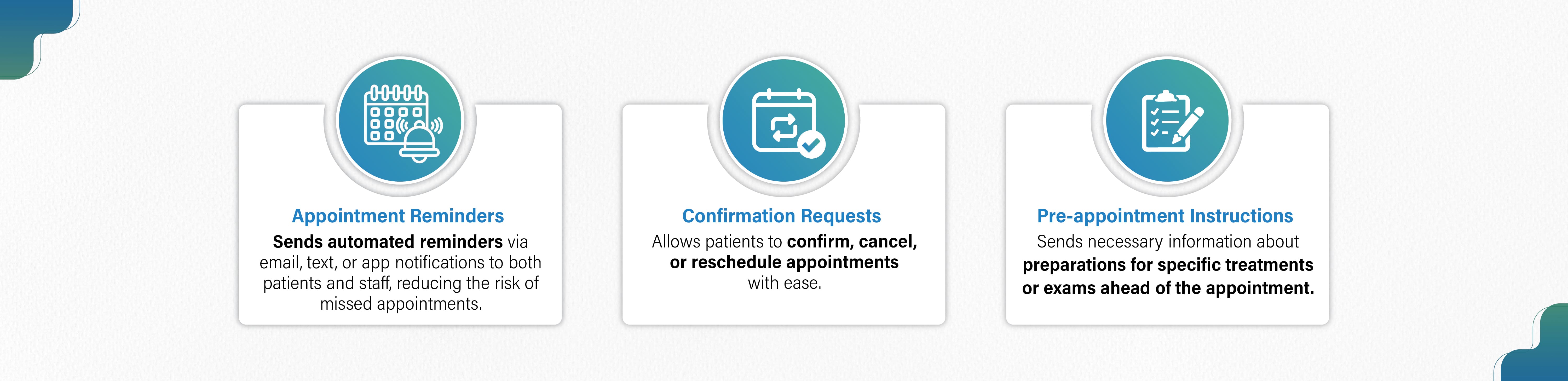
No-shows are a major challenge for healthcare providers, leading to lost time and missed revenue. But now, clinical appointment management software tackles this by automatically sending reminders and notifications to patients through email, text, or phone calls. These reminders can be customized based on the type of appointment and even sent multiple times, ensuring that patients don’t forget about their upcoming visits. This feature boosts attendance rates and frees up your team from the hassle of chasing down appointments, allowing to focus on what truly matters – patient care.
3. Calendar and Virtual Scheduling Integration
Calendar and virtual scheduling integration streamline appointments, letting patients schedule online while keeping your clinic’s calendar perfectly synced and hassle-free.
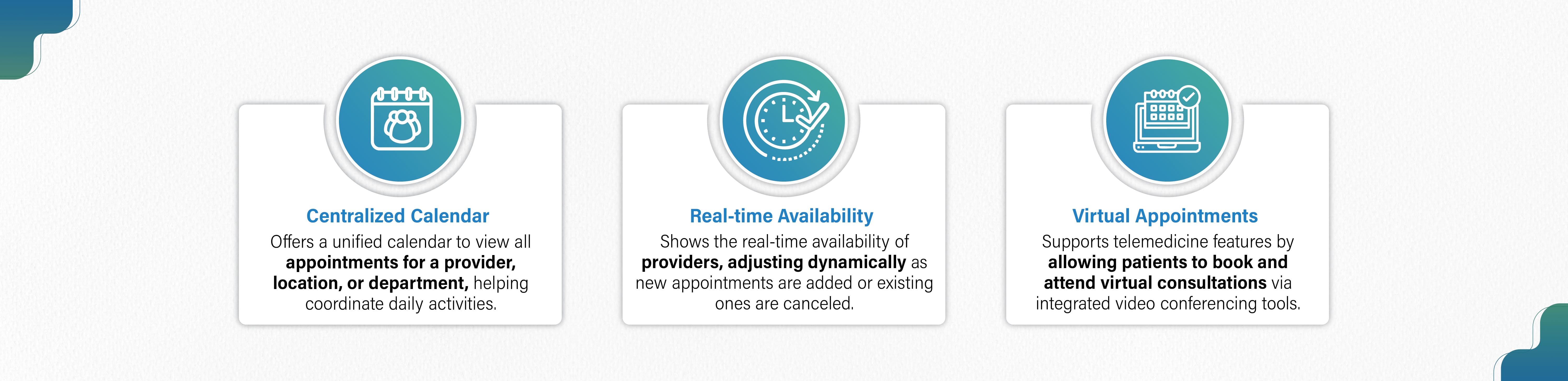
A centralized calendar, real-time availability, and virtual appointments are crucial for managing healthcare practices. With a unified calendar, everything from appointments to provider schedules is neatly organized, making it easier to see what’s happening across different locations or departments. This not only helps reduce scheduling conflicts but also makes coordination much smoother.
Real-time availability is another huge win. Providers’ schedules are always up-to-date, so there’s no guessing or confusion when it comes to booking patients. It makes adjusting to last-minute changes quicker and easier, which leads to happier patients who aren’t left waiting or experiencing overbookings.
And let’s not forget virtual appointments. These have been a lifesaver for many patients, offering the convenience of booking and attending consultations from the comfort of home. This is especially helpful for people who live in remote areas or have mobility challenges. It’s a simple way to make healthcare more accessible for everyone.
4. Patient Management
Integrating patient profiles, preferences, medical history, and pre-filled forms into clinical management brings a lot of benefits to healthcare practices.
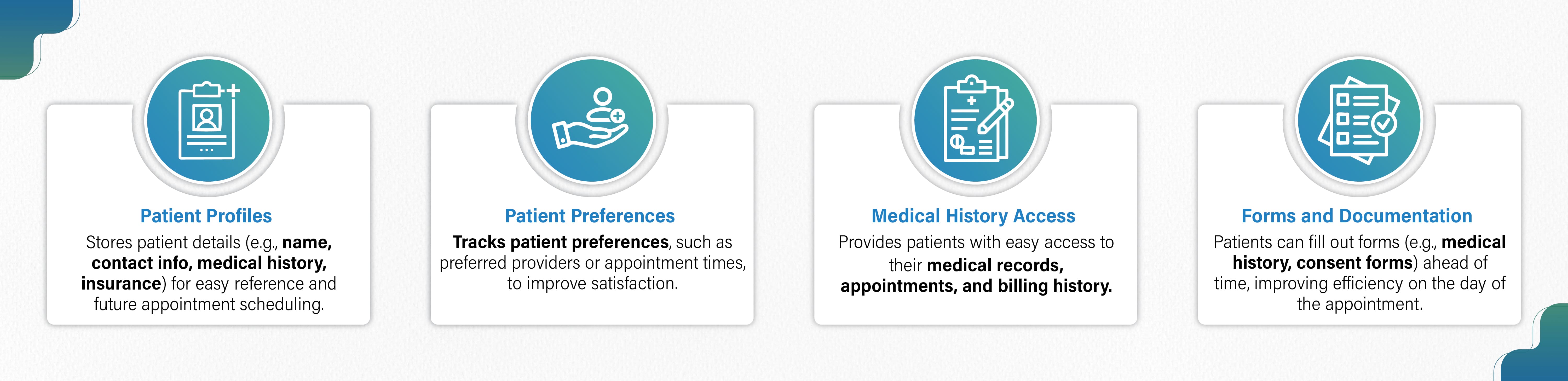
Patient profiles make it easy to access key details like contact info, medical history, and insurance, which helps with appointment scheduling and ensures continuity of care.
Tracking patient preferences such as which providers they prefer and what appointment times work best makes healthcare practices offer more personalized care. This leads to happier patients and encourages better follow through with treatment plans.
Having easy access to a patient’s medical history is a big plus too. It helps both patients and healthcare providers make better-informed decisions, reduces the risk of mistakes, and ultimately improves the quality of care.
Pre-filled forms are another great feature that speeds up administrative tasks. This boosts efficiency and accuracy, shortens wait times, and helps everything run more smoothly. When combined, these tools help optimize workflows, increase patient satisfaction, and ensure care is delivered faster and more effectively.
5. Billing and Payments
Integrating invoicing, payment processing, and insurance tracking into clinical management can make a big difference in efficiency and reduce the stress of administrative work.
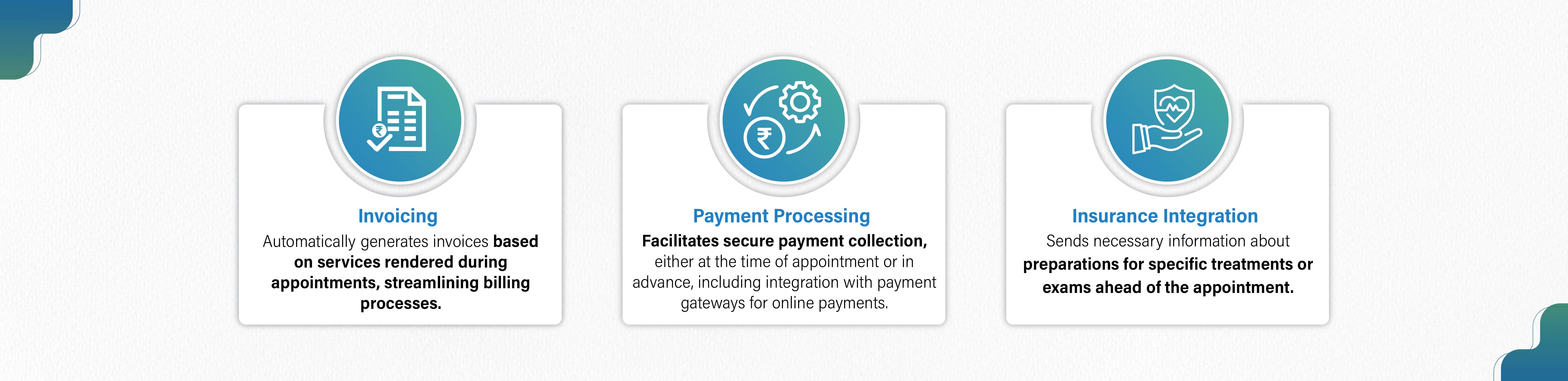
Automated invoicing helps generate accurate bills based on the services provided during appointments, cutting down on errors and making the billing process much smoother.
Secure payment processing is another key feature. Whether payments are made in advance or at the time of the appointment, it streamlines financial transactions and helps avoid delays in payment.
On top of that, insurance integration takes a lot of the manual work out of tracking patient insurance details and eligibility. This not only saves time for office staff but also ensures billing and claims submissions are more accurate.
By combining all these tools, you can streamline financial operations, improve cash flow, and allow staff to spend less time on paperwork. This means they can focus more on what really matters—providing quality care to patients.
For optimizing healthcare workflows, here’s a list of popular clinical appointment management software that offer a variety of features to help manage appointments, patient records, and streamline overall healthcare operations:
• Zocdoc
• Practice Fusion
• Kareo
• SimplePractice
• TheraNest
• Calendly
• Healthie
• Medisoft
• Epic Systems
• eClinicalWorks
Each of these software platforms offers unique features designed to cater to different types of healthcare practices, whether you’re running a small, single-provider clinic or managing a large, multi-location hospital. When choosing an appointment management system, it’s important to consider your practice’s size, specialty, and specific workflow needs.
By assessing the specific needs of your practice whether it’s telehealth capabilities, insurance tracking, or integration with other systems you’ll be able to select the platform that will best streamline your operations and improve patient care.
Clinical appointment management software brings a lot of perks that can really level up how healthcare practices run. By cutting down on manual scheduling and administrative tasks, it boosts efficiency and gives staff more time to focus on what matters most, patient care.
Features like automated reminders and easy rescheduling options help reduce no-shows, while self-service tools and streamlined processes make things smoother for patients, leading to better overall satisfaction. Plus, the software helps make sure resources are used efficiently, preventing both overbooking and under-booking of providers and facilities.
In the end, this kind of technology is a game-changer for keeping everything running smoothly, delivering top-notch care, and driving better business results in today’s healthcare world.