


Crafting A Successful Clinical Management Practice: Key Strategies for Efficiency
As a medical practitioner, your top priority is always your patients’ well-being. But running a private practice involves more than just offering great care. It’s also about managing the business side of things. Juggling patient care with all the administrative tasks can definitely feel overwhelming at times.
That’s where having a solid team really comes into play. Hiring skilled clinical staff is just the beginning. To keep things running smoothly, it’s essential to have healthcare practice management tools to streamline your day-to-day operations. With the right management strategies, you can make sure your practice is efficient, so you can focus more on treating patients and less on all the paperwork.
Practice management system will help with everything from scheduling and billing to managing patient records and handling insurance claims. It’s a game-changer for cutting down on errors, improving efficiency, and keeping your practice running at its best. By optimizing workflows and boosting productivity, you’re not only making life easier for yourself and your team but also setting your practice up for greater success.
In today’s fast-paced healthcare world, using practice management solutions isn’t just a nice-to-have it’s essential for keeping your practice running smoothly and growing.
Key Strategies to Enhance Appointment Management
Appointment management is all about making scheduling smoother, reducing wait times, and keeping both patients and staff happy.
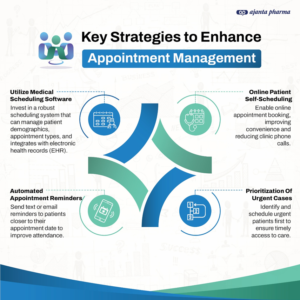
Better appointment management can make a huge difference in how smoothly your practice runs and how successful it is. Appointment management really helps boost patient satisfaction by making it easier for them to book appointments online and get reminders. This not only gives patients more convenience, but it also lightens the load for your staff, freeing them up to handle other tasks.
On top of that, improving your scheduling helps providers stay more productive by cutting down on patient wait times, meaning they can see more patients each day. And, by reducing no-shows, you’ll see a direct improvement in your revenue cycle, since missed appointments often lead to lost income.
In the end, better appointment management doesn’t just make things easier for everyone involved, it boosts both patient experience and your practice’s bottom line.
Key Strategies to Enhance Resource Allocation
Resource allocation in clinical practices is key for balancing workload, reducing waste, and ensuring that patients get the best care without overburdening the team.
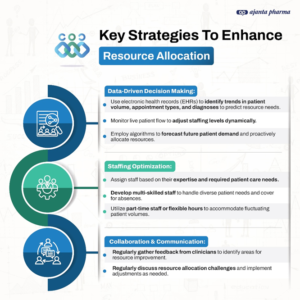
When it comes to managing resources in healthcare, ethics play a big role in making sure decisions are fair and focused on what’s best for the patient, rather than just the cost. It’s important to balance being resourceful with ensuring that patient care doesn’t suffer. Cost-effectiveness analysis is helpful here because it lets you weigh the financial impact of changes in how resources are allocated, while still keeping the quality of care at the forefront.
Continuously improving the process is equally important. By regularly reviewing and tweaking how resources are allocated, healthcare practices can make smarter, data-driven decisions that keep everything running efficiently, without cutting corners on care. This ongoing effort to assess and improve things leads to better patient outcomes and helps keep the practice sustainable in the long run.
Key strategies to improve financial management in a clinical practice
Smart financial management in clinical practices helps keep costs in check, boost revenue, and ensure the practice stays financially healthy while delivering top-notch care.
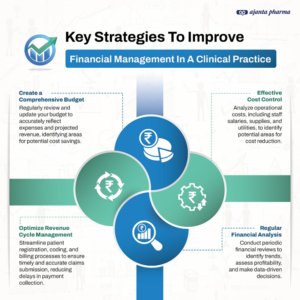
Implementing smart financial strategies in your clinical practice can make a big difference in its long-term success. By using accurate financial data, you can make better decisions that help improve how your practice operates. Effective budgeting and forecasting also play a crucial role in improving cash flow, ensuring you have enough funds to cover your expenses and even invest in growth opportunities.
Taking a proactive approach to risk management can help reduce financial uncertainty, giving your practice the confidence to handle any bumps in the road. Additionally, keeping an eye on costs and controlling them where possible boosts profitability. And, staying compliant with regulations means you won’t have to worry about costly penalties.
With the right financial management in place, you can allocate your resources more efficiently, setting your practice up for growth and long-term success.
Key strategies to improve patient care
Patient care in clinical practices means focusing on clear communication, streamlined processes, and a compassionate approach to meet each patient’s unique needs.
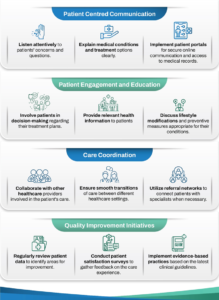
Improving patient care in your practice can bring a lot of benefits that not only boost the patient experience but also contribute to the overall success of your practice. When care is the top priority, patient satisfaction goes up, which leads to stronger loyalty and trust from your patients. As clinicians can focus on providing the best care possible, treatment outcomes improve, and that’s supported by smoother processes and better communication.
Engaging patients more in their own care also helps, as they become more involved in their health journey, leading to even better results. Plus, with improved care comes fewer medical errors, which makes the environment safer for everyone. More efficient operations mean your team can focus on what really matters, your patients.
In the end, by consistently providing high-quality care, you not only build a solid reputation but also attract more patients, helping your practice stand out in a competitive healthcare world.
Incorporating key clinical management strategies into your practice brings a host of benefits that can set your clinic up for long-term success. When operations run efficiently and quality care is at the core of what you do, it boosts patient engagement and strengthens your reputation. By optimizing both financial and operational practices, you create a thriving, patient-centered environment that’s not only effective in delivering exceptional healthcare but also financially sustainable. In the end, it’s all about building a practice that works well for your patients and your bottom line, ensuring success now and in the future.
Reference:
- Ala A, Chen F. Appointment Scheduling Problem in Complexity Systems of the Healthcare Services: A Comprehensive Review. J Healthc Eng. 2022 Mar 3;2022:5819813. doi: 10.1155/2022/5819813. PMID: 35281532; PMCID: PMC8913063.
- Zhao P, Yoo I, Lavoie J, Lavoie BJ, Simoes E. Web-Based Medical Appointment Systems: A Systematic Review. J Med Internet Res. 2017 Apr 26;19(4):e134. doi: 10.2196/jmir.6747. PMID: 28446422; PMCID: PMC5425771.
- Bodina A, Pavan A, Castaldi S. Resource allocation criteria in a hospital. J Prev Med Hyg. 2017 Jun;58(2):E184-E189. PMID: 28900360; PMCID: PMC5584089.
- Jacobs VR, Fischer T. A pragmatic guide on how physicians can take over financial control of their clinical practice. JSLS. 2012 Oct-Dec;16(4):632-8. doi: 10.4293/108680812X13517013316438. PMID: 23484576; PMCID: PMC3558904.
- Bhati D, Deogade MS, Kanyal D. Improving Patient Outcomes Through Effective Hospital Administration: A Comprehensive Review. Cureus. 2023 Oct 26;15(10):e47731. doi: 10.7759/cureus.47731. PMID: 38021686; PMCID: PMC10676194.