


The Role of Financial Planning in Running a Successful Clinic
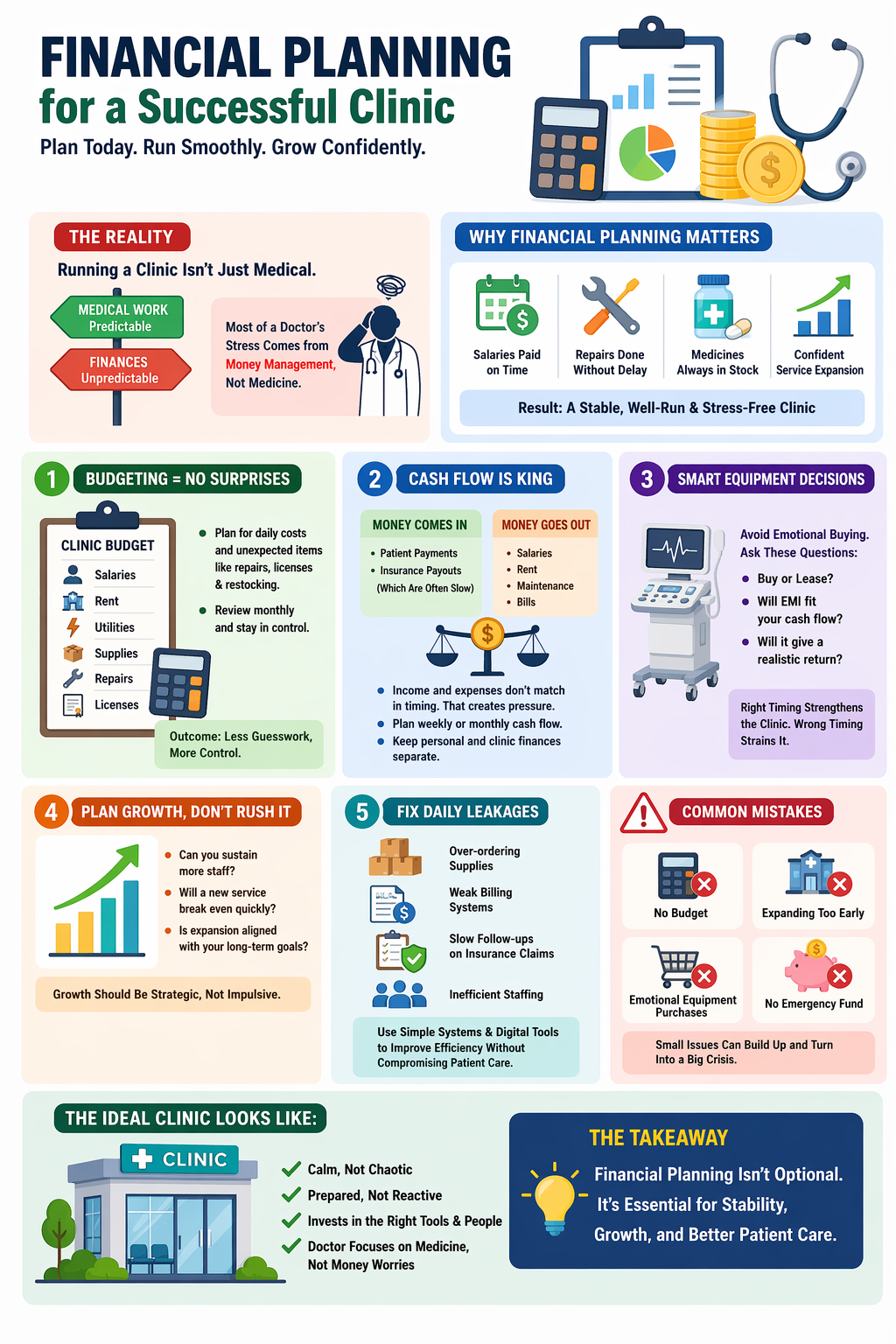
Running a clinic sounds simple until you are the one actually doing it. From the outside, it looks like a routine. Patients come in, treatments happen, payments get sorted, and the clinic moves along. But anyone who has managed a clinic knows the truth. The medical side is predictable, but the financial side rarely is. And surprisingly, most of the stress doctors carry has nothing to do with diagnosing or treating patients. It comes from the money-related tasks that often get pushed aside.
This is why financial planning quietly becomes one of the most important parts of running a clinic. It affects everything patients may not directly notice but definitely feel. When salaries are paid on time, when a broken machine gets replaced without delay, when medicines never go out of stock, and when the clinic adds new services with confidence, it creates a sense of stability. That stability is not luck. It comes from planning.
The reality is that many clinics operate without a proper budget. Doctors usually have a general idea of expenses but not a detailed view. So unexpected items keep popping up. A repair. A large restocking order. A licence renewal no one remembered. A basic annual budget solves most of these surprises. It lays out everything clearly, from salaries and rent to utilities and consumables. With regular monthly reviews, the clinic moves away from guesswork and starts running with more structure.
Cash flow is where things become even more sensitive. Money does not enter the clinic at the same pace it leaves. Insurance payouts are slow. Some patients postpone procedures. Seasonal dips are real. Meanwhile, salaries, rent, and maintenance bills are due whether the month is good or bad. This timing mismatch creates pressure on the clinic, and often on the doctor personally. A simple weekly or monthly cash flow plan changes everything. When you know what is coming in and what is going out, you avoid last-minute stress. You also avoid mixing personal finances with clinic finances, which creates even more confusion later.
Equipment decisions are another common trouble area. A new machine launch, an attractive sales pitch, or the excitement of upgrading can lead to emotional buying. But equipment is a long-term financial decision. It needs planning. Should you buy or lease? How will the EMI affect monthly cash flow? Will the machine realistically generate returns? When the timing and numbers work, the equipment strengthens the clinic. When the purchase is rushed, it strains every other area.
Financial planning also shapes how a clinic grows. Growth does not only mean adding more rooms or equipment. It means adding them at the right time. Can the clinic sustain more staff? Will a new service break even quickly enough? Is expansion aligned with long-term goals? Planning helps answer these questions calmly.
Even daily operations benefit. Small inefficiencies like over-ordering supplies, weak billing systems, slow follow-ups on insurance claims, or mismatched staffing slowly reduce profits. Basic internal controls and digital tools can fix most of this without compromising patient care.
The financial mistakes clinics make rarely look big on their own. A missing budget, an emotional equipment purchase, expanding too early, or having no emergency fund all seem manageable in isolation. But these issues slowly build up. Then one machine breaks or one slow month hits, and the entire system feels the impact. Planning prevents a single bad moment from turning into a larger crisis.
A clinic with solid financial planning does not necessarily look wealthy. It looks calm. It handles uncertainty better. It invests in the right tools and people. And it gives the doctor the mental space to focus on medicine instead of worrying about finances.
Financial planning is not a corporate concept. It is a basic requirement for any clinic that wants to survive, grow, and stay stable for the long run. When the financial side becomes predictable, everything else improves, including patient care.