

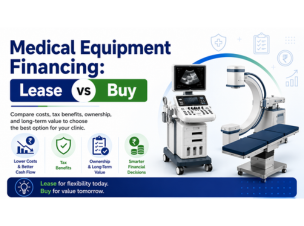
Medical Equipment Financing: Lease vs Buy – Which is Better for Doctors?

One of the biggest challenges that doctors have to navigate is making decisions on when and how to upgrade their clinics. And the largest spend on this front comes in buying medical equipment. But it is an upgrade that is not just necessary but can truly help you set your hospital or clinic aside. This is the reason that knowing when and how to make these upgrades becomes a huge point of contention for most medical professionals. While many people may think that medical equipment is only required in larger hospitals, that is far from the reality. Whether it is imaging machines, surgical tools, or diagnostic devices, the choice between leasing and buying can significantly impact cash flow, taxes, and long-term returns. Here’s everything you need to know about the two main ways that you can unlock medical equipment financing and how you can check which option is better suited for you.
Leasing: The Lower Cost Alternative to Instant Upgrades
Leasing allows you to use equipment without a large initial investment. Instead, you pay fixed monthly installments over a defined period. There are various ways that this method of financing can benefit you. Here are the main things about leasing that you need to consider
- Lower Initial Costs: Leasing is known to be more economical than buying new equipment. It requires minimal upfront costs and is therefore more accessible to healthcare facilities that have lower budgets.
- Easier Upgrades: Being able to easily and efficiently upgrade equipment is a huge advantage for medical professionals and their practices. Leasing allows you to do this and easily upgrade to newer technologies.
- Tax Benefits: Lease payments are typically treated as operating expenses rather than capital expenditures. You can therefore consider deducting these lease payments from their taxable income, which substantially lowers the overall tax burden.
Buying: Ownership and Long-Term Value
The alternative option to leasing is investing high-amount of money into directly buying these equipment. This option gives you full access and ownership of the medical equipment. Most people either make this spend by turning towards loan or by investing a large portion of their available money into the operational expenditure. There are some key advantages of buying that makes it a promising option for many
- Asset Ownership: Owning equipment adds to your clinic’s assets, improving net worth and enhancing credibility when seeking loans or expansion funding.
- Lower Total Costs: The upfront costs of buying an equipment may be higher, however, in the long run it is more cost effective as it eliminates recurring lease premiums and transfers the full ownership of the product to you.
- Depreciation Benefits: While money spent in leasing offers deductions under operating expenses, you can claim depreciation on owned equipment each year, lowering your taxable profits and overall tax liability.
However, both leasing and buying come with their own cons too. For example, leasing equipment is more expensive overall than buying equipment. Additionally, it is not necessary that every leasing opportunity should come with a buyout option. In its absence, you may have invested a large amount of money on the leasing premium and will end up without any asset to showcase it. On the other hand, the EMI burden or upfront cost of buying equipment requires serious consideration. It can also be challenging as there is a risk of obsolescence in fast-changing fields.
Both buying and leasing have their own benefits and challenges. Traditionally, leasing is seen as the best suited option of improving the clinic facilities in the early stage, doctors prioritizing liquidity, or specialties with frequent tech upgrades (like radiology or dermatology). If you have an established practice with stable cash flows and equipment with longer usable life (like dental chairs or OT tables), buying equipment may be best suited for you.