Searching...
Can't find what you're looking for. Try different keywords.


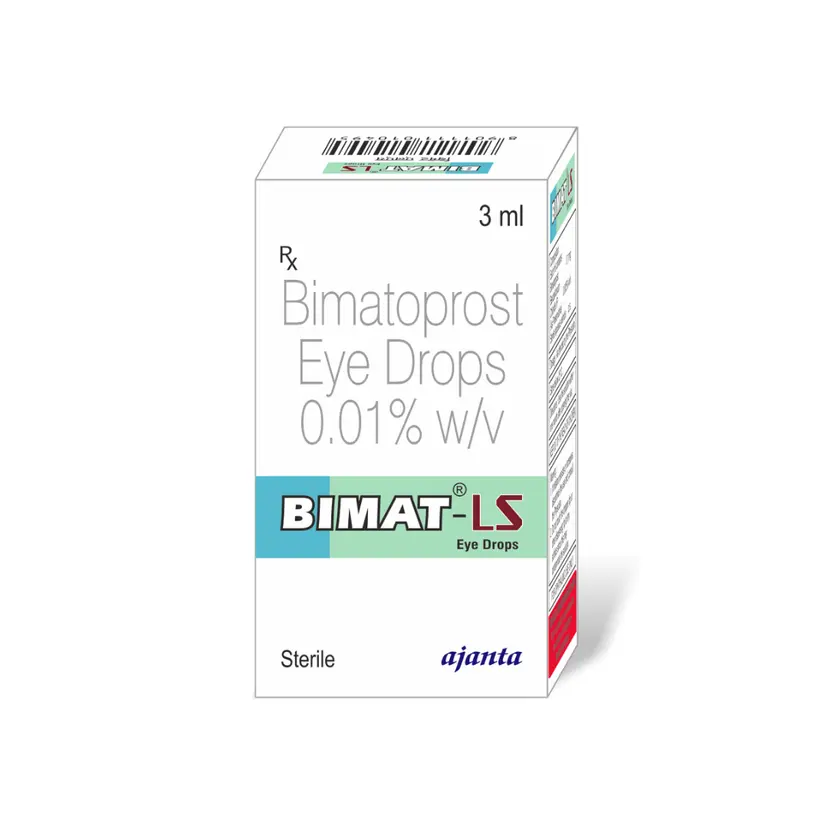

Bimatoprost
0.03 mg
Dosage Form & Strength
One drop in the affected eye(s) once daily in the evening.
Bimat is indicated for the treatment of Glaucoma & ocular hypertension
In clinical trials, the most frequent events associated with the use of Bimatoprostophthalmic solution 0.03% occurring in approximately 15% to 45% of patients, in descending order of incidence, included conjunctival hyperemia, growth of eyelashes, and ocular pruritus. Approximately 3% of patients discontinued therapy due to conjunctival hyperemia. Ocular adverse events occurring in approximately 3 to 10% of patients, in descending order of incidence, included ocular dryness, visual disturbance, ocular burning, foreign body sensation, eye pain, pigmentation of the periocular skin, blepharitis, cataract, superficial punctate keratitis, eyelid erythema, ocular irritation, and eyelash darkening. The following ocular adverse events reported in approximately 1 to 3% of patients, in descending order of incidence, included: eye discharge, tearing, photophobia, allergic conjunctivitis, asthenopia, increases in iris pigmentation, and conjunctival edema. In less than1% of patients, intraocular inflammation was reported as iritis. Systemic adverse events reported in approximately 10% of patients were infections (primarily colds and upper respiratory tract infections). The following systemic adverse events reported in approximately 1 to 5% of patients, in descending order of incidence, included headaches, abnormal liver function tests, asthenia and hirsutism.
Bimatoprost, a prostaglandin analog, is a synthetic structural analog of prostaglandin with ocular hypotensive activity. It selectively mimics the effects of naturally occurring substances, prostamides. Bimatoprost is believed to lower intraocular pressure (IOP) in humans by increasing outflow of aqueous humor through both the trabecular meshwork and uveoscleral routes. Elevated IOP presents a major risk factor for glaucomatous field loss. The higher the level of IOP, the greater the likelihood of optic nerve damage and visual field loss.
The half life of Bimatoprost in Bimat is 45 minutes
Bimatoprost, a prostaglandin analog, is a synthetic structural analog of prostaglandin with ocular hypotensive activity. It selectively mimics the effects of naturally occurring substances, prostamides. Bimatoprost is believed to lower intraocular pressure (IOP) in humans by increasing outflow of aqueous humor through both the trabecular meshwork and uveoscleral routes. Elevated IOP presents a major risk factor for glaucomatous field loss. The higher the level of IOP, the greater the likelihood of optic nerve damage and visual field loss.
Pregnancy: Pregnancy Category C Teratogenic effects: In embryo/fetal developmental studies in pregnant mice and rats, abortion was observed at oral doses of bimatoprost which achieved at least 33 or 97 times, respectively, the maximum intended human exposure based on blood AUC levels. At doses at least 41 times the maximum intended human exposure based on blood AUC levels, the gestation length was reduced in the dams, the incidence of dead fetuses, late resorptions, periand postnatal pup mortality was increased, and pup body weights were reduced. There are no adequate and well-controlled studies of BIMATOPROST ® 0.01% and 0.03% (bimatoprost ophthalmic solution) administration in pregnant women. Because animal reproductive studies are not always predictive of human response BIMATOPROST ® should be administered during pregnancy only if the potential benefit justifies the potential risk to the fetus. Nursing Mothers : It is not known whether BIMATOPROST ® 0.01% and 0.03% is excreted in human milk, although in animal studies, bimatoprost has been shown to be excreted in breast milk. Because many drugs are excreted in human milk, caution should be exercised when BIMATOPROST ® is administered to a nursing woman. Pediatric Use : Use in pediatric patients below the age of 16 years is not recommended because of potential safety concerns related to increased pigmentation following long-term chronic use. Reference Geriatric Use :No overall clinical differences in safety or effectiveness have been observed between elderly and other adult patients. Hepatic Impairment In patients with a history of liver disease or abnormal ALT, AST and/or bilirubin at baseline, bimatoprost 0.03% had no adverse effect on liver function over 48 months.
Patients with hepatic and renal impairment: Bimat has not been studied in patients with renal or moderate to severe hepatic impairment and should therefore be used with caution in such patients. In patients with a history of mild liver disease or abnormal alanine aminotransferase (ALT), aspartate aminotransferase (AST) and/or bilirubin at baseline, bimatoprost 0.3 mg/ml eye drops, solution had no adverse effect on liver function over 24 months.
Patients with hepatic and renal impairment: Bimat has not been studied in patients with renal or moderate to severe hepatic impairment and should therefore be used with caution in such patients. In patients with a history of mild liver disease or abnormal alanine aminotransferase (ALT), aspartate aminotransferase (AST) and/or bilirubin at baseline, bimatoprost 0.3 mg/ml eye drops, solution had no adverse effect on liver function over 24 months.
Pediatric Use Use in pediatric patients below the age of 16 years is not recommended because of potential safety concerns related to increased pigmentation following long-term chronic use.
Geriatric Use No overall clinical differences in safety or effectiveness have been observed between elderly and other adult patients.
Subscribe to our newsletter and be the first to receive insights, updates, and expert tips on optimizing your financial management.