Searching...
Can't find what you're looking for. Try different keywords.


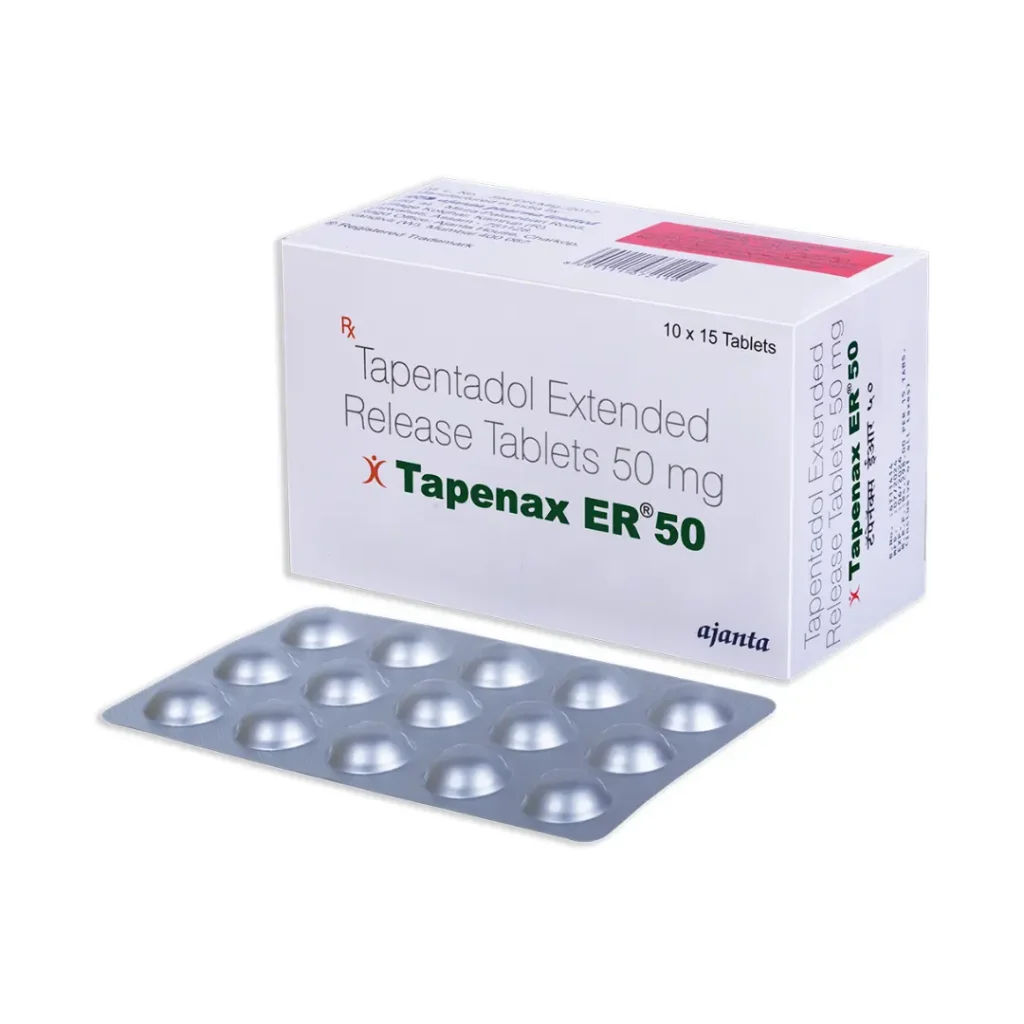

Tapentadol Hydrochloride
50mg/ 100 mg
Should be used during pregnancy only if the potential benefit justifies the potential risk to the foetus. Not recommended for use in women during and immediately before labour and delivery. Should not be used during breast feeding. Not recommended in renal impairment. Should be used with caution in patients with moderate hepatic impairment
Tapenax ER is indicated for the treatment of mixed pain
The most common (≥10%) adverse reactions were nausea, constipation, headache, dizziness, and somnolence.
Use with caution in patients currently using specified centrally-acting drugs or alcohol. Do not use in patients currently using or within 14 days of using a monoamine oxidase inhibitor (MAOI)
Tapentadol is a strong analgesic with µ-agonistic opioid and additional noradrenaline reuptake inhibition properties. Tapentadol exerts its analgesic effects directly without a pharmacologically active metabolite. Tapentadol demonstrated efficacy in preclinical models of nociceptive, neuropathic, visceral and inflammatory pain; efficacy has been verified in clinical trials with tapentadol prolonged-release tablets in non-malignant nociceptive and neuropathic chronic pain conditions as well as chronic tumour-related pain. The trials in pain due to osteoarthritis and chronic low back pain showed similar analgesic efficacy of tapentadol to a strong opioid used as a comparator. In the trial in painful diabetic peripheral neuropathy tapentadol separated from placebo which was used as comparator. Effects on the cardiovascular system: In a thorough human QT trial, no effect of multiple therapeutic and supratherapeutic doses of tapentadol on the QT interval was shown. Similarly, tapentadol had no relevant effect on other ECG parameters (heart rate, PR interval, QRS duration, T-wave or U-wave morphology)
The half life of Tapentadol (Tapenax ER) is 5-6 hours
Pregnancy There is very limited amount of data from the use in pregnant women. Studies in animals have not shown teratogenic effects. However, delayed development and embryotoxicity were observed at doses resulting in exaggerated pharmacology (mu-opioid-related CNS effects related to dosing above the therapeutic range). Effects on the postnatal development were already observed at the maternal NOAEL Tapentadol ER should be used during pregnancy only if the potential benefit justifies the potential risk to the foetus. Labour and Delivery The effect of tapentadol on labour and delivery in humans is unknown. Tapentadol ER is not recommended for use in women during and immediately before labour and delivery. Due to the mu-opioid receptor agonist activity of tapentadol, new-born infants whose mothers have been taking tapentadol should be monitored for respiratory depression. Lactation There is no information on the excretion of tapentadol in human milk. From a study in rat pups suckled by dams dosed with tapentadol it was concluded that tapentadol is excreted via milk. Therefore, a risk to the suckling child cannot be excluded. Tapentadol ER should not be used during breast feeding.
Renal Impairment In patients with mild or moderate renal impairment a dosage adjustment is not required. Tapentadol ER has not been studied in controlled efficacy trials in patients with severe renal impairment, therefore the use in this population is not recommended.
Hepatic Impairment In patients with mild hepatic impairment a dosage adjustment is not required. Tapentadol ER should be used with caution in patients with moderate hepatic impairment. Treatment in these patients should be initiated at the lowest available dose strength, i.e. 50 mg tapentadol as prolonged-release tablet, and not be administered more frequently than once every 24 hours. At initiation of therapy a daily dose greater than 50 mg tapentadol as prolonged-release tablet is not recommended. Further treatment should reflect maintenance of analgesia with acceptable tolerability . Tapentadol ER has not been studied in patients with severe hepatic impairment and therefore, use in this population is not recommended
Paediatric Patients The safety and efficacy of Tapentadol ER in children and adolescents below 18 years of age has not yet been established. Therefore Tapentadol ER is not recommended for use in this population.
Elderly patients (persons aged 65 years and over) In general, a dose adaptation in elderly patients is not required. However, as elderly patients are more likely to have decreased renal and hepatic function, care should be taken in dose selection as recommended.
Subscribe to our newsletter and be the first to receive insights, updates, and expert tips on optimizing your financial management.