Searching...
Can't find what you're looking for. Try different keywords.


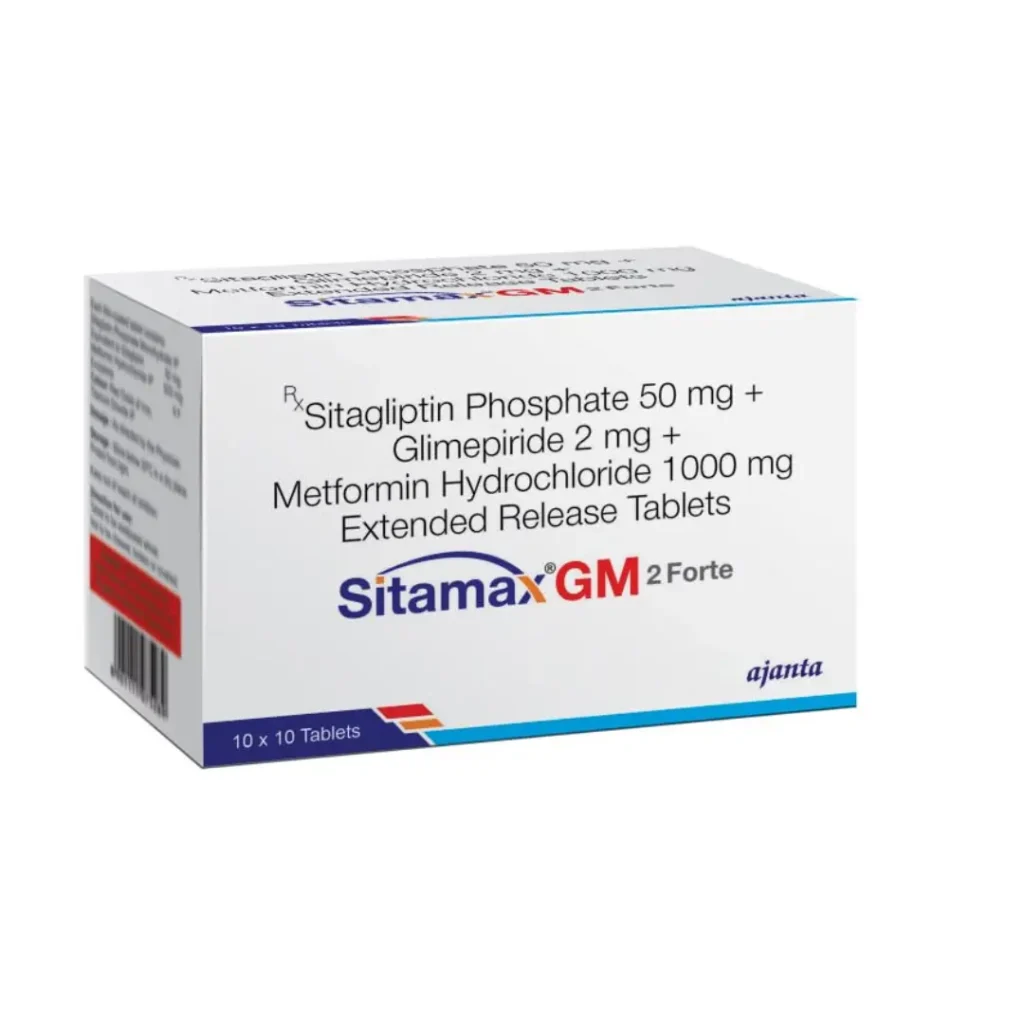

Sitagliptin Phosphate monohydrate IP Eq. to sitagliptin
50 mg / 50 mg
Metformin Hydrochloride IP
1000 mg / 1000 mg
Glimepiride IP
1 mg / 2 mg
Dosage Form & Strength
Tablet — Once daily or as directed by HCP; Sitagliptin 100 mg maximum recommended daily dose
The combination of Sitagliptin, Glimepiride & Metformin is indicated as an adjunct to diet and exercise to improve glycemic control in adult patients with Type 2 Diabetes Mellitus.
The combination is contraindicated: • Hypersensitivity to the active substances or to any of the excipients listed • Any type of acute metabolic acidosis (such as lactic acidosis, diabetic ketoacidosis); • Diabetes mellitus type 1, • Diabetic pre-coma; • Severe renal failure (GFR< 30 mL/min); • Acute conditions with the potential to alter renal function such as: – Dehydration, – Severe infection, – Shock, – Intravascular administration of iodinated contrast agents; • Acute or chronic disease which may cause tissue hypoxia such as: – Cardiac or respiratory failure, – Recent myocardial infarction, – Shock; • Hepatic impairment; • Acute alcohol intoxication, alcoholism; • Breast-feeding.
Serious adverse reactions including pancreatitis and hypersensitivity reactions have been reported. Hypoglycaemia has been reported in combination with sulphonylurea (13.8 %) and insulin (10.9 %).
Should not be used in patients with type 1 diabetes and must not be used for the treatment of diabetic ketoacidosis.Caution should be exercised in patients with a history of pancreatitis.Lactic acidosis, a rare but serious metabolic complication, most often occurs at acute worsening of renal function or cardiorespiratory illness or sepsis. Metformin accumulation occurs at acute worsening of renal function and increases the risk of lactic acidosis. In case of dehydration (severe vomiting, diarrhoea, fever or reduced fluid intake), metformin should be temporarily discontinued and contact with a health care professional is recommended. GFR should be assessed before treatment initiation and regularly thereafter. Sitagliptin/Metformin is contraindicated in patients with GFR < 30 mL/min and should be temporarily discontinued during conditions with the potential to alter renal function.The combination must be discontinued at the time of surgery under general, spinal or epidural anesthesia. Therapy may be restarted no earlier than 48 hours following surgery or resumption of oral nutrition and provided that renal function has been re-evaluated and found to be stable.Glimepiride must be taken shortly before or during a meal. When meals are taken at irregular hours or skipped altogether, treatment with Glimepiride may lead to hypoglycaemia. Treatment with Glimepiride requires regular monitoring of glucose levels in blood and urine. In addition determination of the proportion of glycosylated haemoglobin is recommended. Regular hepatic and haematological monitoring (especially leucocytes and thrombocytes) are required during treatment with Glimepiride. In stress-situations (e.g. accidents, acute operations, infections with fever, etc.) a temporary switch to insulin may be indicated. No experience has been gained concerning the use of Glimepiride in patients with severe impairment of liver function or dialysis patients. In patients with severe impairment of renal or liver function change over to insulin is indicated. Treatment of patients with G6PD-deficiency with sulfonylurea agents can lead to haemolytic anaemia. Since glimepiride belongs to the class of sulfonylurea agents, caution should be used in patients with G6PD-deficiency and a non-sulfonylurea alternative should be considered.
Pharmacokinetic drug interaction studies with this combination have not been performed; however, such studies have been conducted with the individual active substances, sitagliptin, metformin and glimepiride. Concomitant use not recommended Alcohol Alcohol intoxication is associated with an increased risk of lactic acidosis, particularly in cases of fasting, malnutrition or hepatic impairment. Iodinated contrast agents This combination must be discontinued prior to or at the time of the imaging procedure and not restarted until at least 48 hours after, provided that renal function has been re-evaluated and found to be stable. Combinations requiring precautions for use Some medicinal products can adversely affect renal function, which may increase the risk of lactic acidosis, e.g. NSAIDs, including selective cyclo-oxygenase (COX) II inhibitors, ACE inhibitors, angiotensin II receptor antagonists and diuretics, especially loop diuretics. When starting or using such products in combination with metformin, close monitoring of renal function is necessary. Concomitant use of drugs that interfere with common renal tubular transport systems involved in the renal elimination of metformin (e.g., organic cationic transporter-2 [OCT2] / multidrug and toxin extrusion [MATE] inhibitors such as ranolazine, vandetanib, dolutegravir, and cimetidine) could increase systemic exposure to metformin and may increase the risk for lactic acidosis. Consider the benefits and risks of concomitant use. Close monitoring of glycaemic control, dose adjustment within the recommended posology and changes in diabetic treatment should be considered when such products are co-administered. Glucocorticoids (given by systemic and local routes) beta-2-agonists, and diuretics have intrinsic hyperglycaemic activity. The patient should be informed and more frequent blood glucose monitoring performed, especially at the beginning of treatment with such medicinal products. If necessary, the dose of the anti-hyperglycaemic medicinal product should be adjusted during therapy with the other medicinal product and on its discontinuation. ACE-inhibitors may decrease the blood glucose levels. If necessary, the dose of the anti-hyperglycaemic medicinal product should be adjusted during therapy with the other medicinal product and on its discontinuation. Effects of other medicinal products on sitagliptin In vitro and clinical data described below suggest that the risk for clinically meaningful interactions following co-administration of other medicinal products is low. In vitro studies indicated that the primary enzyme responsible for the limited metabolism of sitagliptin is CYP3A4, with contribution from CYP2C8. In patients with normal renal function, metabolism, including via CYP3A4, plays only a small role in the clearance of sitagliptin. Metabolism may play a more significant role in the elimination of sitagliptin in the setting of severe renal impairment or end-stage renal disease (ESRD). For this reason, it is possible that potent CYP3A4 inhibitors (i.e., ketoconazole, itraconazole, ritonavir, clarithromycin) could alter the pharmacokinetics of sitagliptin in patients with severe renal impairment or ESRD. The effects of potent CYP3A4 inhibitors in the setting of renal impairment have not been assessed in a clinical study. In vitro transport studies showed that sitagliptin is a substrate for p-glycoprotein and organic anion transporter-3 (OAT3). OAT3 mediated transport of sitagliptin was inhibited in vitro by probenecid, although the risk of clinically meaningful interactions is considered to be low. Concomitant administration of OAT3 inhibitors has not been evaluated in vivo. Cyclosporine: A study was conducted to assess the effect of cyclosporine, a potent inhibitor of p-glycoprotein, on the pharmacokinetics of sitagliptin. Co-administration of a single 100 mg oral dose of sitagliptin and a single 600 mg oral dose of cyclosporine increased the AUC and Cmax of sitagliptin by approximately 29 % and 68 %, respectively. These changes in sitagliptin pharmacokinetics were not considered to be clinically meaningful. The renal clearance of sitagliptin was not meaningfully altered. Therefore, meaningful interactions would not be expected with other p-glycoprotein inhibitors. Effects of sitagliptin on other medicinal products Digoxin: Sitagliptin had a small effect on plasma digoxin concentrations. Following administration of 0.25 mg digoxin concomitantly with 100 mg of sitagliptin daily for 10 days, the plasma AUC of digoxin was increased on average by 11 %, and the plasma Cmax on average by 18 %. No dose adjustment of digoxin is recommended. However, patients at risk of digoxin toxicity should be monitored for this when sitagliptin and digoxin are administered concomitantly. In vitro data suggest that sitagliptin does not inhibit nor induce CYP450 isoenzymes. In clinical studies, sitagliptin did not meaningfully alter the pharmacokinetics of metformin, glyburide, simvastatin, rosiglitazone, warfarin, or oral contraceptives, providing in vivo evidence of a low propensity for causing interactions with substrates of CYP3A4, CYP2C8, CYP2C9, and organic cationic transporter (OCT). Sitagliptin may be a mild inhibitor of p-glycoprotein in vivo. If glimepiride is taken simultaneously with certain other medicinal products, both undesired increases and decreases in the hypoglycaemic effect of glimepiride can occur. For this reason, other medicinal products should only be taken with the knowledge (or at the prescription) of the doctor. Glimepiride is metabolized by cytochrome P450 2C9 (CYP2C9). Its metabolism is known to be influenced by concomitant administration of CYP2C9 inducers (e .g. rifampicin) or inhibitors (e.g. fluconazole). Results from an in vivo interaction study reported in literature show that glimepiride AUC is increased approximately 2-fold by fluconazole, one of the most potent CYP2C9 inhibitors. Based on the experience with glimepiride and with other sulphonylureas the following interactions have to be mentioned. Potentiation of the blood-glucose-lowering effect and, thus, in some instances hypoglycaemia may occur when one of the following medicinal products is taken, for example: – phenylbutazone, azapropazone and oxyfenbutazone, – insulin and oral antidiabetic products, such as metformin, – salicylates and p-amino-salicylic acid, – anabolic steroids and male sex hormones, – chloramphenicol, certain long acting sulfonamides, tetracyclines, quinolone antibiotics and clarithromycin, – coumarin anticoagulants, – fenfluramine, – disopyramide, – fibrates, – ACE inhibitors, – fluoxetine, MAO-inhibitors, – allopurinol, probenecid, sulfinpyrazone, – sympatholytics, – cyclophosphamide, trophosphamide and iphosphamides, – miconazole, fluconazole. – pentoxifylline (high dose parenteral), – tritoqualine. Weakening of the blood-glucose-lowering effect and, thus raised blood glucose levels may occur when one of the following medicinal products is taken, for example: – oestrogens and progestogens, – saluretics, thiazide diuretics, – thyroid stimulating agents, glucocorticoids, – phenothiazine derivatives, chlorpromazine, – adrenaline and sympathicomimetics, – nicotinic acid (high dosages) and nicotinic acid derivatives, – laxatives (long term use), – phenytoin, diazoxide, – glucagon, barbiturates and rifampicin, – acetazolamide. H2 antagonists, beta blockers, clonidine and reserpine may lead to either potentiation or weakening of the blood glucose lowering effect. Under the influence of sympatholytic medicinal products such as beta blockers, clonidine, guanethidine and reserpine, the signs of adrenergic counter regulation to hypoglycaemia may be reduced or absent. Alcohol intake may potentiate or weaken the hypoglycaemic action of glimepiride in an unpredictable fashion. Glimepiride may either potentiate or weaken the effects of coumarin derivatives. Colesevelam binds to glimepiride and reduces glimepiride absorption from the gastro-intestinal tract. No interaction was observed when glimepiride was taken at least 4 hours before colesevelam. Therefore, glimepiride should be administered at least 4 hours prior to colesevelam.
Sitagliptin: Mechanism of action Sitagliptin phosphate is an orally-active, potent, and highly selective inhibitor of the dipeptidyl peptidase 4 (DPP-4) enzyme for the treatment of type 2 diabetes. The DPP-4 inhibitors are a class of agents that act as incretin enhancers. By inhibiting the DPP-4 enzyme, sitagliptin increases the levels of two known active incretin hormones, glucagon-like peptide-1 (GLP-1) and glucose-dependent insulinotropic polypeptide (GIP). The incretins are part of an endogenous system involved in the physiologic regulation of glucose homeostasis. When blood glucose concentrations are normal or elevated, GLP-1 and GIP increase insulin synthesis and release from pancreatic beta cells. GLP-1 also lowers glucagon secretion from pancreatic alpha cells, leading to reduced hepatic glucose production. When blood glucose levels are low, insulin release is not enhanced and glucagon secretion is not suppressed. Sitagliptin is a potent and highly selective inhibitor of the enzyme DPP-4 and does not inhibit the closely-related enzymes DPP-8 or DPP-9 at therapeutic concentrations. Sitagliptin differs in chemical structure and pharmacological action from GLP-1 analogues, insulin, sulphonylureas or meglitinides, biguanides, peroxisome proliferator-activated receptor gamma (PPARγ) agonists, alpha-glucosidase inhibitors, and amylin analogues. In a two-day study in healthy subjects, sitagliptin alone increased active GLP-1 concentrations, whereas metformin alone increased active and total GLP-1 concentrations to similar extents. Co-administration of sitagliptin and metformin had an additive effect on active GLP-1 concentrations. Sitagliptin, but not metformin, increased active GIP concentrations. Metformin Mechanism of action Metformin is a biguanide with antihyperglycaemic effects, lowering both basal and postprandial plasma glucose. It does not stimulate insulin secretion and therefore does not produce hypoglycaemia. Metformin may act via three mechanisms: – by reduction of hepatic glucose production by inhibiting gluconeogenesis and glycogenolysis – in muscle, by modestly increasing insulin sensitivity, improving peripheral glucose uptake and utilisation – by delaying intestinal glucose absorption. Metformin stimulates intracellular glycogen synthesis by acting on glycogen synthase. Metformin increases the transport capacity of specific types of membrane glucose transporters (GLUT-1 and GLUT-4). Glimepiride Glimepiride acts mainly by stimulating insulin release from pancreatic beta cells. As with other sulphonylureas this effect is based on an increase of responsiveness of the pancreatic beta cells to the physiological glucose stimulus. In addition, glimepiride seems to have pronounced extrapancreatic effects also postulated for other sulphonylureas. Insulin release Sulphonylureas regulate insulin secretion by closing the ATP-sensitive potassium channel in the beta cell membrane. Closing the potassium channel induces depolarisation of the beta cell and results -by opening of calcium channels – in an increased influx of calcium into the cell. This leads to insulin release through exocytosis. Glimepiride binds with a high exchange rate to a beta cell membrane protein which is associated with the ATP-sensitive potassium channel but which is different from the usual sulphonylurea binding site. Extrapancreatic activity The extrapancreatic effects are for example an improvement of the sensitivity of the peripheral tissue for insulin and a decrease of the insulin uptake by the liver. The uptake of glucose from blood into peripheral muscle and fat tissues occurs via special transport proteins, located in the cells membrane. The transport of glucose in these tissues is the rate limiting step in the use of glucose. Glimepiride increases very rapidly the number of active glucose transport molecules in the plasma membranes of muscle and fat cells, resulting in stimulated glucose uptake. Glimepiride increases the activity of the glycosyl-phosphatidylinositol-specific phospholipase C which may be correlated with the drug-induced lipogenesis and glycogenesis in isolated fat and muscle cells. Glimepiride inhibits the glucose production in the liver by increasing the intracellular concentration of fructose-2,6-bisphosphate, which in its turn inhibits the gluconeogenesis.
Following an oral dose of metformin, the apparent terminal elimination half-life is approximately 6.5 h. Mean dominant serum half-life of glimepiride, which is of relevance for the serum concentrations under multiple-dose conditions, is about 5 to 8 hours.The apparent terminal t1/2 of sitagliptin following a 100-mg oral dose of sitagliptin was approximately 12.4 hours
Absorption: Following oral administration of a 100-mg dose to healthy subjects, sitagliptin was rapidly absorbed, with peak plasma concentrations (median Tmax) occurring 1 to 4 hours post-dose, mean plasma AUC of sitagliptin was 8.52 μM•hr, Cmax was 950 nM. The absolute bioavailability of sitagliptin is approximately 87 %. Since co-administration of a high-fat meal with sitagliptin had no effect on the pharmacokinetics, sitagliptin may be administered with or without food. Plasma AUC of sitagliptin increased in a dose-proportional manner. Dose-proportionality was not established for Cmax and C24hr (Cmax increased in a greater than dose-proportional manner and C24hr increased in a less than dose-proportional manner). After an oral dose of metformin, Tmax is reached in 2.5 h. Absolute bioavailability of a 500 mg metformin tablet is approximately 50-60 % in healthy subjects. After an oral dose, the non-absorbed fraction recovered in faeces was 20-30 %. After oral administration, metformin absorption is saturable and incomplete. It is assumed that the pharmacokinetics of metformin absorption is non-linear. At the usual metformin doses and dosing schedules, steady state plasma concentrations are reached within 24-48 h and are generally less than 1 µg/mL. In controlled clinical trials, maximum metformin plasma levels (Cmax) did not exceed 5 µg/mL, even at maximum doses. The bioavailability of glimepiride after oral administration is complete. Food intake has no relevant influence on absorption, only absorption rate is slightly diminished. Maximum serum concentrations (Cmax) are reached approx. 2.5 hours after oral intake (mean 0.3 µg/ml during multiple dosing of 4 mg daily) and there is a linear relationship between dose and both Cmax and AUC (area under the time/concentration curve). Bioavailability: The absolute bioavailability of sitagliptin is approximately 87 %. Absolute bioavailability of a 500 mg metformin tablet is approximately 50-60 % in healthy subjects.Glimepiride is rapidly and completely absorbed after oral administration. The oral bioavailability is approximately 100% Metabolism: Sitagliptin is primarily eliminated unchanged in urine, and metabolism is a minor pathway. Approximately 79 % of sitagliptin is excreted unchanged in the urine. Following a [14C] sitagliptin oral dose, approximately 16 % of the radioactivity was excreted as metabolites of sitagliptin. Six metabolites were detected at trace levels and are not expected to contribute to the plasma DPP-4 inhibitory activity of sitagliptin. In vitro studies indicated that the primary enzyme responsible for the limited metabolism of sitagliptin was CYP3A4, with contribution from CYP2C8. Metformin is excreted unchanged in the urine. No metabolites have been identified in humans. Excretion: Sitagliptin Following administration of an oral [14C] sitagliptin dose to healthy subjects, approximately 100 % of the administered radioactivity was eliminated in faeces (13 %) or urine (87 %) within one week of dosing. Elimination of sitagliptin occurs primarily via renal excretion and involves active tubular secretion.Renal clearance of metformin is > 400 mL/min, indicating that metformin is eliminated by glomerular filtration and tubular secretion. Following an oral dose, the apparent terminal elimination half-life is approximately 6.5 h. When renal function is impaired, renal clearance is decreased in proportion to that of creatinine and thus the elimination half-life is prolonged, leading to increased levels of metformin in plasma. After a single dose of radio labelled glimepiride, 58% of the radioactivity was recovered in the urine, and 35% in the faeces. No unchanged substance was detected in the urine. Two metabolites -most probably resulting from hepatic metabolism (major enzyme is CYP2C9)- were identified both in urine and feces: the hydroxy derivative and the carboxy derivative. After oral administration of glimepiride, the terminal half-lives of these metabolites were 3 to 6 and 5 to 6 hours respectively.
Subscribe to our newsletter and be the first to receive insights, updates, and expert tips on optimizing your financial management.