Searching...
Can't find what you're looking for. Try different keywords.


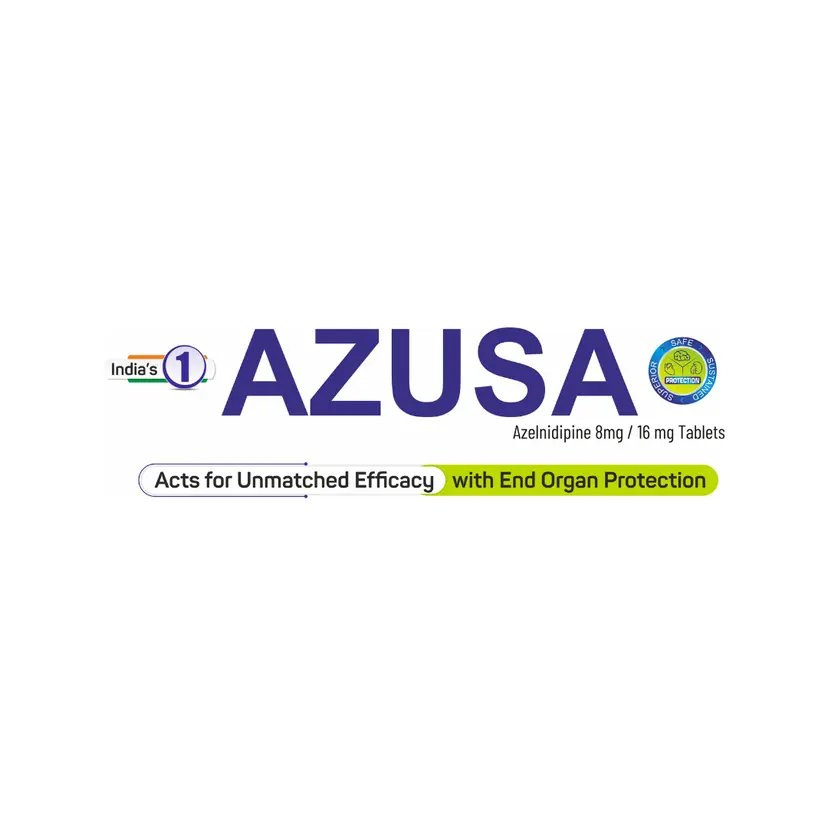

Azelnidipine
8/16mg
The recommended starting dose is 40 mg once daily. The dose may be increased to a maximum of 80 mg once daily for patients whose blood pressure is not adequately controlled at the lower dose.
Elderly (65 years and over) No initial dose adjustment is necessary in elderly patients although consideration can be given to 20 mg as a starting dose in the very elderly (≥ 75 years), who may be at risk of hypotension. Renal impairment Caution should be exercised in hypertensive patients with severe renal impairment and end stage renal disease as there is no experience of use of Edarbi in these patients. Hemodialysis does not remove azilsartan from the systemic circulation. No dose adjustment is required in patients with mild or moderate renal impairment. Hepatic impairment Edarbi has not been studied in patients with severe hepatic impairment and therefore its use is not recommended in this patient group Paediatric population The safety and efficacy in children and adolescents aged 0 to < 18 years have not yet been established. Pregnancy When pregnancy is diagnosed, treatment with angiotensin II receptor antagonists should be stopped immediately Breastfeeding Not recommended and alternative treatments with better established safety profiles during breastfeeding are preferable
Azusa is indicated for the treatment of hypertension
The possible side effects of Azelnidipine include cardiac arrest, cardiac failure, hypotension, bradycardia, concomitant disease, cerebral haemorrhage, decreased heart rate, human herpesvirus infection, ascitis and prolonged electrocardiogram
With Azoles: It is considered that these drugs inhibit CYP3A4 and reduce the clearance of this drug With HIV Protease Inhibitors: It is considered that these drugs inhibit CYP3A4 and reduce the clearance of this drug With other anti-hypertensives: The pharmacological action is enhanced by the combined use of antihypertensive agents having different action mechanisms: Excessive pressure reduction may occur. If necessary, reduce the dose of other antihypertensive agents or this drug With Simvastatin: It has been reported that the AUC of simvastatin increases 2.0-fold. If necessary, discontinue administration of this drug or simvastatin: Competitive inhibition of CYP3A4 by these agents is thought to reduce mutual clearance. Special attention should be paid to patients with renal dysfunction
Azelnidipine exerts an antihypertensive effect by dilating blood vessels based on L-type Ca channel antagonism
The half life of Azelnidipine in Azusa is 19-23 hours
Absorption Oral ingestion of azelnidipine demonstrates rapid and dose-dependent absorption. Route of Elimination In one study, following a single 4mg oral dose of 14C-labeled azelnidipine in humans, about 26% of the drug was thought to br excreted in the urine and 63% in the feces during the 1 week period post administration Volume of Distribution In a Chinese study examining the pharmacokinetics of the drug, the volume of distribution was found to be 1749 +/- 964. Metabolism/Metabolites Like most members of its class, azelnidipine primarily undergoes first-pass hepatic metabolism. Azelnidipine is metabolized by hepatic cytochrome P450 (CYP) 3A4 and has no active metabolite product. It may interact with other drugs or compounds that are substrates for this enzyme. Azelnidipine is lipophilic and has a potent affinity for membranes of vascular smooth muscle cells. Biological Half-Life 16 –28 hours
Azelnidipine: Pregnant woman Do not administer to pregnant women or women who may be pregnant. Lactating women Consider continuing or discontinuing breastfeeding, taking into account the therapeutic benefits and benefits of breastfeeding. It has been reported in animal experiments that it is transferred into milk.
Patients with severe renal dysfunction Renal function may decline with blood pressure reduction
Patients with severe liver dysfunction No clinical trials have been conducted in patients with severe liver dysfunction.
Children: No clinical trials have been conducted on children.
Elderly Start with 8 mg or even lower doses and administer with caution. Excessive pressure reduction is generally considered unfavorable. Cerebral infarction etc. may occur.
Subscribe to our newsletter and be the first to receive insights, updates, and expert tips on optimizing your financial management.