Searching...
Can't find what you're looking for. Try different keywords.


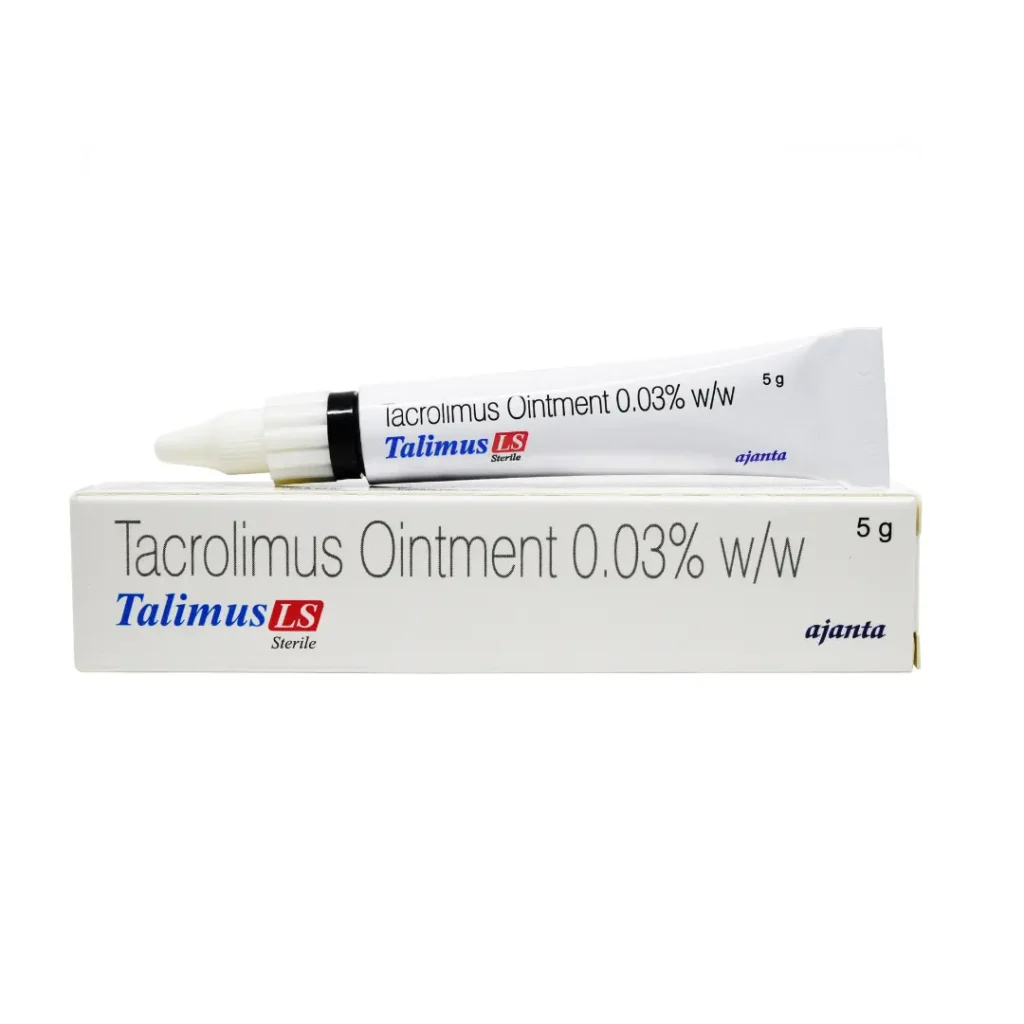

Tacrolimus
0.03%
Children (2 years of age and above) should use the lower strength Tacrolimus 0.03% ointment. Tacrolimus 0.03% should be applied once a day twice weekly (e.g. Monday and Thursday) to areas commonly affectedby atopic dermatitis to prevent progression to flares. Between applications there should be 2–3 days without Tacrolimus 0.03% treatment. The review of the child`s condition after 12 months treatment should include suspension of treatment to assess the needto continue this regimen and to evaluate the course of the disease. Tacrolimus 0.03% ointment should not be used in children aged below 2 years until further data are available.
Paediatric population – Children (2 years of age and above) should use the lower strength Protopic 0.03% ointment. Treatment should be started twice a day for up to three weeks. Afterwards the frequency of application should bereduced to once a day until clearance of the lesion Pregnancy – There are no adequate data from the use of tacrolimus ointment in pregnant women. Studies in animals have shown reproductive toxicity following systemic administration. The potential risk for humans is unknown. It should not be used during pregnancy unless clearly necessary. Breast-feeding – Human data demonstrate that, after systemic administration, tacrolimus is excreted into breast milk. Although clinical data have shown that systemic exposure from application of tacrolimus ointment is low, breast-feeding during treatment is not recommended.
Talimus LS is indicated for the treatment of Ocular Allergy & infection, Dry Eyes, Uveitis & Allergic conjunctivitis
Formal topical drug interaction studies with tacrolimus ointment have not been conducted. Tacrolimus is not metabolised in human skin, indicating that there is no potential for percutaneous interactions that could affect the metabolism of tacrolimus. Systemically available tacrolimus is metabolised via the hepatic Cytochrome P450 3A4 (CYP3A4). Systemic exposure from topical application of tacrolimus ointment is low (<1.0 ng/ml) and is unlikely to be affected by concomitant use of substances known to be inhibitors of CYP3A4. However, the possibility of interactions cannot be ruled out and the concomitant systemic administration of known CYP3A4 inhibitors (e.g. erythromycin, itraconazole, ketoconazole and diltiazem) in patients with widespread and/or erythrodermic disease should be done with caution.
The mechanism of action of tacrolimus in atopic dermatitis is not fully understood. While the following have beenobserved, the clinical significance of these observations in atopic dermatitis is not known. Via its binding to a specific cytoplasmic immunophilin (FKBP12), tacrolimus inhibits calcium-dependent signaltransduction pathways in T cells, thereby preventing the transcription and synthesis of IL-2, IL-3, IL-4, IL-5 and othercytokines such as GM-CSF, TNF-α and IFN-γ. In vitro , in Langerhans cells isolated from normal human skin, tacrolimus reduced the stimulatory activity towards T cells.Tacrolimus has also been shown to inhibit the release of inflammatory mediators from skin mast cells, basophils andeosinophils. In animals, tacrolimus ointment suppressed inflammatory reactions in experimental and spontaneous dermatitis modelsthat resemble human atopic dermatitis. Tacrolimus ointment did not reduce skin thickness and did not cause skin atrophyin animals. In patients with atopic dermatitis, improvement of skin lesions during treatment with tacrolimus ointment was associatedwith reduced Fc receptor expression on Langerhans cells and a reduction of their hyperstimulatory activity towards Tcells. Tacrolimus ointment does not affect collagen synthesis in humans.
Fertility:There are no fertility data available. Pregnancy: There are no adequate data from the use of tacrolimus ointment in pregnant women. Studies in animals have shown reproductive toxicity following systemic administration. The potential risk for humans is unknown. Protopic ointment should not be used during pregnancy unless clearly necessary. Breast-feeding : Human data demonstrate that, after systemic administration, tacrolimus is excreted into breast milk. Although clinical data have shown that systemic exposure from application of tacrolimus ointment is low, breast-feeding during treatment with Protopic ointment is not recommended.
Subscribe to our newsletter and be the first to receive insights, updates, and expert tips on optimizing your financial management.