Searching...
Can't find what you're looking for. Try different keywords.


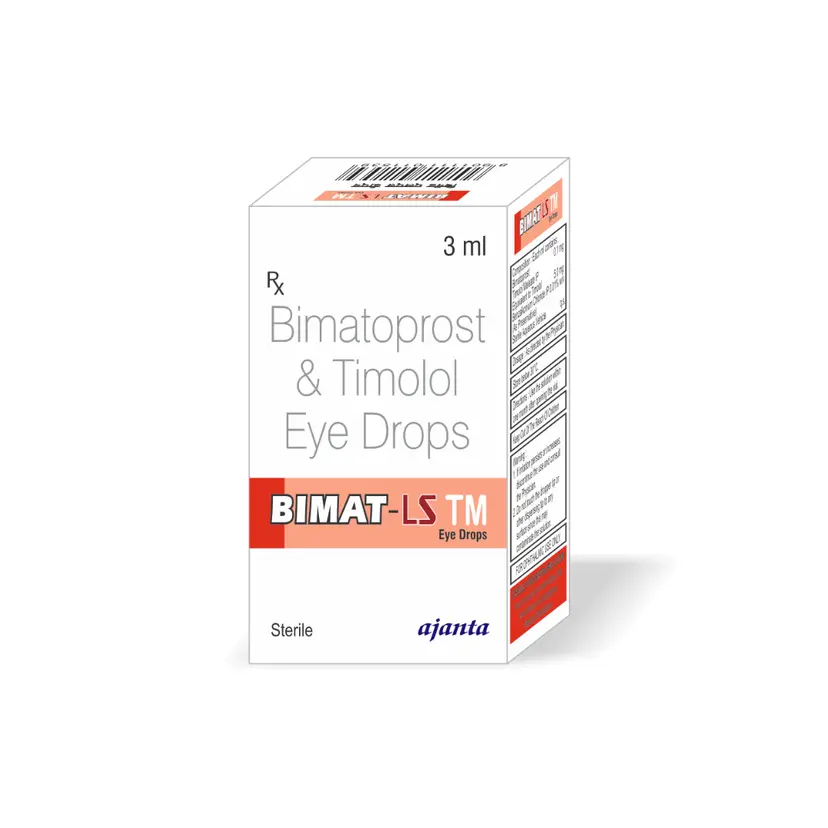

Bimatoprost
0.03 mg
Timolol Maleate IP
5.0 mg
Bimat T is indicated for the treatment of Glaucoma & ocular hypertension
Bimatoprost, a prostaglandin analog, is a synthetic structural analog of prostaglandin with ocular hypotensive activity. It selectively mimics the effects of naturally occurring substances, prostamides. Bimatoprost is believed to lower intraocular pressure (IOP) in humans by increasing outflow of aqueous humor through both the trabecular meshwork and uveoscleral routes. Elevated IOP presents a major risk factor for glaucomatous field loss. The higher the level of IOP, the greater the likelihood of optic nerve damage and visual field loss. Timolol: Timolol is a beta1 and beta2 non-selective adrenergic receptor blocking agent that does not have significant intrinsic sympathomimetic, direct myocardial depressant, or local anaesthetic (membrane-stabilising) activity. Timolol lowers IOP by reducing aqueous humour formation. The precise mechanism of action is not clearly established, but inhibition of the increased cyclic AMP synthesis caused by endogenous beta-adrenergic stimulation is probable.
Absorption Following bilateral topical ocular administration of alcaftadine ophthalmic solution, 0.25%, the mean plasma Cmax of alcaftadine was approximately 60 pg/mL and the median Tmax occurred at 15 minutes. Plasma concentrations of alcaftadine were below the lower limit of quantification (10 pg/mL) by 3 hours after dosing. The mean Cmax of the active carboxylic acid metabolite was approximately 3 ng/mL and occurred at 1 hour after dosing. Plasma concentrations of the carboxylic acid metabolite were below the lower limit of quantification (100 pg/mL) by 12 hours after dosing. There was no indication of systemic accumulation or changes in plasma exposure of alcaftadine or the active metabolite following daily topical ocular administration. Distribution The protein binding of alcaftadine and the active metabolite are 39.2% and 62.7%, respectively. Metabolism The metabolism of alcaftadine is mediated by non-CYP450 cytosolic enzymes to the active carboxylic acid metabolite. Excretion The elimination half-life of the carboxylic acid metabolite is approximately 2 hours following topical ocular administration. Based on data following oral administration of alcaftadine, the carboxylic acid metabolite is primarily eliminated unchanged in the urine. In vitro studies showed that neither alcaftadine nor the carboxylic acid metabolite substantially inhibited reactions catalyzed by major CYP450 enzymes.
Subscribe to our newsletter and be the first to receive insights, updates, and expert tips on optimizing your financial management.