Searching...
Can't find what you're looking for. Try different keywords.


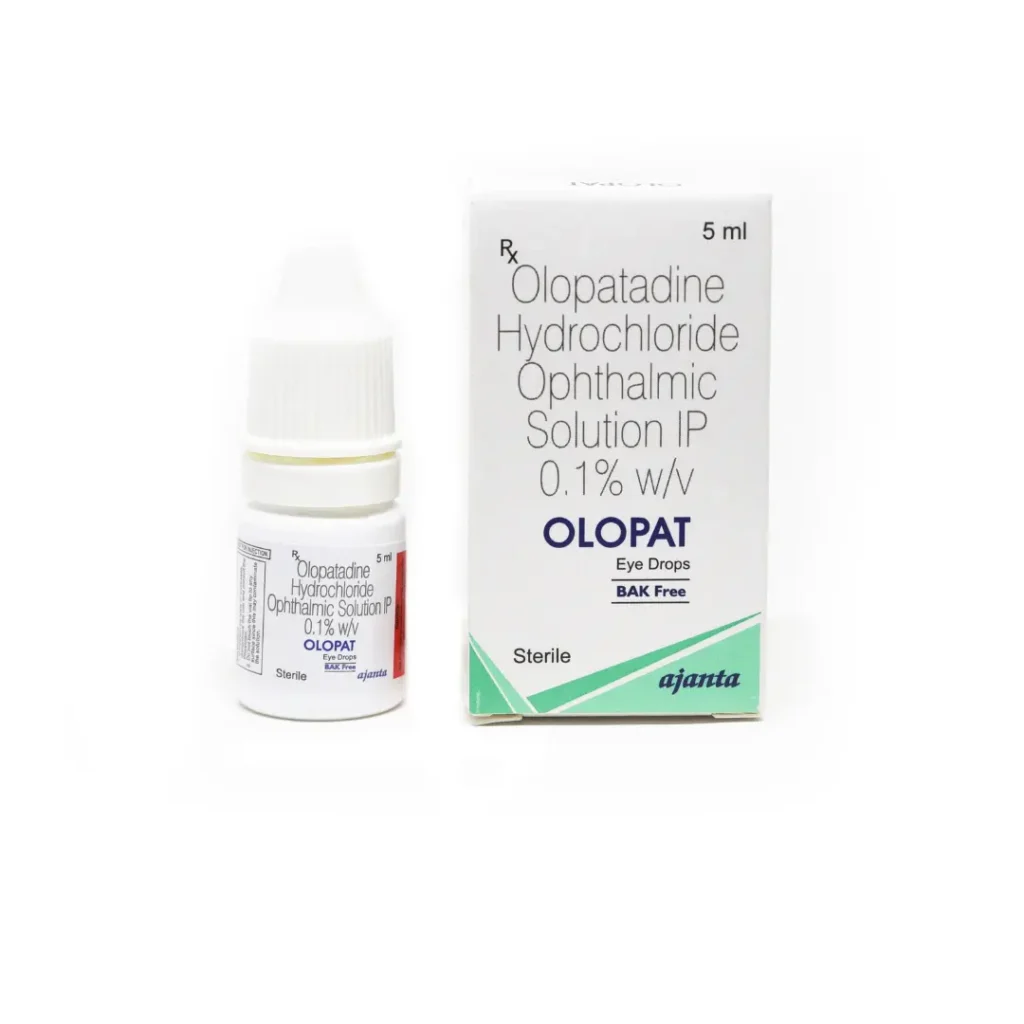

Olopatadine Hydrochloride
0.1%
Dosage Form & Strength
1 drop in affected eye(s) twice daily (8-hourly) | Treatment up to 4 months
Olopat is indicated for the treatment of Ocular Allergy
Symptoms similar to cold syndrome and pharyngitis were reported at an incidence of approximately 10%. The following adverse experiences have been reported in 5% or less of patients: Ocular: blurred vision, burning or stinging, conjunctivitis, dry eye, foreign body sensation, hyperemia, hypersensitivity, keratitis, lid edema, pain and ocular pruritus. Non-ocular: asthenia, back pain, flu syndrome, headache, increased cough, infection, nausea, rhinitis, sinusitis and taste perversion.
Olopatadine is a potent selective antiallergic/antihistaminic agent that exerts its effects through multiple distinct mechanisms of action. It antagonises histamine (the primary mediator of allergic response in humans) and prevents histamine induced inflammatory cytokine production by human conjunctival epithelial cells. Data from in vitro studies suggest that it may act on human conjunctival mast cells to inhibit the release of pro-inflammatory mediators. In patients with patent nasolacrimal ducts, topical ocular administration of Olopatadine was suggested to reduce the nasal signs and symptoms that frequently accompany seasonal allergic conjunctivitis. It does not produce a clinically significant change in pupil diameter.
The half life of Olpatadine in Olopat is 8-12 hours
Pregnancy There are, however, no adequate and well- controlled studies in pregnant women. Because animal studies are not always predictive of human responses, this drug should be used in pregnant women only if the potential benefit to the mother justifies the potential risk to the embryo or fetus. Lactation Olopatadine has been identified in the milk of nursing rats following oral administration. It is not known whether topical ocular administration could result in sufficient systemic absorption to produce detectable quantities in the human breast milk. Nevertheless, caution should be exercised when olopatadine hydrochloride ophthalmic solution 0.2% is administered to a nursing mother.
PEDIATRIC USE The safety and effectiveness of Olopatadine have been established in pediatric patients two years of age and older. Use of Olopatadine in these pediatric patients is supported by evidence from adequate and wellcontrolled studies of Olopatadine in adults and an adequate and well controlled study evaluating the safety of Olopatadine in pediatric and adult patients.
No overall differences in safety and effectiveness have been observed between elderly and younger patients.
Subscribe to our newsletter and be the first to receive insights, updates, and expert tips on optimizing your financial management.