

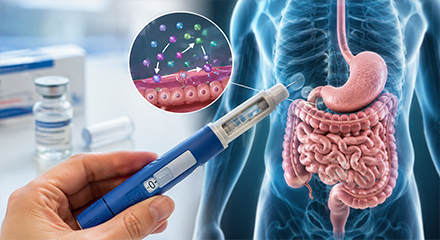
How Semaglutide Works: Mechanism of Action Explained Simply
Semaglutide has rapidly emerged as a cornerstone therapy in both type 2 diabetes and obesity management. While its clinical outcomes—improved glycaemic control and significant weight loss—are well recognized, understanding ‘how’ it achieves these effects is equally important.
For clinicians, this means exploring its pharmacological pathways. For patients, it’s about understanding how the medication influences the body in a meaningful yet simplified way.
Understanding the GLP-1 Pathway
Semaglutide belongs to a class of medications known as GLP-1 receptor agonists. These drugs mimic the action of glucagon-like peptide-1 (GLP-1), an incretin hormone released from the gut in response to food intake.
Under normal physiological conditions, GLP-1 plays a key role in maintaining glucose homeostasis. However, in individuals with type 2 diabetes, this response is often impaired. Semaglutide restores and enhances this pathway by binding to GLP-1 receptors and prolonging its activity.¹
If you’re new to the therapy, you can explore a broader overview in what is semaglutide, which explains its role and uses in more detail.
Core Mechanism of Action
Semaglutide stimulates insulin secretion in a glucose-dependent manner, meaning it enhances insulin release only when blood glucose levels are elevated. This reduces the risk of hypoglycaemia compared to some traditional therapies.¹
Simultaneously, it suppresses glucagon secretion, which helps prevent excess glucose production by the liver.²
Another important effect is delayed gastric emptying. By slowing the rate at which food leaves the stomach, semaglutide reduces postprandial glucose spikes and contributes to prolonged satiety.³
How Semaglutide Supports Weight Loss
One of the most distinctive aspects of semaglutide’s mechanism is its action on the brain.
Semaglutide interacts with appetite-regulating centres in the hypothalamus, reducing hunger signals and increasing feelings of fullness. This leads to reduced caloric intake without the need for extreme dietary restriction.⁴
This central effect, combined with delayed gastric emptying, explains its strong outcomes in semaglutidefor weight loss, making it a key therapy in obesity management today.
Clinical Relevance in Type 2 Diabetes
From a clinical perspective, semaglutide addresses multiple pathophysiological defects seen in type 2 diabetes.
It improves glycaemic control by targeting both insulin deficiency and glucagon excess, while also supporting weight reduction—an important factor in improving insulin sensitivity.¹
Additionally, studies have shown cardiovascular benefits with GLP-1 receptor agonists, positioning semaglutide as more than just a glucose-lowering agent.²
Why This Mechanism Matters
What differentiates semaglutide from many conventional therapies is its ability to act on interconnected metabolic pathways rather than a single target.
This integrated mechanism is why it is often compared with newer therapies, particularly in discussions around semaglutide vs tirzepatide, where differences in receptor activity and outcomes are actively evaluated.
At the same time, understanding its mechanism also helps contextualize potential semaglutide side effects, many of which—such as nausea—are directly linked to its gastrointestinal and central actions.
Looking Ahead
As the role of GLP-1 receptor agonists continues to expand, semaglutide remains at the forefront of a shift towards more holistic metabolic care.
In upcoming articles, we will explore its clinical application in weight loss, detailed dosing strategies, safety considerations, and practical aspects such as access and semaglutide in India.
Understanding the science behind the therapy is the first step towards making informed clinical and personal health decisions.
For more clinically relevant insights and expert-led discussions, explore our resource hub—where evolving science meets everyday clinical practice.
References
- American Diabetes Association.
Standards of Medical Care in Diabetes—2024. Diabetes Care. - The Lancet.
Davies MJ et al. GLP-1 receptor agonists in type 2 diabetes. - Novo Nordisk.
Semaglutide Prescribing Information (Ozempic®, Wegovy®, Rybelsus®). - The New England Journal of Medicine.
Wilding JPH et al. Once-Weekly Semaglutide in Adults with Overweight or Obesity. - National Institute for Health and Care Excellence.
Semaglutide for managing overweight and obesity.