


How Does Semaglutide Work for Diabetes and Weight Loss?
Semaglutide has become one of the most talked-about therapies in modern metabolic care—not just for its effectiveness, but for its ability to address two major health concerns simultaneously: type 2 diabetes and obesity.
But what makes this medication so unique is not just what it does, but how it works inside the body to deliver these outcomes.
If you’re new to the therapy, understanding what is semaglutide provides a useful starting point before exploring its dual role in greater depth.
A Dual-Action Therapy
Unlike traditional treatments that target a single pathway, semaglutide works across multiple systems in the body.
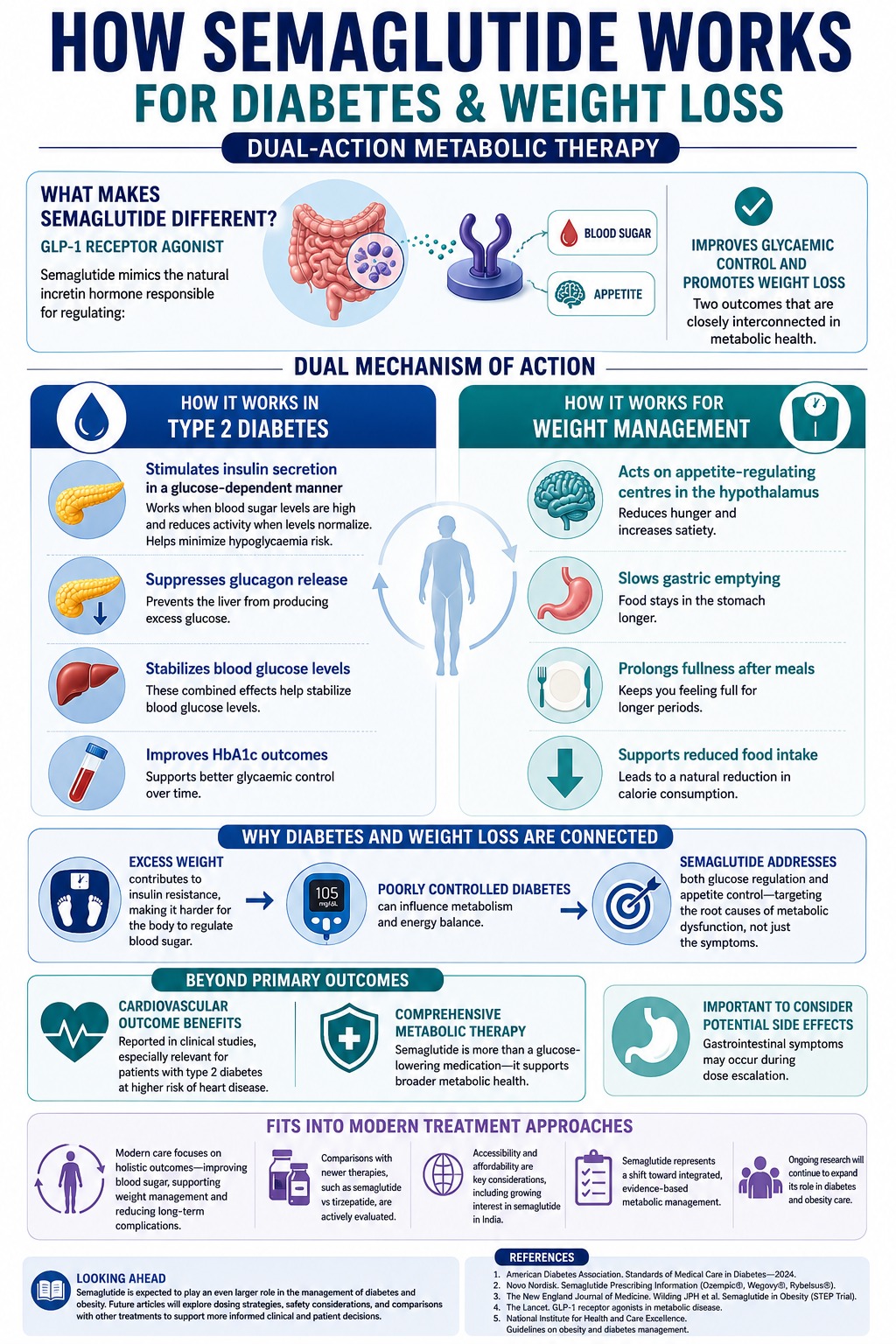
It belongs to the class of GLP-1 receptor agonists, which mimic the natural incretin hormone responsible for regulating blood sugar and appetite.¹
This dual-action effect allows semaglutide to simultaneously improve glycaemic control and promote weight loss—two outcomes that are closely interconnected in metabolic health.
How Semaglutide Works in Diabetes
In type 2 diabetes, the body either does not produce enough insulin or does not use it effectively. Semaglutide helps restore balance through several mechanisms. It stimulates insulin secretion in a glucose-dependent manner, meaning it works when blood sugar levels are high and reduces activity when levels normalize. This helps minimize the risk of hypoglycaemia.¹
At the same time, it suppresses glucagon release, preventing the liver from producing excess glucose.²
Together, these effects help stabilize blood glucose levels and improve HbA1c outcomes over time.
For a deeper scientific breakdown, you can explore the semaglutide mechanism of action in detail.
How Semaglutide Works for Weight Loss
While its role in diabetes is well established, semaglutide’s impact on weight loss has gained significant attention.
The drug acts on appetite-regulating centres in the brain, particularly in the hypothalamus, reducing hunger and increasing satiety.³
This leads to a natural reduction in food intake without forcing restrictive diets.
Additionally, semaglutide slows gastric emptying, meaning food stays in the stomach longer—prolonging the feeling of fullness after meals.²
These combined effects explain why semaglutide for weight loss has become a widely discussed and clinically validated approach in obesity management.
Why Diabetes and Weight Loss Are Connected
The relationship between diabetes and weight is deeply interconnected.
Excess weight contributes to insulin resistance, making it harder for the body to regulate blood sugar. At the same time, poorly controlled diabetes can influence metabolism and energy balance.
By addressing both glucose regulation and appetite control, semaglutide targets the root causes of metabolic dysfunction rather than just the symptoms.
This integrated approach is one of the reasons it is increasingly preferred over traditional therapies.
Clinical Benefits Beyond Blood Sugar and Weight
Beyond glycaemic control and weight reduction, semaglutide has shown additional benefits in clinical studies.
These include improvements in cardiovascular outcomes, making it particularly relevant for patients with type 2 diabetes who are at higher risk of heart disease.¹
Such benefits have positioned semaglutide as a comprehensive metabolic therapy rather than a single-purpose drug.
However, as with any treatment, it is important to consider potential semaglutide side effects, particularly gastrointestinal symptoms that may occur during dose escalation.
How It Fits Into Modern Treatment Approaches
Semaglutide reflects a broader shift in how metabolic diseases are treated today.
Rather than addressing isolated markers, modern therapies aim to deliver holistic outcomes—improving blood sugar, supporting weight management, and reducing long-term complications.
This has also led to increasing comparisons with newer therapies, particularly in discussions around semaglutide vs tirzepatide, where differences in mechanism and efficacy are actively evaluated.
Additionally, practical considerations such as accessibility and affordability are becoming more important, especially with growing interest in semaglutide in India.
Looking Ahead
As research continues to evolve, semaglutide is expected to play an even larger role in the management of diabetes and obesity.
In upcoming articles, we will explore dosing strategies, safety considerations, and comparisons with other treatment options to support more informed clinical and patient decisions.
References
- American Diabetes Association. Standards of Medical Care in Diabetes—2024.
- Novo Nordisk. Semaglutide Prescribing Information (Ozempic®, Wegovy®, Rybelsus®).
- The New England Journal of Medicine. Wilding JPH et al. Semaglutide in Obesity (STEP Trial).
- The Lancet. GLP-1 receptor agonists in metabolic disease.
- National Institute for Health and Care Excellence. Guidelines on obesity and diabetes management.