

Semaglutide Weight Loss Dosage Chart: Complete Guide
As semaglutide continues to gain attention for its effectiveness in weight management, one of the most commonly asked questions is around dosing—how much to take, how often, and how the dosage is increased over time.
Unlike many medications, semaglutide is not started at its full therapeutic dose. Instead, it follows a gradual escalation approach designed to improve tolerability and minimize side effects.
If you’re new to the therapy, it may help to first understand what is semaglutide and how semaglutide for weight loss works before diving into dosing specifics.
Why Is Semaglutide Dosing Gradual?
Semaglutide acts on both the gastrointestinal system and appetite centres in the brain. Because of this, starting at a high dose can lead to increased gastrointestinal side effects such as nausea and vomiting.
A step-wise titration allows the body to adapt to the medication, improving patient comfort and long-term adherence.¹
This approach is a key reason behind the drug’s success in sustained weight management.
Semaglutide Weight Loss Dosage Chart
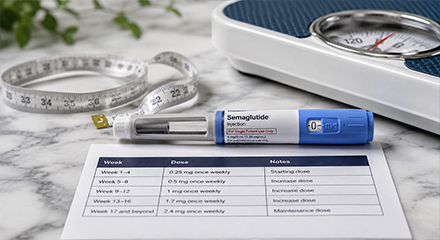
Below is the commonly recommended dosing schedule for semaglutide (injectable form) in weight management:
0.25 mg→0.5 mg→1.0 mg→1.7 mg→2.4 mg
The dosing typically progresses as follows:
- Week 1–4: 0.25 mg once weekly (initiation phase)
- Week 5–8: 0.5 mg once weekly
- Week 9–12: 1.0 mg once weekly
- Week 13–16: 1.7 mg once weekly
- Week 17 onwards: 2.4 mg once weekly (maintenance dose)¹
This gradual increase helps optimize both efficacy and tolerability.
How the Dosage Supports Weight Loss
The titration schedule is not just about reducing side effects—it also aligns with how semaglutide works in the body.
As explained in how semaglutide works for diabetes and weight loss, the drug progressively enhances satiety and reduces appetite.
Higher doses are associated with greater weight loss outcomes, as they produce stronger effects on appetite regulation and energy intake.²
This is why reaching and maintaining the therapeutic dose is important for optimal results.
Can the Dosage Be Adjusted?
In clinical practice, dosing may be individualized based on patient response and tolerability.
Some patients may require a slower titration schedule if they experience side effects. Others may remain on a lower maintenance dose if sufficient weight loss is achieved.
For healthcare professionals, tailoring the dose is an important part of patient-centric care, ensuring both effectiveness and adherence.
Oral vs Injectable Dosage Differences
While the chart above applies to injectable semaglutide, oral formulations follow a different dosing structure.
Oral semaglutide is taken daily and requires specific conditions for absorption, as discussed in semaglutide injection vs oral comparisons.
Understanding these differences is essential when choosing the most suitable formulation for a patient.
Common Mistakes to Avoid
One of the most common issues with semaglutide dosing is attempting to increase the dose too quickly.
Skipping titration steps or increasing dosage prematurely can significantly increase the risk of semaglutide side effects, particularly gastrointestinal discomfort.
Consistency is equally important. Missing doses or irregular administration can impact both effectiveness and tolerability.
Safety Considerations
While semaglutide has a strong safety profile, dosing must always be guided by a healthcare professional.
Patients should be monitored for side effects, especially during dose escalation phases.¹
It is also important to consider contraindications and patient-specific factors before initiating therapy.
How It Fits Into the Treatment Landscape
The structured dosing approach of semaglutide reflects its role as a long-term therapy rather than a short-term intervention.
Its ability to deliver sustained weight loss, when used correctly, has made it a key part of modern obesity management.
Additionally, practical considerations such as cost and accessibility—especially regarding semaglutide in India—play an important role in treatment decisions.
Looking Ahead
Understanding the dosing schedule is a crucial step in maximizing the benefits of semaglutide.
In upcoming articles, we will explore safety, long-term use, and real-world considerations to further support informed decision-making. For more clinically relevant insights and expert-led discussions, explore our resource hub—designed to simplify evolving treatment pathways.
References
- Novo Nordisk.
Wegovy® Prescribing Information. - The New England Journal of Medicine.
Wilding JPH et al. Semaglutide and Weight Loss Outcomes (STEP Trials). - American Diabetes Association.
Standards of Medical Care in Diabetes—2024. - National Institute for Health and Care Excellence.
Guidelines on obesity pharmacotherapy.