Searching...
Can't find what you're looking for. Try different keywords.


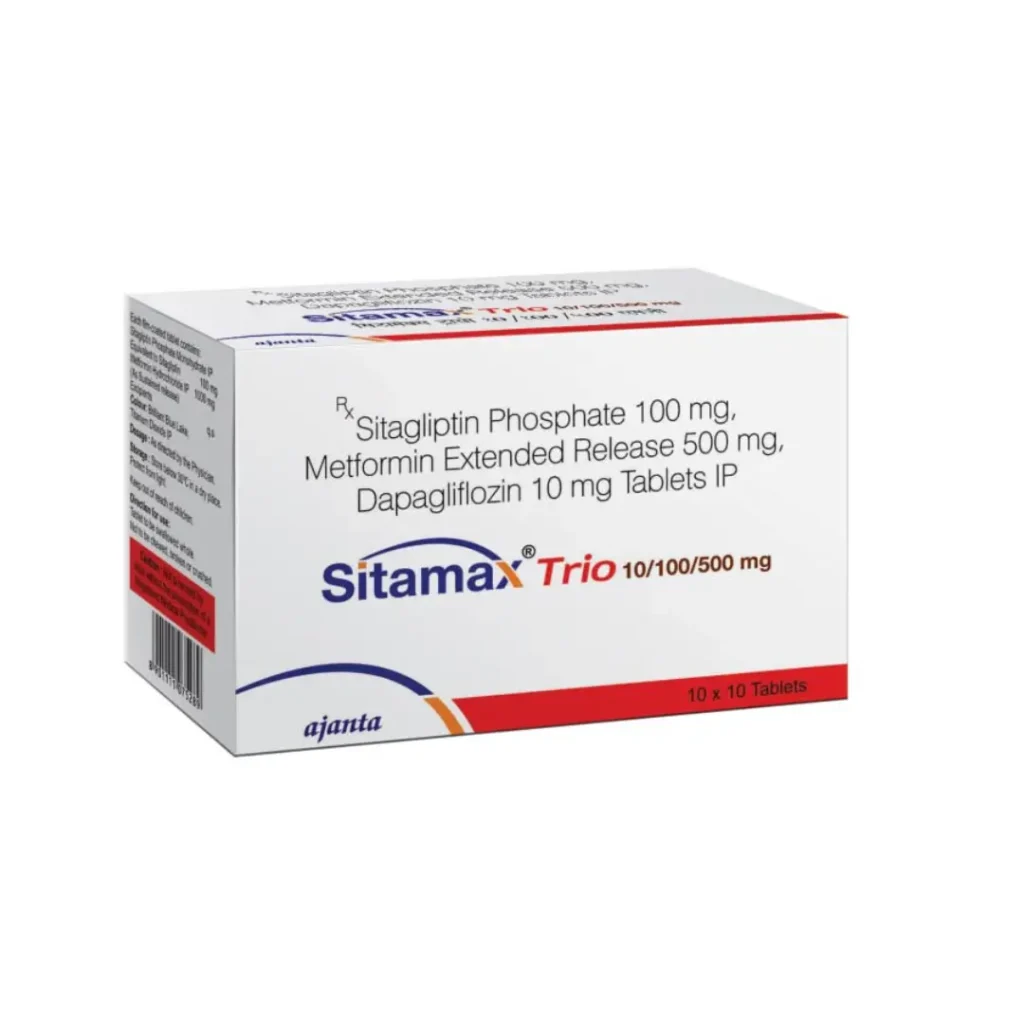

Sitagliptin Phosphate Monohydrate IP Eq. to Sitagliptin
50/50/100 mg
Metformin Hydrochloride IP
500/1000/1000mg (As sustained release)
Dapagliflozin Propanediol Monohydrate Eq. to Dapagliflozin
5/5/10 mg
Orally once daily in the morning with food. •Individualize the dosage of on the basis of the patient’s current regimen, effectiveness, and tolerability. Dosing may be adjusted based on effectiveness and tolerability while not exceeding the maximum recommended daily dose of 100 mg of sitagliptin, 10 mg dapagliflozin and 2,000 mg metformin hydrochloride (HCl) extended release.
There are no data from the use of Sitagliptin, dapagliflozin & Metformin HCL in pregnant women. Studies in animals have shown reproductive toxicity at high doses of sitagliptin. A limited amount of data suggests the use of metformin in pregnant women is not associated with an increased risk of congenital malformations. Animal studies with metformin do not indicate harmful effects with respect to pregnancy, embryonic or foetal development, parturition or postnatal development. Based on animal data showing adverse renal effects, this Tablet is not recommended during the second and third trimesters of pregnancy. No studies in lactating animals have been conducted with the combined components of Sitagliptin, dapagliflozin & Metformin HCL. In studies performed with the individual components, both sitagliptin and metformin are secreted in the milk of lactating rats. There is no information regarding the presence of dapagliflozin in human milk, the effects on the breastfed infant, or the effects on milk production. It is not known whether sitagliptin is excreted in human milk. Because many drugs are excreted in human milk, caution should be exercised when Tablet is administered to a nursing woman. Safety and effectiveness of Sitagliptin, Metformin HCL & Dapagliflozin in pediatric patients under 18 years have not been established. Renal Impairment Use of dapagliflozin is not recommended when eGFR is less than 45 mL/min/1.73 m2 and is contraindicated in patients with severe renal impairment (eGFR less than 30 mL/min/1.73 m2) or ESRD.
Sitamax Trio is a combination of sitagliptin, a dipeptidyl peptidase-4 (DPP-4) inhibitor, Dapagliflozin an inhibitor of Sodium-glucose cotransporter 2 (SGLT2), and metformin hydrochloride (HCl), a biguanide and This tablet is indicated as an adjunct to diet and exercise to improve glycemic control in adult patients with type 2 Diabetes Mellitus(T2DM).
contraindicated in patients with: • Severe renal impairment (eGFR below 30 mL/min/1.73 m2), end-stage renal disease or patients on dialysis •Acute or chronic metabolic acidosis, including diabetic ketoacidosis with or without coma. Diabetic ketoacidosis should be treated with insulin. •History of a serious hypersensitivity reaction to sitagliptin, dapagliflozin or metformin such as anaphylaxis or angioedema.
The most common adverse reactions reported with this combination were hypoglycemia, diarrhea, and upper respiratory tract infection, and headache, Genital mycotic infection, nasopharyngitis, urinary tract infection, Nausea, vomiting, and flatulence, influenza, cough & dizziness.
Sitagliptin should not be used in patients with type 1 diabetes or for the treatment of diabetic ketoacidosis. Acute pancreatitis Use of DPP-4 inhibitors has been associated with a risk of developing acute pancreatitis. Patients should be informed of the characteristic symptom of acute pancreatitis: persistent, severe abdominal pain. Resolution of pancreatitis has been observed after discontinuation of sitagliptin (with or without supportive treatment), Post-marketing reports of serious hypersensitivity reactions in patients treated with sitagliptin have been reported. These reactions include anaphylaxis, angioedema, and exfoliative skin conditions including Stevens-Johnson syndrome Due to its mechanism of action, dapagliflozin increases diuresis, which may lead to the modest decrease in blood pressure, observed in clinical studies. It may be more pronounced in patients with very high blood glucose concentrations. Caution should be exercised in patients for whom a dapagliflozin-induced drop in blood pressure could pose a risk, such as patients on anti-hypertensive therapy with a history of hypotension or elderly patients. In case of intercurrent conditions that may lead to volume depletion (e.g. gastrointestinal illness), careful monitoring of volume status (e.g. physical examination, blood pressure measurements, laboratory tests including haematocrit and electrolytes) is recommended. Temporary interruption of treatment with dapagliflozin is recommended for patients who develop volume depletion until the depletion is corrected.Urinary glucose excretion may be associated with an increased risk of urinary tract infection; therefore, temporary interruption of dapagliflozin should be considered when treating pyelonephritis or urosepsis
Carbonic Anhydrase Inhibitors-Topiramate or other carbonic anhydrase inhibitors (e.g., zonisamide, acetazolamide or dichlorphenamide) frequently causes a decrease in serum bicarbonate and induce non-anion gap, hyperchloremic metabolic acidosis. Concomitant use of these drugs with this combination may increase the risk for lactic acidosis.Intervention-Consider more frequent monitoring of these patients. Concomitant use of drugs that interfere with common renal tubular transport systems involved in the renal elimination of metformin (e.g., organic cationic transporter-2 [OCT2]/multidrug and toxin extrusion [MATE] inhibitors, such as ranolazine, vandetanib, dolutegravir, and cimetidine) could increase systemic exposure to metformin and may increase the risk for lactic acidosis.Intervention-Consider the benefits and risks of concomitant use. Alcohol is known to potentiate the effect of metformin on lactate metabolism.Intervention-Warn patients against excessive alcohol intake while receiving this combination. The risk of hypoglycemia may be increased when this combination is used concomitantly with insulin or insulin secretagogues (e.g., sulfonylurea) Intervention-Concomitant use may require lower doses of insulin or the insulin secretagogue to reduce the risk of hypoglycemia. Certain drugs tend to produce hyperglycemia and may lead to loss of glycemic control. These medications include thiazides and other diuretics, corticosteroids, phenothiazines, thyroid products, estrogens, oral contraceptives, phenytoin, nicotinic acid, sympathomimetics, calcium channel blocking drugs, and isoniazid.Intervention-When such drugs are administered to a patient receiving this combination, observe the patient closely for loss of blood glucose control. When such drugs are withdrawn from a patient receiving this combination, observe the patient closely for hypoglycemia. Concomitant use of an SGLT2 inhibitor with lithium may decrease serum lithium concentrations.Intervention-Monitor serum lithium concentration more frequently during this combination initiation and dosage changes. SGLT2 inhibitors increase urinary glucose excretion and will lead to positive urine glucose tests.Intervention- Monitoring glycemic control with urine glucose tests is not recommended in patients taking SGLT2 inhibitors. Use alternative methods to monitor glycemic control.
Sitagliptin-Sitagliptin is a DPP-4 inhibitor, which is believed to exert its actions in patients with type 2 diabetes by slowing the inactivation of incretin hormones. Concentrations of the active intact hormones are increased by sitagliptin, thereby increasing and prolonging the action of these hormones. Incretin hormones, including glucagon-like peptide-1 (GLP-1) and glucose-dependent insulinotropic polypeptide (GIP), are released by the intestine throughout the day, and levels are increased in response to a meal. These hormones are rapidly inactivated by the enzyme DPP-4. The incretins are part of an endogenous system involved in the physiologic regulation of glucose homeostasis. When blood glucose concentrations are normal or elevated, GLP-1 and GIP increase insulin synthesis and release from pancreatic beta cells by intracellular signaling pathways involving cyclic AMP. GLP-1 also lowers glucagon secretion from pancreatic alpha cells, leading to reduced hepatic glucose production. By increasing and prolonging active incretin levels, sitagliptin increases insulin release and decreases glucagon levels in the circulation in a glucose-dependent manner. Sitagliptin demonstrates selectivity for DPP-4 and does not inhibit DPP-8 or DPP-9 activity in vitro at concentrations approximating those from therapeutic doses. Metformin hydrochloride-Metformin is an antihyperglycemic agent which improves glucose tolerance in patients with type 2 diabetes, lowering both basal and postprandial plasma glucose. Its pharmacologic mechanisms of action are different from other classes of oral antihyperglycemic agents. Metformin decreases hepatic glucose production, decreases intestinal absorption of glucose, and improves insulin sensitivity by increasing peripheral glucose uptake and utilization. Unlike sulfonylureas, metformin does not produce hypoglycemia in either patients with type 2 diabetes or normal subjects (except in special circumstances) and does not cause hyperinsulinemia. With metformin therapy, insulin secretion remains unchanged while fasting insulin levels and day-long plasma insulin response may actually decrease. Dapagliflozin- Sodium-glucose cotransporter 2 (SGLT2), expressed in the proximal renal tubules, is responsible for the majority of the reabsorption of filtered glucose from the tubular lumen. Dapagliflozin is an inhibitor of SGLT2. By inhibiting SGLT2, dapagliflozin reduces reabsorption of filtered glucose and lowers the renal threshold for glucose, and thereby increases urinary glucose excretion. Dapagliflozin also reduces sodium reabsorption and increases the delivery of sodium to the distal tubule. This may influence several physiological functions including, but not restricted to, lowering both pre-and afterload of the heart and downregulation of sympathetic activity.
The apparent terminal t1/2 following a 100-mg oral dose of sitagliptin was approximately 12.4 hours Following oral administration of metformin, approximately 90% of the absorbed drug is eliminated via the renal route within the first 24 hours, with a plasma elimination half-life of approximately 6.2 hours. In blood, the elimination half-life is approximately 17.6 hours,The mean plasma terminal half-life (t½) for dapagliflozin is approximately 12.9 hours following a single oral dose of dapagliflozin 10 mg.
Absorption: The absolute bioavailability of sitagliptin is approximately 87%. Co-administration of a high-fat meal with sitagliptin had no effect on the pharmacokinetics of sitagliptin.The absolute bioavailability of a metformin hydrochloride 500-mg tablet given under fasting conditions is approximately 50-60%. Studies using single oral doses of metformin hydrochloride tablets 500 mg to 1500 mg, and 850 mg to 2550 mg, indicate that there is a lack of dose proportionality with increasing doses, which is due to decreased absorption rather than an alteration in elimination. Food decreases the extent of and slightly delays the absorption of metformin, as shown by approximately a 40% lower mean peak plasma concentration (Cmax), a 25% lower area under the plasma concentration versus time curve (AUC), and a 35-minute prolongation of time to peak plasma concentration (Tmax) following administration of a single 850-mg tablet of metformin with food, compared to the same tablet strength administered fasting. The clinical relevance of these decreases is unknown.Oral administration of dapagliflozin, the maximum plasma concentration (Cmax) is usually attained within 2 hours under fasting state. The Cmax and AUC values increase dose proportionally with increase in dapagliflozin dose in the therapeutic dose range. The absolute oral bioavailability of dapagliflozin following the administration of a 10 mg dose is 78%. Administration of dapagliflozin with a high-fat meal decreases its Cmax by up to 50% and prolongs Tmax by approximately 1 hour, but does not alter AUC as compared with the fasted state. These changes are not considered to be clinically meaningful and dapagliflozin can be administered with or without food. Bioavailability: The absolute bioavailability of sitagliptin is approximately 87%. The absolute bioavailability of a metformin hydrochloride 500-mg tablet given under fasting conditions is approximately 50-60%. The absolute oral bioavailability of dapagliflozin following the administration of a 10 mg dose is 78%. Metabolism: Sitagliptin Approximately 79% of sitagliptin is excreted unchanged in the urine with metabolism being a minor pathway of elimination. Following a sitagliptin oral dose, approximately 16% of the radioactivity was excreted as metabolites of sitagliptin. Six metabolites were detected at trace levels and are not expected to contribute to the plasma DPP-4 inhibitory activity of sitagliptin. In vitro studies indicated that the primary enzyme responsible for the limited metabolism of sitagliptin was CYP3A4, with contribution from CYP2C8. Metformin hydrochloride Intravenous single-dose studies in normal subjects demonstrate that metformin is excreted unchanged in the urine and does not undergo hepatic metabolism (no metabolites have been identified in humans) nor biliary excretion. Dapagliflozin The metabolism of dapagliflozin is primarily mediated by UGT1A9; CYP-mediated metabolism is a minor clearance pathway in humans. Dapagliflozin is extensively metabolized, primarily to yield dapagliflozin 3-O-glucuronide, which is an inactive metabolite. Dapagliflozin 3-Oglucuronide accounted for 61% of a 50 mg dapagliflozin dose and is the predominant drug-related component in human plasma. Excretion: Sitagliptin Following administration of an oral sitagliptin dose to healthy subjects, approximately 100% of the administered radioactivity was eliminated in feces (13%) or urine (87%) within one week of dosing. The apparent terminal t1/2 following a 100-mg oral dose of sitagliptin was approximately 12.4 hours and renal clearance was approximately 350 mL/min. Elimination of sitagliptin occurs primarily via renal excretion and involves active tubular secretion. Sitagliptin is a substrate for human organic anion transporter-3 (hOAT-3), which may be involved in the renal elimination of sitagliptin. The clinical relevance of hOAT-3 in sitagliptin transport has not been established. Sitagliptin is also a substrate of p-glycoprotein, which may also be involved in mediating the renal elimination of sitagliptin. However, cyclosporine, a p-glycoprotein inhibitor, did not reduce the renal clearance of sitagliptin. Metformin hydrochloride Renal clearance is approximately 3.5 times greater than creatinine clearance, which indicates that tubular secretion is the major route of metformin elimination. Following oral administration, approximately 90% of the absorbed drug is eliminated via the renal route within the first 24 hours, with a plasma elimination half-life of approximately 6.2 hours. In blood, the elimination half-life is approximately 17.6 hours, suggesting that the erythrocyte mass may be a compartment of distribution. Dapagliflozin Dapagliflozin and related metabolites are primarily eliminated via the renal pathway. Following a single 50 mg dose ofdapagliflozin, 75% and 21% total radioactivity is excreted in urine and feces, respectively. In urine, less than 2% of the dose is excreted as parent drug. In feces, approximately 15%of the dose is excreted as parent drug. The mean plasma terminal half-life (t½) for dapagliflozin is approximately 12.9 hours following a single oral dose of dapagliflozin 10 mg.
Subscribe to our newsletter and be the first to receive insights, updates, and expert tips on optimizing your financial management.