Searching...
Can't find what you're looking for. Try different keywords.


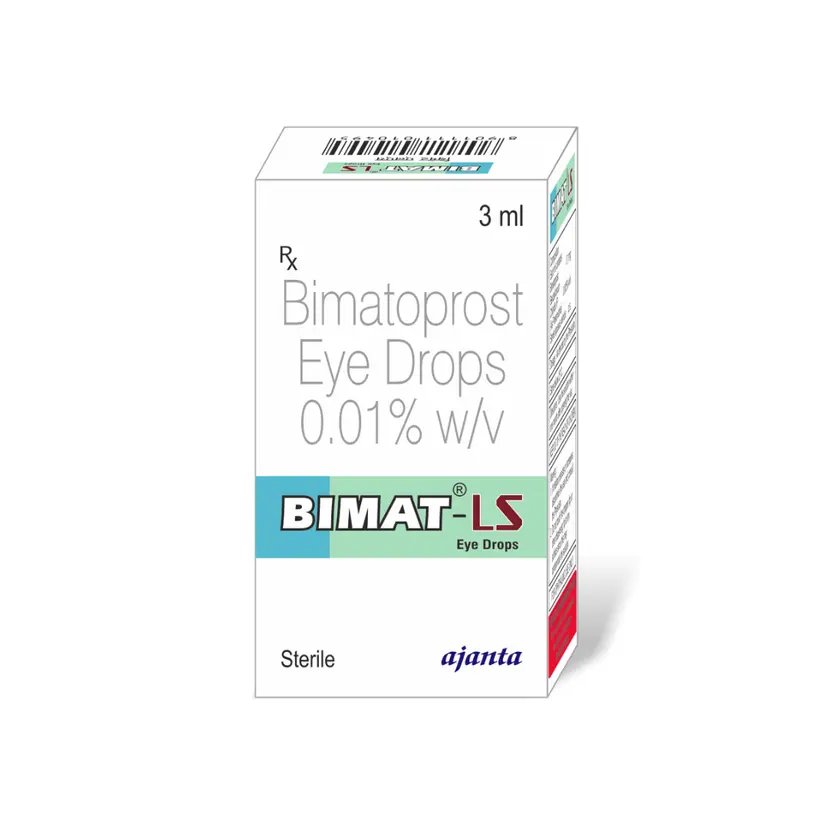

Bimatoprost
0.01 %
Timolol
0.5 %
Dosage Form & Strength
One drop in the affected eye(s) once daily in the evening
Bimat LS TM is indicated for the treatment of Glaucoma & ocular hypertension
Bimatoprost In clinical trials, the most frequent events associated with the use of Bimatoprostophthalmic solution 0.03% occurring in approximately 15% to 45% of patients, in descending order of incidence, included conjunctival hyperemia, growth of eyelashes, and ocular pruritus. Approximately 3% of patients discontinued therapy due to conjunctival hyperemia. Ocular adverse events occurring in approximately 3 to 10% of patients, in descending order of incidence, included ocular dryness, visual disturbance, ocular burning, foreign body sensation, eye pain, pigmentation of the periocular skin, blepharitis, cataract, superficial punctate keratitis, eyelid erythema, ocular irritation, and eyelash darkening. The following ocular adverse events reported in approximately 1 to 3% of patients, in descending order of incidence, included: eye discharge, tearing, photophobia, allergic conjunctivitis, asthenopia, increases in iris pigmentation, and conjunctival edema. In less than1% of patients, intraocular inflammation was reported as iritis. Systemic adverse events reported in approximately 10% of patients were infections (primarily colds and upper respiratory tract infections). The following systemic adverse events reported in approximately 1 to 5% of patients, in descending order of incidence, included headaches, abnormal liver function tests, asthenia and hirsutism. Timolol In clinical trials with timolol maleate ophthalmic solutions, common adverse effects aobserved were transient blurred vision upon instillation of the drop, burning and stinging upon instillation, Blepharitis, conjunctivitis, crusting, discomfort, foreign body sensation, hyperemia, pruritus and tearing.
Timolol: Some products that may interact with this drug include: oral beta-blockers (such as propranolol), clonidine, certain antidepressants (including SSRIs such as fluoxetine), digoxin, epinephrine, fingolimod, methyldopa, quinidine
Bimatoprost, a prostaglandin analog, is a synthetic structural analog of prostaglandin with ocular hypotensive activity. It selectively mimics the effects of naturally occurring substances, prostamides. Bimatoprost is believed to lower intraocular pressure (IOP) in humans by increasing outflow of aqueous humor through both the trabecular meshwork and uveoscleral routes. Elevated IOP presents a major risk factor for glaucomatous field loss. The higher the level of IOP, the greater the likelihood of optic nerve damage and visual field loss.
The half life of Bimatoprost in Bimat LS TM is 45 minutes, half life of Timolol in Bimat LS TM is not applicable since the plasma concentration of Timolol is negligible
Bimatoprost Absorption Bimatoprost penetrates the human cornea and sclera well in vitro. After ocular administration in adults, the systemic exposure of bimatoprost is very low with no accumulation over time. After once daily ocular administration of one drop of 0.3 mg/ml bimatoprost to both eyes for two weeks, blood concentrations peaked within 10 minutes after dosing and declined to below the lower limit of detection (0.025 ng/ml) within 1.5 hours after dosing. Mean Cmax and AUC 0-24hrs values were similar on days 7 and 14 at approximately 0.08 ng/ml and 0.09 ng•hr/ml respectively, indicating that a steady bimatoprost concentration was reached during the first week of ocular dosing. Distribution Bimatoprost is moderately distributed into body tissues and the systemic volume of distribution in humans at steady-state was 0.67 l/kg. In human blood, bimatoprost resides mainly in the plasma. The plasma protein binding of bimatoprost is approximately 88 %. Biotransformation Bimatoprost is the major circulating species in the blood once it reaches the systemic circulation following ocular dosing. Bimatoprost then undergoes oxidation, N-deethylation and glucuronidation to form a diverse variety of metabolites. Elimination Bimatoprost is eliminated primarily by renal excretion, up to 67 % of an intravenous dose administered to healthy adult volunteers was excreted in the urine, 25 % of the dose was excreted via the faeces. The elimination half-life, determined after intravenous administration, was approximately 45 minutes; the total blood clearance was 1.5 l/hr/kg. Timolol Absorption The onset of reduction in intra-ocular pressure can be detected within one-half hour after a single dose. The maximum effect occurs in one or two hours; significant lowering of IOP can be maintained for as long as 24 hours with a single dose. In some cases, a decreased therapeutic effect has been observed in long-term treatment.
Pregnancy: There are no adequate data from the use of the bimatoprost / timolol fixed combination in pregnant women. Bimatoprost + Timolol single-dose should not be used during pregnancy unless clearly necessary. To reduce the systemic absorption Lactation: Timolol Beta-blockers are excreted in breast milk. However, at therapeutic doses of timolol in eye drops it is not likely that sufficient amounts would be present in breast milk to produce clinical symptoms of beta-blockade in the infant. Bimatoprost It is not known if bimatoprost is excreted in human breast milk but it is excreted in the milk of the lactating rat. (Bimatoprost + Timolol ) single-dose should not be used by breast-feeding women. Renal and hepatic impairment (Bimatoprost+ Timolol) single-dose has not been studied in patients with hepatic or renal impairment. Therefore caution should be used in treating such patients. Paediatric population The safety and efficacy of (Bimatoprost+ Timolol) single-dose in children aged less than 18 years has not been established. No data are available.
Renal and hepatic impairment Bimat LS TM single-dose has not been studied in patients with hepatic or renal impairment. Therefore caution should be used in treating such patients.
Hepatic In patients with a history of mild liver disease or abnormal alanine aminotransferase (ALT), aspartate aminotransferase (AST) and/or bilirubin at baseline, bimatoprost eye drops had no adverse reactions on liver function over 24 months. There are no known adverse reactions of ocular timolol on liver function.
Bimatoprost: Pediatric Use Use in pediatric patients below the age of 16 years is not recommended because of potential safety concerns related to increased pigmentation following long-term chronic use. Pediatric Use Bimat-T is contraindicated in children under the age of 2 years. During post-marketing surveillance, apnea, bradycardia, coma, hypotension, hypothermia, hypotonia, lethargy, pallor, respiratory depression, and somnolence have been reported in infants receiving brimonidine. The safety and effectiveness of brimonidine tartrate and timolol maleate have not been studied in children below the age of 2 years. The safety and effectiveness of Bimat-T have been established in the age groups 2 – 16 years of age. Use of Bimat-T in these age groups is supported by evidence from adequate and well-controlled studies of Bimat-T in adults with additional data from a study of the concomitant use of brimonidine tartrate ophthalmic solution 0.2% and timolol maleate ophthalmic solution in pediatric glaucoma patients (ages 2 to 7 years).
Geriatric Use No overall clinical differences in safety or effectiveness have been observed between elderly and other adult patients.
Subscribe to our newsletter and be the first to receive insights, updates, and expert tips on optimizing your financial management.