Searching...
Can't find what you're looking for. Try different keywords.


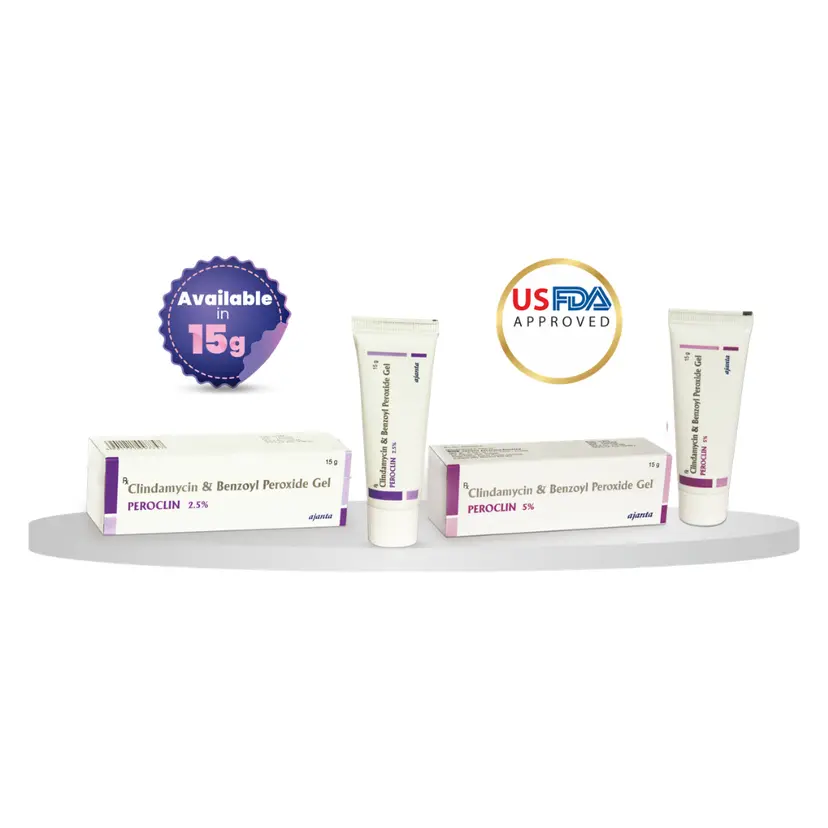

Clindamycin Phosphate
1%
Benzoyl peroxide
2.5/5%
Pregnancy: Teratogenic Effects: Pregnancy Category C: Animal reproductive/developmental toxicity studies have not been conducted with the gel or benzoyl peroxide Developmental toxicity studies performed in rats and mice using oral doses of clindamycin up to 600 mg/kg/day (240 and 120 times amount of clindamycin in the highest recommended adult human dose based on mg/m2, respectively) or subcutaneous doses of clindamycin up to 250 mg/kg/day (100 and 50 times the amount of clindamycin in the highest recommended adult human dose based on mg/m2, respectively) revealed no evidence of teratogenicity There are no well-controlled trials in pregnant women treated with the gel It also is not known whether the gel can cause fetal harm when administered to a pregnant woman Nursing Women: It is not known whether the gel is excreted in human milk after topical application However, orally and parenterally administered clindamycin has been reported to appear in breast milk Because of the potential for serious adverse reactions in nursing infants, a decision should be made whether to discontinue nursing or to discontinue the drug, taking into account the importance of the drug to the mother Pediatric Use: Safety and effectiveness of this product in pediatric patients below the age of 12 have not been established
Peroclin is indicated for the treatment of Acne
The gel is contraindicated in those individuals who have shown hypersensitivity to any of its components or to lincomycin It is also contraindicated in those having a history of regional enteritis, ulcerative colitis, or antibiotic-associated colitis
The following selected adverse reactions occurred in less than 0.2% of patients treated with clindamycin/Benzoyl Peroxide: application site pain (0.1%); application site exfoliation (0.1%); and application site irritation.
Erythromycin: Should not be used in combination with topical or oral erythromycin-containing products due to its clindamycin component. In vitro studies have shown antagonism between erythromycin and clindamycin. The clinical significance of this in vitro antagonism is not known Neuromuscular Blocking Agents: Clindamycin has been shown to have neuromuscular blocking properties that may enhance the action of other neuromuscular blocking agents Therefore, the gel should be used with caution in patients receiving such agents
Clindamycin: Clindamycin is a lincosamide antibacteria Clindamycin binds to the 50S ribosomal subunits of susceptible bacteria and prevents elongation of peptide chains by interfering with peptidyl transfer, thereby suppressing bacterial protein synthesis Benzoyl Peroxide: Benzoyl peroxide is an oxidizing agent with bacteriocidal and keratolytic effects but the precise mechanism of action is unknown Clindamycin and benzoyl peroxide individually have been shown to have in vitro activity against Propionibacterium acnes, an organism which has been associated with acne vulgaris; however, the clinical significance of this activity against P. acnes is not known
An in vivo bioavailability study has not been conducted hence the the half life of Clindamycin & BPO in Peroclin is not applicable
Pregnancy: Teratogenic Effects: Pregnancy Category C: Animal reproductive/developmental toxicity studies have not been conducted with the gel or benzoyl peroxide Developmental toxicity studies performed in rats and mice using oral doses of clindamycin up to 600 mg/kg/day (240 and 120 times amount of clindamycin in the highest recommended adult human dose based on mg/m2, respectively) or subcutaneous doses of clindamycin up to 250 mg/kg/day (100 and 50 times the amount of clindamycin in the highest recommended adult human dose based on mg/m2, respectively) revealed no evidence of teratogenicity There are no well-controlled trials in pregnant women treated with the gel It also is not known whether the gel can cause fetal harm when administered to a pregnant woman Nursing Women: It is not known whether the gel is excreted in human milk after topical application. However, orally and parenterally administered clindamycin has been reported to appear in breast milk Because of the potential for serious adverse reactions in nursing infants, a decision should be made whether to discontinue nursing or to discontinue the drug, taking into account the importance of the drug to the mother Pregnancy and Lactation: There are no adequate data from the use of Clindamycin plus Benzoyl peroxide gel in pregnant women. Animal reproductive/developmental studies have not been conducted with this combination Gel or benzoyl peroxide. Therefore, this gel should only be prescribed to pregnant women after careful risk/benefit assessment by the physician in charge. Use of Clindamycin plus Benzoyl peroxide gel has not been studied during breastfeeding. Percutaneous absorption of clindamycin and benzoyl peroxide is low however; it is not known whether clindamycin or benzoyl peroxide is excreted in human milk following the use of Clindamycin plus Benzoyl peroxide gel. Oral and parenteral administration of clindamycin has been reported to result in the appearance of clindamycin in breast milk. For this reason, Clindamycin plus Benzoyl peroxide gel should be used during lactation only if the expected benefit justifies the potential risk to the infant. To avoid accidental ingestion by the infant if used during lactation, Clindamycin plus Benzoyl peroxide gel should not be applied to the breast area.
Pediatric Use: Safety and effectiveness of this product in pediatric patients below the age of 12 have not been established
Subscribe to our newsletter and be the first to receive insights, updates, and expert tips on optimizing your financial management.