

Protecting Your Skin During Pregnancy: Safe & Effective Photoprotection Strategies
Pregnancy brings so many changes—not only in your body and emotions, but also in your skin. Both pregnancy and skin care go hand in hand, especially when it comes to skin protection and managing common concerns like melasma (patchy pigmentation), linea nigra, or flare-ups of acne and rosacea during this special time[1]. Understanding the best photoprotection strategies during pregnancy is crucial for every mom-to-be who wants to maintain healthy, glowing skin while ensuring their baby’s safety.
Why Photoprotection matters in Pregnancy?
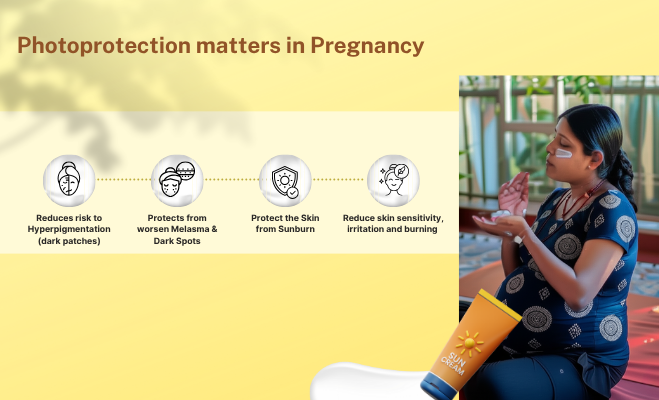
During pregnancy, hormonal changes boost melanin production and intensify skin responses to sunlight, resulting in:
- Greater risk of hyperpigmentation (dark patches), especially on the face.
- Exacerbation of melasma and other pigment disorders due to sunlight and visible light.
- Enhanced skin sensitivity, causing burning and irritation[1].
Being outdoors, especially in regions with high UV index or if you have a darker skin tone, raises the risk of pigmentation even further.
Best Sun Protection Strategies for Pregnant Women
1. Use Physical Barriers for maximum protection:
- Wide-brimmed hats
- Sun-protective clothing- UPF rated if possible
- Seek shade during peak hours to avoid UV exposure.
2. Choose Pregnancy-Safe Sunscreen:
- Broad-spectrum with SPF 30 or higher is essential for blocking UVA, UVB, and high-energy visible light (HEVL)[1].
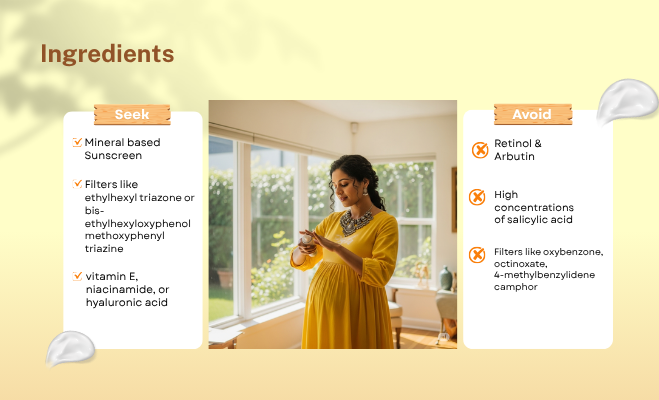
- Mineral-based sunscreens containing zinc oxide or titanium dioxide are the safest as they act as physical barrier and are minimally absorbed[1].
- Tinted sunscreens add another layer of defense against visible light and can help camouflage pigmentation, especially for darker skin tones
3. Safe & Effective Ingredients:
- Prioritize mineral sunscreens for daily use.
- When extra cosmetic appeal is needed, sunscreens may combine certain “safe” organic filters—like ethylhexyl triazone or bis-ethylhexyloxyphenol methoxyphenyl triazine—which show low systemic absorption and good safety profiles[1].
4. Ingredients to Avoid During Pregnancy:
- Avoid filters like oxybenzone, octinoxate (ethylhexyl methoxycinnamate) and 4-methylbenzylidene camphor, due to possible hormone-disrupting effects[1].
- Do not use products with retinoids, arbutin, or high concentrations of salicylic acid, whether topical or oral
5. Supportive Ingredients During Pregnancy:
Some vitamin E, niacinamide or hyaluronic acid soothe and protect the skin during pregnancy.
Folic Acid and Vitamin D: The Sunlight Dilemma
- Excessive exposure to ultraviolet rays can decrease folic acid levels,hencesunbathing is discouraged as folate is crucial for the baby’s brain and spinal cord development[1].
- Conversely, some sun is needed for vitamin D synthesis. Experts suggest that most women achieve healthy vitamin D levels with brief sun exposure or physician-recommended supplements. .
Adherence: Choose What Feels Good (and Looks Good)
For sunscreen to be effective, it must be applied regularly. However, many pregnant women avoid using it due to thick, sticky textures or white cast. To make daily use easier, choose a sunscreen that offers a light, non-greasy, matte finish and blends well with your skin tone[1].
Addressing Other Skin Concerns:
Conditions such as itchy rashes or autoimmune flares (e.g. atopic eruption), although not directly caused by the sun, can worsen if exposed to heat and sun rays. Sunscreen and other photoprotection methods help prevent these symptoms from getting worse, and reduce the risk of post-inflammatory pigmentation marks developing[1].
When To TalkTo Your Doctor
Consult your dermatologist or OBGYN if you have:
- Concerns about persistent pigmentation or skin issues
- Difficulty choosing a safe sunscreen or pregnancy-safe ingredients
- Allergic reactions or skin irritation to any sun care product
Always spot-test new products and check the ingredient list for agents inappropriate in pregnancy.
Your dermatologist or OBGYN can recommend a sunscreen that meets both your safety needs and cosmetic preferences. Always spot-test any new product and check for ingredient lists free from retinoids or potential hormonal disruptors.
Key Takeaways: Pregnancy & Sun Protection
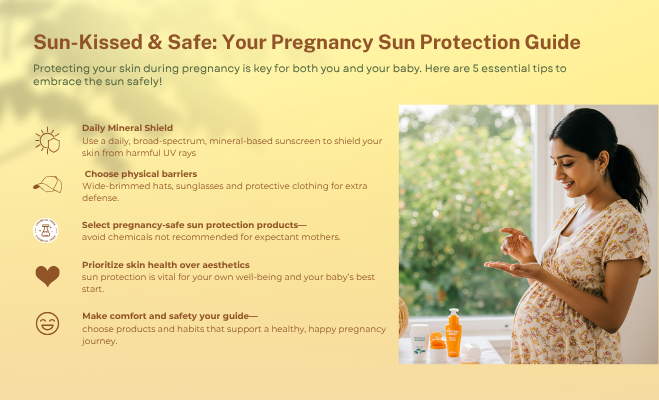
Daily, broad-spectrum, mineral-based sunscreen, physical barriers and the right product selection are the cornerstones of maintaining skin health during pregnancy. Pregnancy-safe photoprotection is not just about beauty—it’s about health, comfort, and supporting the best start for your baby[1].
Reference:
[1] Frontiers | Photoprotection in pregnancy: addressing safety concerns and optimizing skin health: https://www.frontiersin.org/journals/medicine/articles/10.3389/fmed.2025.1563369/full