Fine-Tuning of IOL Power Calculation
Problems with Standard Formulas
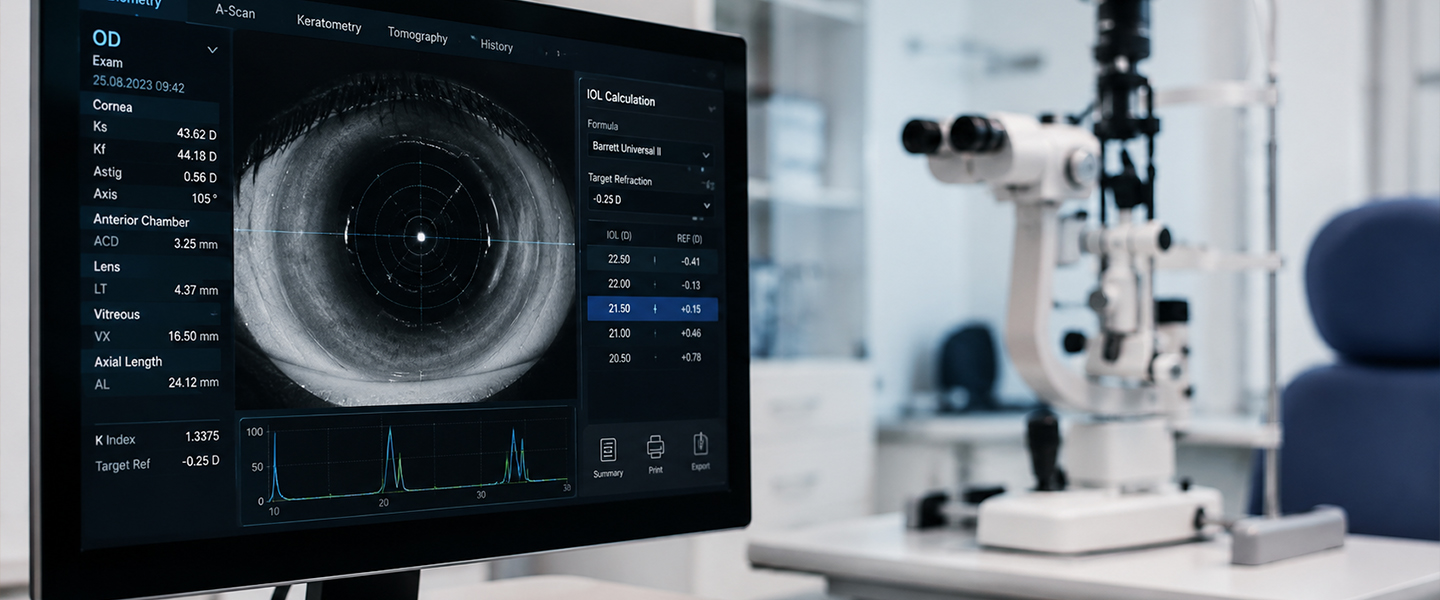
Current intraocular lens (IOL) calculation relies on 3rd and 4th generation theoretical formulas, including the Hoffer Q, SRK/T, Holladay II, Barrett Universal II, and Hill RBF formulas. These formulas utilize corneal power in two ways:
- Vergence Calculation – to predict postoperative refraction.
- Effective Lens Position (ELP) – to estimate the depth of the IOL relative to the cornea.
However, refractive surgery alters corneal curvature and introduces two types of errors:
- Keratometry Error: Arises because standard formulas misjudge the corneal curvature after laser vision correction, often resulting in underestimated IOL power.
- ELP Error: Post-refractive surgery, standard formulas misestimate ELP, particularly after radial keratotomy (RK) or myopic laser vision correction (LVC).
Types of Keratometry Errors
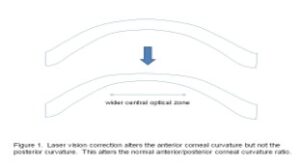
- Laser Vision Correction (LASIK, PRK, SMILE, LASEK):
- These surgeries flatten only the anterior corneal surface, altering the anterior/posterior curvature ratio and causing errors in keratometry.
- Radial Keratotomy (RK):
- Flattens both corneal surfaces but in a smaller central zone, often leading to an overestimation of corneal power by standard keratometry.
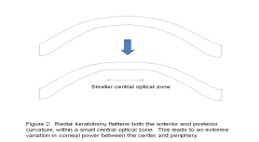
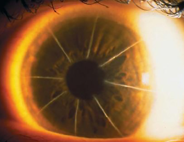
Effective Lens Position (ELP) Error after Refractive Surgery
Standard formulas use corneal power and axial length to predict ELP. Post-refractive surgery, this leads to:
- Underestimated IOL power in cases of myopic LVC or RK.
- Overestimated IOL power after hyperopic LVC.
Methods to Obtain True Corneal Power Post-Refractive Surgery
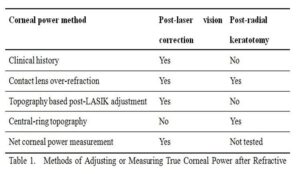
- Clinical History Method:
- Formula: K=KPRE−RCCK = K_{\text{PRE}} – RCCK=KPRE−RCC
- While theoretically accurate, it often lacks preoperative data or becomes unreliable due to progressive changes in corneal curvature, especially after RK.
- Contact Lens Over-Refraction Method:
- Formula: K=BCL+PCL+RCL−RNoCLK = BCL + PCL + RCL – R_{\text{NoCL}}K=BCL+PCL+RCL−RNoCL
- This method is inexpensive but limited in cases with poor visual acuity, such as dense cataracts.
- Topography-Based Adjusted Keratometry:
- Uses post-LASIK central Ks to predict true corneal power through regression formulas:
- Koch and Wang Formula: K=1.1141×TK−6.1K = 1.1141 \times TK – 6.1K=1.1141×TK−6.1
- Shammas Formula: K=1.14×TK−6.8K = 1.14 \times TK – 6.8K=1.14×TK−6.8
- Suitable for LASIK but not for RK.
- Uses post-LASIK central Ks to predict true corneal power through regression formulas:
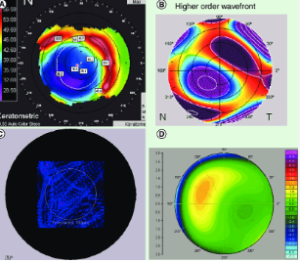
- Central Ring Topography Method:
- Averages corneal power in the central 3.0 mm zone, achieving good predictability with a double-K IOL formula for RK cases but less effective for LVC.
- Net Corneal Power Measurement:
- Measures anterior and posterior curvature directly through technologies like slit-scanning tomography, Scheimpflug photography, and OCT.
- Limitations: Tested primarily in post-LVC surgeries, with limited application in RK cases.
Key Technologies for Measuring Corneal Power
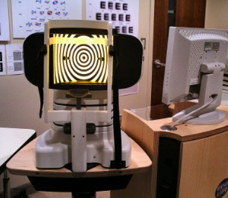
- Orbscan:
- It combines Placido disk and slit-scanning technology to directly measure elevation and curvature of both the anterior and posterior corneal surfaces.
- Limitation: intracorneal opacities may obscure imaging of the posterior cornea and introduce artifacts into total corneal power calculations.
- Pentacam:
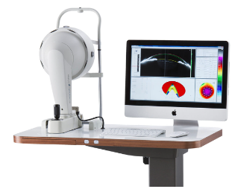
- Uses rotating Scheimpflug photography to analyze corneal surfaces and generate a TrueNetPower map. Recommended 4.5 mm zone equivalent K is often accurate post-surgery.
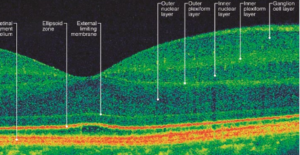
- Optical Coherence Tomography (OCT):
- Directly measures total corneal power, especially useful when pre-surgery data are unavailable.
IOL Power Formulae for Post-Refractive Surgery Eyes
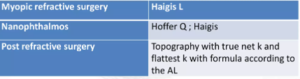
- Haigis-L Formula:
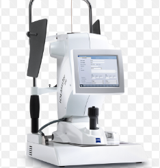
- Available in IOLMaster software; calculates IOL power using axial length, anterior chamber depth, and keratometry. Best suited for post-LVC but not post-RK cases.
- Masket Formula:
-
- Adjusts IOL power based on refractive change due to surgery. Uses SRK/T for myopic and Hoffer Q for hyperopic eyes.
- Koch and Wang Nomogram Adjustment:
- Separate nomograms for post-myopic and hyperopic surgeries. Adjusts IOL power by adding or subtracting values based on the patient’s axial length.
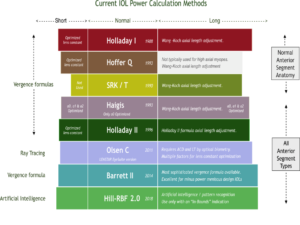
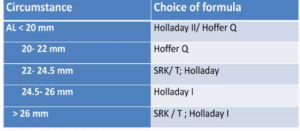
IOL formula depending on ALBottom of Form
IOL power calculation in special situation