


AI & Automation in Clinic Finance Management
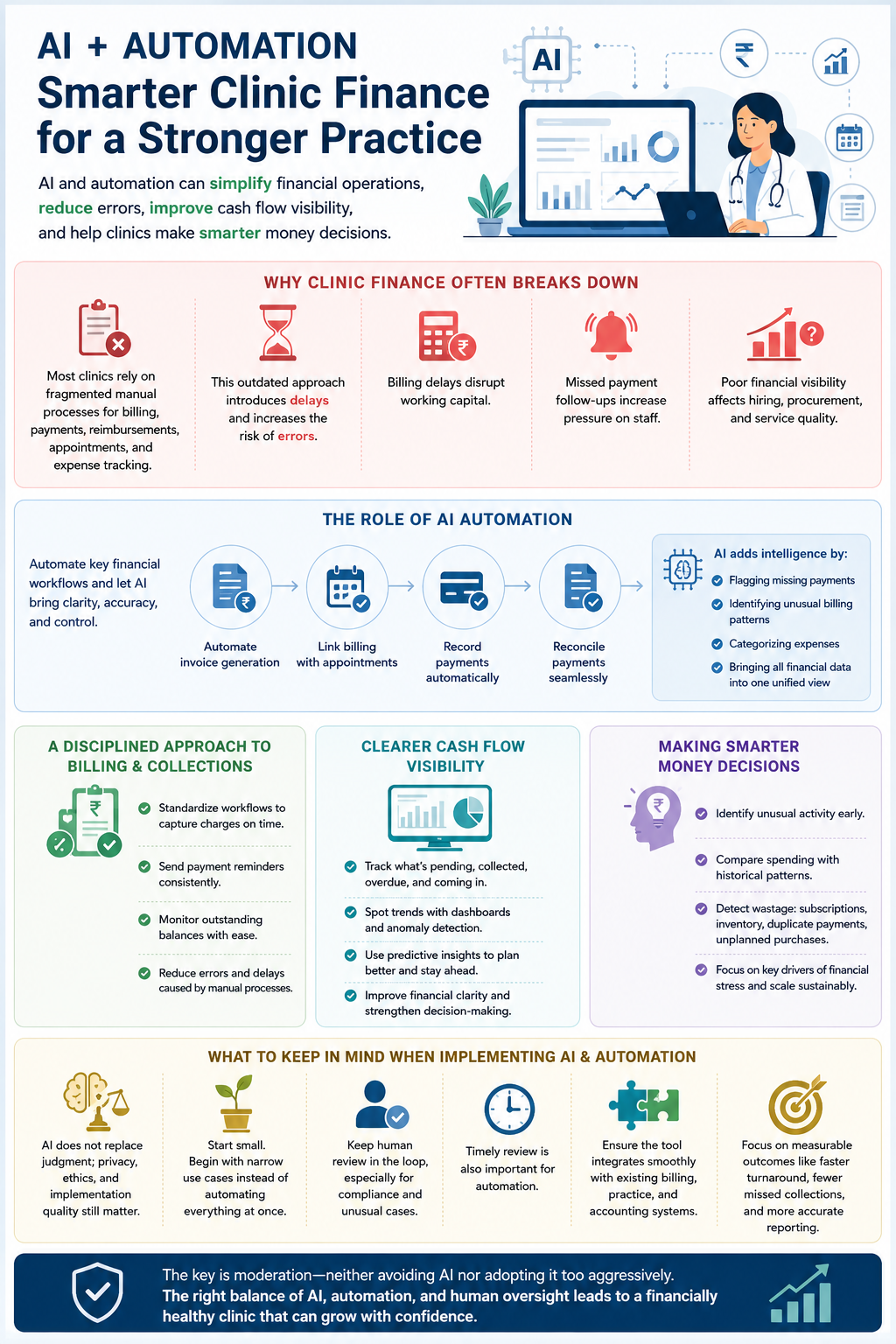
AI is at the center of nearly every conversation today. From writing emails to serving as a go-to advisor, people have been turning to AI—especially generative AI—for just about everything. While there are serious conversations to be had about our growing dependency on AI for everyday tasks, there is also a right way to use it: one that is reliable, streamlines workflows, and reduces the chances of errors or complications. Automation is at the core of this practical approach to introducing AI into our everyday lives. It is also a simple and effective way for doctors to leverage AI in clinic finance management.
Running a clinic is one of the most challenging aspects of medical practice for many healthcare professionals. It comes with significant overheads, from managing patient inflow and shift timings to handling clinic finances efficiently so the practice can thrive. Efficient financial management is therefore a crucial part of clinic operations, helping sustain day-to-day functioning, optimize resources, and maintain compliance with regulations. AI and automation can be instrumental in this aspect of clinic finance management.
Why Clinic Finance Often Breaks Down
Most clinics in India still rely on fragmented manual processes for billing, payment tracking, reimbursements, follow-up appointments, and other expense tracking. This outdated approach introduces both delay and the risk of errors when managing a clinic’s finances. A billing delay can disrupt working capital, a missed payment follow-up can increase pressure on staff, and poor financial visibility can affect hiring, procurement, and service quality.
The Role of AI Automation
One of the easiest ways to implement AI in your clinic is through automation. You can automate everything from invoice generation to appointment-linked billing, payment recording, and payment reconciliation. By starting with these processes, you can also create a system where AI flags missing payments, identifies unusual billing patterns, categorizes expenses, and brings different financial data points into one view.
A Disciplined Approach to Billing and Collections
Billing is an important part of clinic financial management, and when it depends heavily on people remembering each step, errors and delays are almost inevitable. Introducing AI automation can help standardize these workflows so charges are captured on time, payment reminders go out consistently, and outstanding balances are easier to monitor.
Clearer Cash Flow Visibility
In addition to delayed payments, another challenge that often hinders the growth of a clinic is the lack of clarity around cash flow. Revenue may be coming in, yet the owner may still lack a clear view of what is pending, what has been collected, what is overdue, and which expense heads are rising too quickly. AI-supported financial systems can make these patterns easier to spot through dashboards, anomaly detection, and predictive modeling.
Making Smarter Money Decisions
When it comes to tracking a clinic’s expenses, AI and automation can also help us make smarter decisions. Clinics often lose money through poorly tracked subscriptions, inventory inefficiencies, duplicated vendor payments, or unplanned purchases. AI can support decision-making by surfacing unusual activity, comparing historical spending behavior, and helping owners focus on the few variables that are actually driving financial stress. This kind of structured decision-making is especially valuable for growing clinics that want to scale without letting costs spiral.
While all this may sound optimistic and exciting, there are a few things clinics need to keep in mind when implementing automation and introducing AI systems into financial management:
- AI does not replace judgment; privacy, ethics, and implementation quality still matter.
- It is always better to start small. Begin with narrow use cases instead of automating everything at once.
- Keep human review in the loop, especially for compliance and unusual cases. Timely review is also important for automation.
- Ensure the tool integrates smoothly with existing billing, practice, and accounting systems.
- Focus on measurable outcomes like faster turnaround, fewer missed collections, and more accurate reporting.
The world is constantly changing, and it is clear that clinic management will continue to be shaped by these changes. The key is not to completely avoid AI or to adopt it too aggressively. Like in every other field, moderation is essential when introducing AI and automation into clinic financial management.