Searching...
Can't find what you're looking for. Try different keywords.


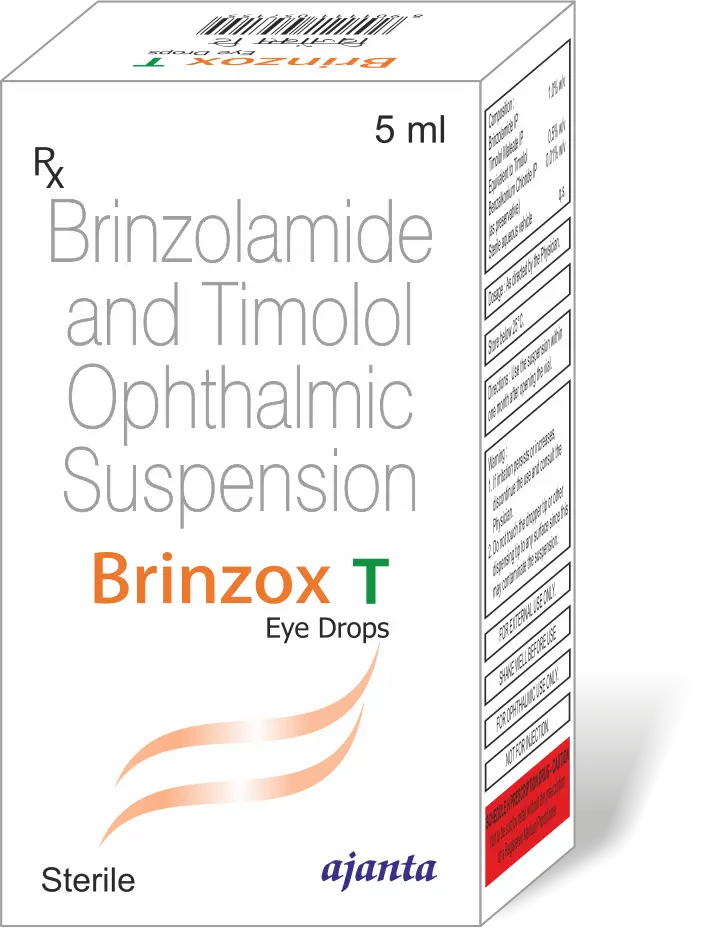

Brinzolamide
1 %
Dosage Form & Strength
Instill one drop in the affected eye(s) three times daily
Pregnancy Category C: Should be used during pregnancy only if the potential benefit justifies the potential risk to the fetus. Nursing Mothers It is not known whether this drug is excreted in human milk. Because many drugs are excreted in human milk and because of the potential for serious adverse reactions in nursing infants from brinzolamide ophthalmic suspension 1%, a decision should be made whether to discontinue nursing or to discontinue the drug, taking into account the importance of the drug to the mother. Pediatric Use A three-month controlled clinical study was conducted in which brinzolamide ophthalmic suspension 1% was dosed only twice a day in pediatric patients 4 weeks to 5 years of age. Patients were not required to discontinue their IOP-lowering medication(s) until initiation of monotherapy with Brinzolamide 1 %. IOP-lowering efficacy was not demonstrated in this study in which the mean decrease in elevated IOP was between 0 and 2 mmHg. Five out of 32 patients demonstrated an increase in corneal diameter of one millimeter.
Brinzox is indicated for the treatment of Glaucoma & ocular hypertension
In clinical studies of brinzolamide ophthalmic suspension 1%, the most frequently reported adverse events were blurred vision and bitter, sour or unusual taste. These events occurred in approximately 5-10% of patients. Blepharitis, dermatitis, dry eye, foreign body sensation, headache, hyperemia, ocular discomfort, ocular keratitis, ocular discharge, ocular pain, ocular pruritus and rhinitis were reported an incidence of 1-5%. The following adverse reactions were reported at an incidence below 1%: allergic reactions, alopecia, chest pain, conjunctivitis, diarrhea, diplopia, dizziness, dry mouth, dyspnea, dyspepsia, eye fatigue, hypertonia, keratoconjunctivitis, keratopathy, kidney pain, lid margin crusting or sticky sensation, nausea, pharyngitis, tearing and urticaria.
There is a potential additive effect of the known systemic effects of carbonic anhydrase inhibition in patients receiving both oral and topical carbonic anhydrase inhibitors Rare instance of acid-base alterations have occurred with high-dose salicylate therapy
Carbonic anhydrase (CA) is an enzyme found in many tissues of the body including the eye. It catalyzes the reversible reaction involving the hydration of carbon dioxide and the dehydration of carbonic acid. In humans, carbonic anhydrase exists as a number of isoenzymes, the most active being carbonic anhydrase II (CA-II), found primarily in red blood cells (RBCs), but also in other tissues. Inhibition of carbonic anhydrase in the ciliary processes of the eye decreases aqueous humor secretion, presumably by slowing the formation of bicarbonate ions with subsequent reduction in sodium and fluid transport. The result is a reduction in intraocular pressure (IOP). brinzolamide, an inhibitor of carbonic anhydrase II (CA-II). Following topical ocular administration, brinzolamide inhibits aqueous humor formation and reduces elevated intraocular pressure. Elevated intraocular pressure is a major risk factor in the pathogenesis of optic nerve damage and glaucomatous visual field loss.
The half life of Brinzolamide in Brinzox is 111 days
Product Portfolios all Product Portfolios all 100% 12 Brinzox 1 of 2 A209 Brinzox G209 There are no or limited amount of data from the use of ophthalmic brinzolamide in pregnant women. Studies in animals have shown reproductive toxicity following systemic administration There are no or limited amount of data from the use of ophthalmic brinzolamide in pregnant women. Studies in animals have shown reproductive toxicity following systemic administration Turn on screen reader support To enable screen reader support, press Ctrl+Alt+Z To learn about keyboard shortcuts, press Ctrl+slashAjantaMaxcor has joined the document.
Subscribe to our newsletter and be the first to receive insights, updates, and expert tips on optimizing your financial management.