Searching...
Can't find what you're looking for. Try different keywords.


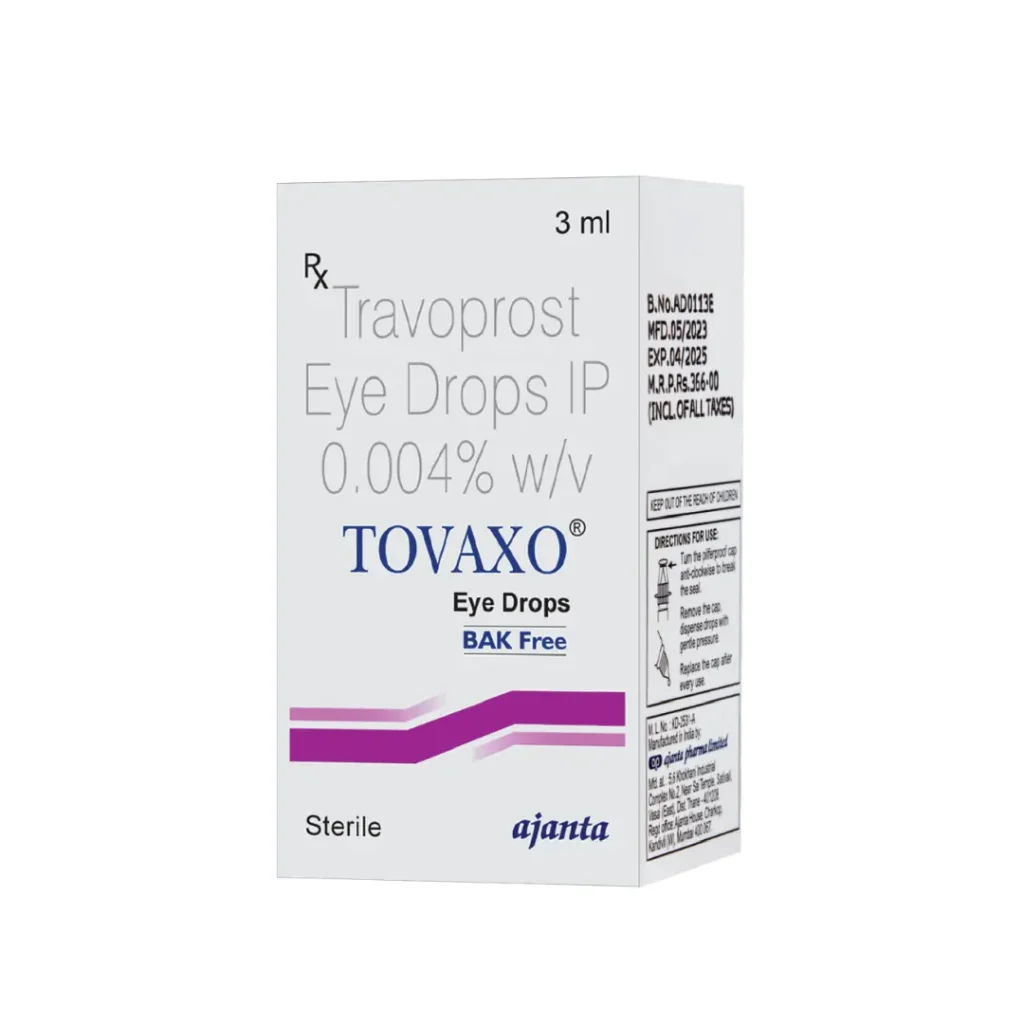

Travoprost
0.004%
Dosage Form & Strength
One drop in the affected eye(s) once daily in the evening
Tovaxo is indicated for the treatment of Glaucoma & ocular hypertension
The most common ocular adverse event observed in controlled clinical studies with Travoprost 0.004% was ocular hyperemia which was reported in 35 to 50% of patients. Approximately 3% of patients discontinued therapy due to conjunctival hyperemia. Ocular adverse events reported at an incidence of 5 to 10% included decreased visual acuity, eye discomfort, foreign body sensation, pain, and pruritus. Ocular adverse events reported at an incidence of 1 to 4% included, abnormal vision, blepharitis, blurred vision, cataract, cells, conjunctivitis, dry eye, eye disorder, flare, iris discoloration, keratitis, lid margin crusting, photophobia, subconjunctival hemorrhage, and tearing. Nonocular adverse events reported at a rate of of 1 to 5% were accidental injury, angina pectoris, anxiety, arthritis, back pain, bradycardia, bronchitis, chest pain, cold syndrome, depression, dyspepsia, gastrointestinal disorder, headache, hypercholesterolemia, hypertension, hypotension, infection, pain, prostate disorder, sinusitis, urinary incontinence, and urinary tract infection.
Travoprost free acid, a prostaglandin analog is a selective FP prostanoid receptor agonist which is believed to reduce intraocular pressure by increasing uveoscleral outflow
The half life of Travoprost in Tovaxo is 45 minutes
Pregnancy Category C Teratogenic effects:Tovaxo should be administered during pregnancy only if the potential benefit justifies the potential risk to the fetus Nursing Mothers A study in lactating rats demonstrated that radiolabeled travoprost and/or its metabolites were excreted in milk. It is not known whether this drug or its metabolites are excreted in human milk. Because many drugs are excreted in human milk, caution should be exercised when Tovaxo is administered to a nursing woman.
Hepatic and Renal Impairment Travoprost ophthalmic solution has been studied in patients with hepatic impairment and also in patients with renal impairment. No clinically relevant changes in hematology, blood chemistry, or urinalysis laboratory data were observed in these patients.
Hepatic and Renal Impairment Travoprost ophthalmic solution has been studied in patients with hepatic impairment and also in patients with renal impairment. No clinically relevant changes in hematology, blood chemistry, or urinalysis laboratory data were observed in these patients.
Pediatric Use Use in pediatric patients below the age of 16 years is not recommended because of potential safety concerns related to increased pigmentation following long-term chronic use.
Geriatric Use No overall clinical differences in safety or effectiveness have been observed between elderly and other adult patients.
Subscribe to our newsletter and be the first to receive insights, updates, and expert tips on optimizing your financial management.