Searching...
Can't find what you're looking for. Try different keywords.


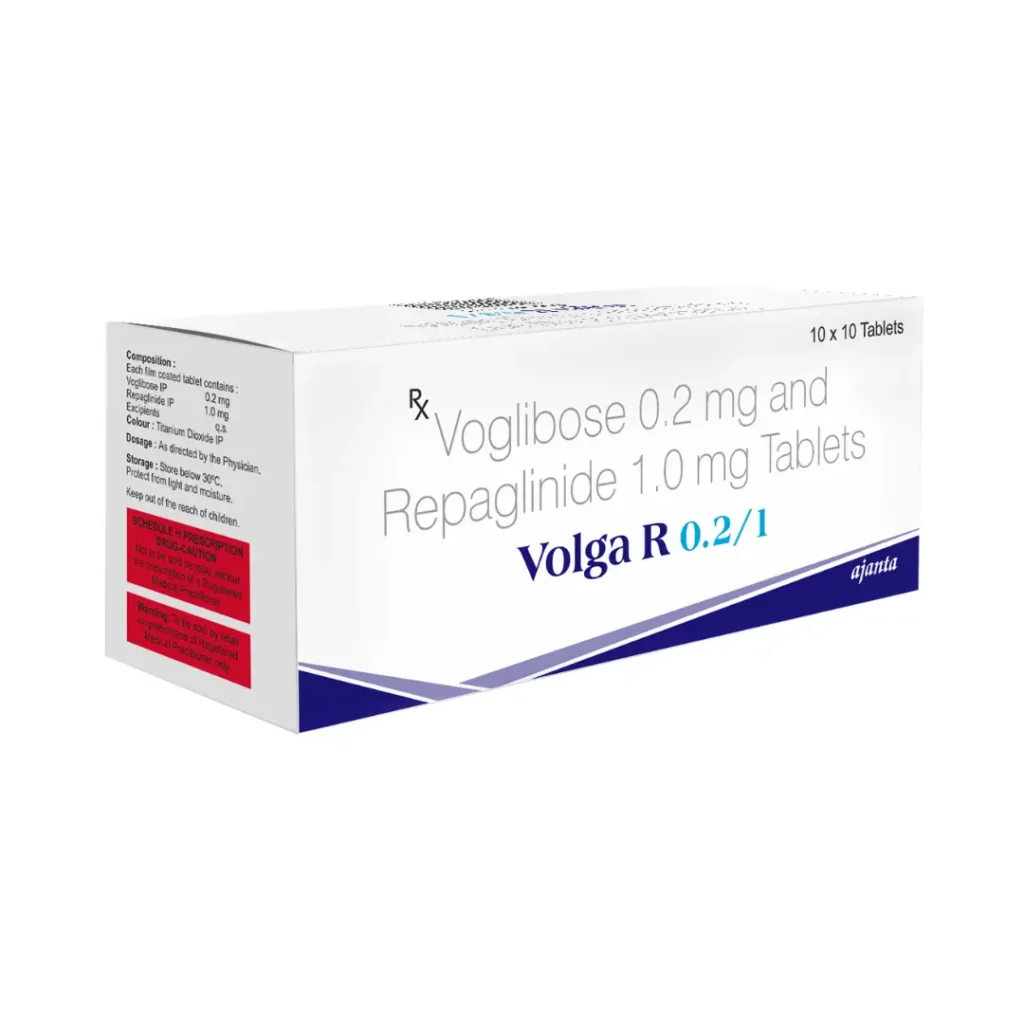

Voglibose
0.2/0.3mg
Repaglinide
0.5mg /1 mg Tablets
Volga R is indicated for the treatment of type 2 diabetes
Repaglinide Commonly reported side effects of repaglinide include: hypoglycemia Voglibose Some of the side effects listed with voglibose are Pneumatosis Intestinalis, Flatulence, Dizziness, Fatigue, Nausea, Vomiting, Diarrhe, Abnormal liver function.
Repaglinide:Clopidogrel: Avoid concomitant use; if used concomitantly initiate at 0.5 mg before each meal and limit total daily dose to 4 mg (7) Cyclosporine: Limit daily dose of Repaglinide to 6 mg and increase frequency of glucose monitoring when co-administered CYP2C8 and CYP3A4 Inhibitors and Drugs That May Increase the Risk of Hypoglycemia: Co-administration may require dose reductions and increased frequency of glucose monitoring; CYP2C8 and CYP3A4 Inducers and Drugs That May Decrease the Blood Glucose Lowering Effect of Repaglinide: Co-administration may require Repaglinide dose increases and increased frequency of glucose monitoring Drugs That May Blunt Signs and Symptoms of Hypoglycemia: Increased frequency of glucose monitoring may be required when co-administered Voglibose: The risk or severity of hypoglycemia can be increased when Acarbose is combined with Voglibose; Amitriptyline may decrease the hypoglycemic activities of Voglibose; The risk or severity of hypoglycemia can be increased when Amlodipine is combined with Voglibose; The therapeutic efficacy of Voglibose can be increased when used in combination with Atenolol; The risk or severity of hyperglycemia can be increased when Betamethasone is combined with Voglibose
Voglibose: Voglibose is an alpha-glucosidase inhibitor which reduces intestinal ,absorption of starch, dextrin, and disaccharides by inhibiting the action of alpha-glucosidase in the intestinal brush border. Inhibition of this enzyme halts the decomposition of disaccharides into monosaccharides and slows the digestion and absorption of carbohydrates; the postprandial rise in plasma glucose is blunted in both normal and diabetic subjects resulting in improvement of postprandial hyperglycemia and various disorders caused by hyperglycemia. Alpha-glucosidase inhibitors do not stimulate insulin release and therefore do not result in hypoglycemia. These agents may be considered as monotherapy in elderly patients or in patients with predominantly post prandial hyperglycemia. Alpha-glucosidase inhibitors are typically used in combination with other oral antidiabetic agents and/or insulin. Voglibose should be administered at the start of a meal as it is poorly absorbed. Repaglinide: Repaglinide is a short-acting oral secretagogue. Repaglinide lowers the blood glucose levels acutely by stimulating the release of insulin from the pancreas, an effect dependent upon functioning β-cells in the pancreatic islets. Repaglinide closes ATP-dependent potassium channels in the β-cell membrane via a target protein different from other secretagogues. This depolarizes the β-cell and leads to an opening of the calcium channels. The resulting increased calcium influx induces insulin secretion from the β-cell.
The half life of Repaglinide in Volga R is 1 hour
Repaglinide Absorption Repaglinide is rapidly absorbed from the gastrointestinal tract, which leads to a rapid increase in the plasma concentration of the active substance. The peak plasma level occurs within one hour post administration. After reaching a maximum, the plasma level decreases rapidly. Repaglinide pharmacokinetics are characterised by a mean absolute bioavailability of 63% (CV 11%). No clinically relevant differences were seen in the pharmacokinetics of repaglinide, when repaglinide was administered 0, 15 or 30 minutes before a meal or in fasting state. Distribution Repaglinide pharmacokinetics are characterised by low volume of distribution, 30 L (consistent with distribution into intracellular fluid) and is highly bound to plasma proteins in humans (greater than 98%). Elimination Repaglinide is eliminated rapidly within 4 – 6 hours from the blood. The plasma elimination half-life is approximately one hour. Repaglinide is almost completely metabolised, and no metabolites with clinically relevant hypoglycaemic effect have been identified. Repaglinide metabolites are excreted primarily via the bile. A small fraction (less than 8%) of the administered dose appears in the urine, primarily as metabolites. Less than 1% of repaglinide is recovered in faeces.
Pregnancy There are no studies of Volga – R in pregnant women. Therefore should be avoided during pregnancy. Breast-feeding There are no studies in breast-feeding women. Therefore should not be used in breast-feeding women. Repaglinide: Pregnancy Pregnancy Category C. There are no adequate and well-controlled studies in pregnant women. It is unknown whether PRANDIN can cause fetal harm when administered to a pregnant woman. PRANDIN should be used during pregnancy only if the potential benefit justifies the potential risk to the fetus. Voglibose: Pregnant women It should be given only to pregnant women or women who may be pregnant if the therapeutic benefit outweighs the risk.
Volga-R should be used with caution in Renal impairement patients Voglibose:Patients with severe renal impairment Since the metabolic status may change, the blood sugar control situation may change significantly. Repaglinide:Initial dose adjustment is not required in patients with mild to moderate renal dysfunction. However, patients with severe renal function impairment should initiate Repaglinide therapy with the 0.5 mg dose and be carefully titrated
Volga-R should be used with caution in Hepatic impairement patients. Voglibose:Since the metabolic status may change, the blood sugar control situation may change significantly. Moreover, in cases of severe liver cirrhosis,hyperammonemia may be exacerbated and associated with consciousness disorder. Repaglinide:Repaglinide should be used cautiously in patients with impaired liver function. Longer intervals between dose adjustments may be needed to allow full assessment of response
Pediatric Use Safety and effectiveness of Volga-R in pediatric patients have not been established.
Voglibose:Generally, the physiological function is deteriorated in the elderly. Repaglinide:Geriatric Use In clinical studies of 24 weeks or greater duration, 415 patients were over 65 years of age and no patients were greater than 75 years of age. In one-year, active-controlled trials, no differences were seen in effectiveness or adverse events between these subjects and those less than 65. There was no increase in frequency or severity of hypoglycemia in older subjects, but greater sensitivity of some older individuals to Repaglinide therapy cannot be ruled out
Subscribe to our newsletter and be the first to receive insights, updates, and expert tips on optimizing your financial management.