Searching...
Can't find what you're looking for. Try different keywords.


Pregnancy: Use during pregnancy only if the potential benefit justifies the potential risk to the fetus. Use during late pregnancy should be avoided. Nursing Mothers: Caution should be exercised
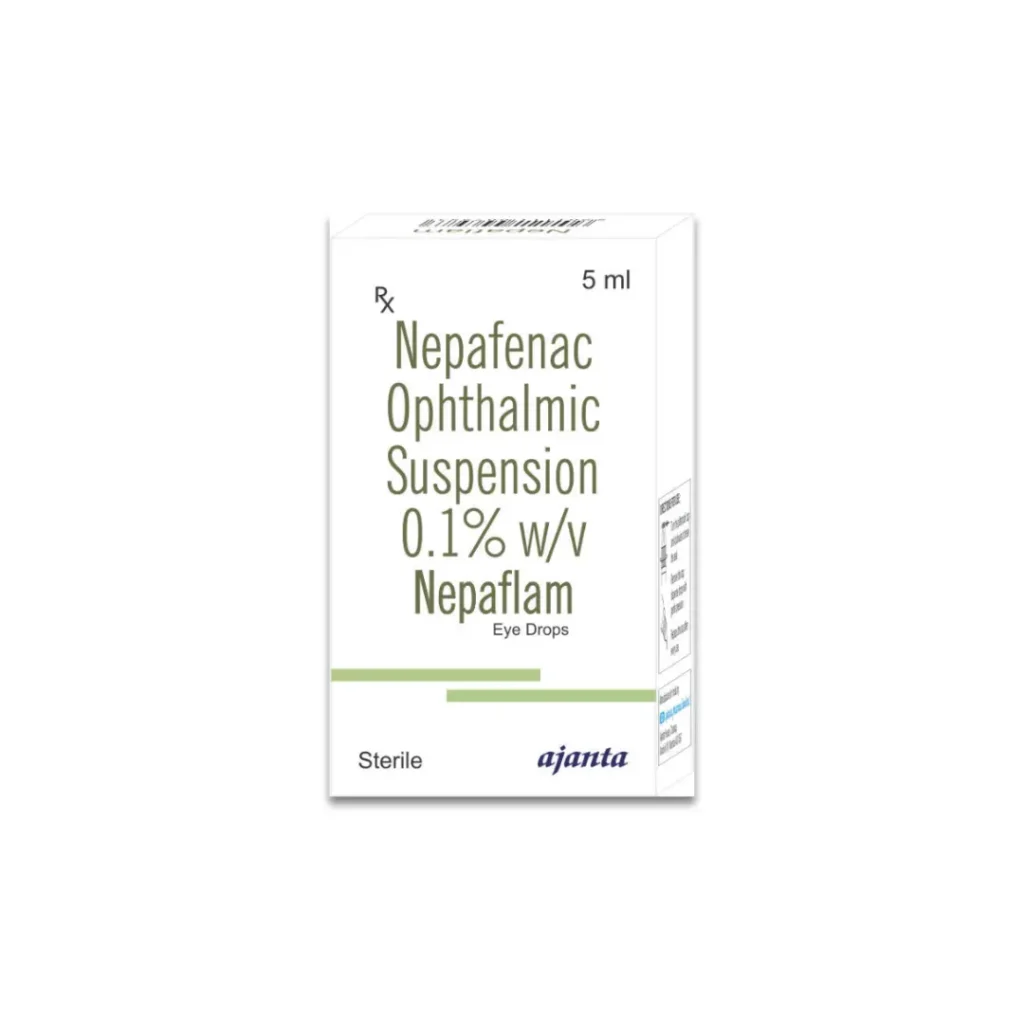
Nepaflam is indicated for the Prevention and treatment of postoperative pain and inflammation associated with cataract surgery & reduction in the risk of postoperative macular oedema associated with cataract surgery in diabetic patients
The most common adverse reactions in clinicl studies of Nepafenac were punctate keratitis, foreign body sensation and eyelid margin crusting which occurred in between 0.4% and 0.2% of patients
One drop of Nepafenac 0.1% should be applied to the affected eye three times daily beginning 1 day prior to cataract surgery, continued on the day of surgery and through the first 2 weeks of the postoperative period
After topical ocular dosing, nepafenac penetrates the cornea and is converted by ocular tissue hydrolases to amfenac, an NSAID. Amfenac is thought to inhibit the action of prostaglandin H synthase (cyclooxygenase), an enzyme required for prostaglandin production.
Pregnancy Teratogenic Effects Pregnancy Category C:Nepafenac 0.1% should be used during pregnancy only if the potential benefit justifies the potential risk to the fetus. Nursing Mothers Nepafenac is excreted in the milk of lactating rats. It is not known whether this drug is excreted in human milk. Because many drugs are excreted in human milk, caution should be exercised when Nepafenac 0.1% ophthalmic suspension is administered to a nursing woman.
Pediatric Use The safety and effectiveness of NEVANAC 0.1% in pediatric patients below the age of 10 years have not been established.
Geriatric Use No overall differences in safety and effectiveness have been observed between elderly and younger patients.
Subscribe to our newsletter and be the first to receive insights, updates, and expert tips on optimizing your financial management.