Searching...
Can't find what you're looking for. Try different keywords.


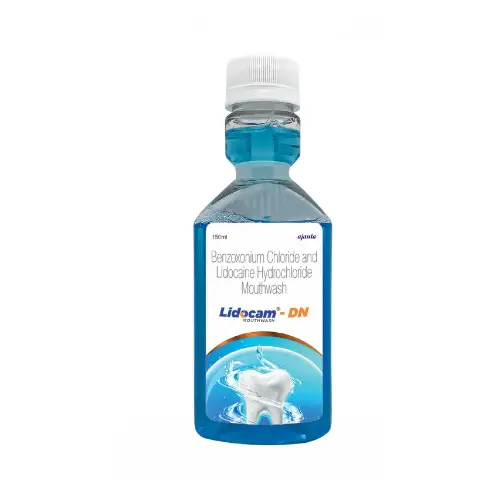

Benzoxonium chloride
2.5 mg
Lidocaine hydrochloride
2.5 mg
Dosage Form & Strength
BID gargling
Benzoxonium chloride: Benzoxonium chloride belongs to quaternary ammonium compounds of anti-infective compounds. Benzoxonium chloride exerts bactericidal and bacteriostatic effects on bacteria depending on the concentration. The exact mechanism of action is unknown. However, research studies suggested that Benzoxonium chloride inhibits or inactivates certain bacterial enzymes. Lidocaine: Lidocaine stabilizes the neuronal membrane by inhibiting the ionic fluxes required for the initiation and conduction of impulses, thereby effecting local anesthetic action.
Pregnancy Benzoxonium chloride is USFDA pregnancy category C product. Lidocaine topical has been assigned to pregnancy category B by the USFDA. Animal studies have failed to reveal evidence of fetotoxicity following administration of up to 6.6 times the human dose. There are no controlled data in human pregnancy. Lidocaine topical is only recommended for use during pregnancy when benefit outweighs risk. Hence, Lidocam Chew tablets must be avoided in pregnancy. Lactation It is not known whether Benzoxonium chloride can pass through the breast milk or not. Nursing mothers should avoid breastfeeding while using Benzoxonium chloride Lidocaine is excreted into human milk. The effects in the nursing infant are unknown. Caution should be used when administering lidocaine topical to nursing women. Hence, Lidocam Chew tablets must be avoided during lactation. Because there have been no controlled trials in pregnant women, Lidocam should not be used during pregnancy, and should not be used when breast feeding
Not recommended for children below the age of 4 years
Subscribe to our newsletter and be the first to receive insights, updates, and expert tips on optimizing your financial management.