Searching...
Can't find what you're looking for. Try different keywords.


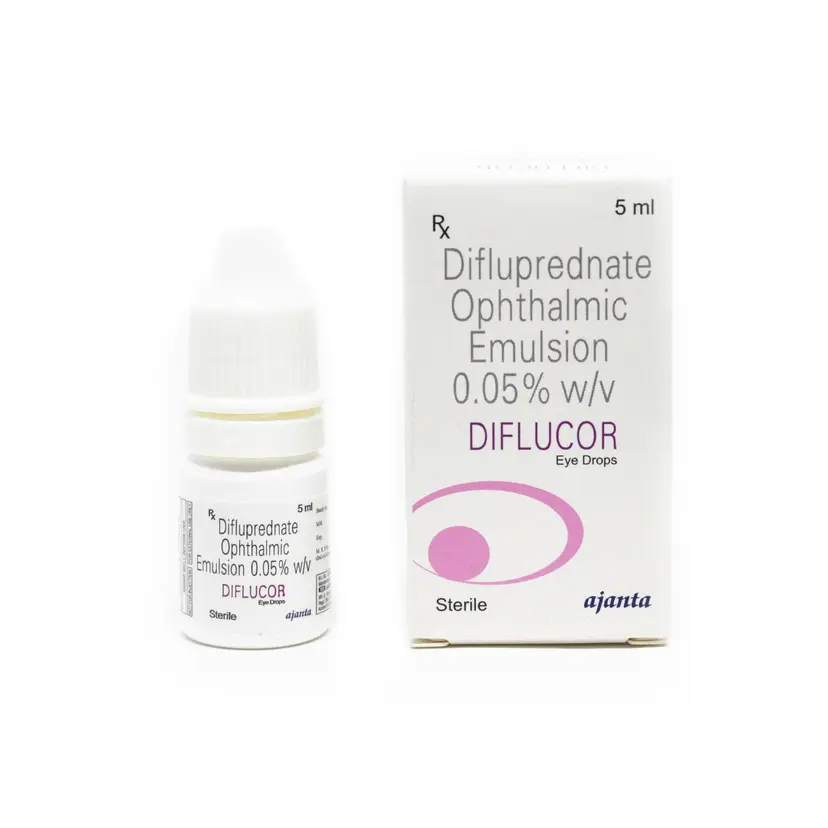

Difluprednate
0.05%
For the treatment of inflammation and pain associated with ocular surgery instill one drop into the conjunctival sac of the affected eye 4 times daily beginning 24 hours after surgery and continuing throughout the first 2 weeks of the postoperative period, followed by 2 times daily for a week and then a taper based on the response. For the treatment of endogenous anterior uveitis instill one drop into the conjunctival sac of the affected eye 4 times daily for 14 days followed by tapering as clinically indicated.
Pregnancy Category C: Should be used during pregnancy only if the potential benefit justifies the potential risk to the embryo or fetus. Nurs ing Mothers: Caution should be exercised
Diflucor is indicated for the treatment of Ocular Infections, Anterior Uveitis & Post Ocular Surgery
Ocular adverse reactions occurring in 5–15% of subjects in clinical studies with Difluprednate included corneal edema, ciliary and conjunctival hyperemia, eye pain, photophobia, posterior capsule opacification, anterior chamber cells, anterior chamber flare, conjunctival edema, and blepharitis. Other ocular adverse reactions occurring in 1–5% of subjects included reduced visual acuity, punctate keratitis, eye inflammation, and iritis. Ocular adverse events occurring in < 1% of subjects included application site discomfort or irritation, corneal pigmentation and striae, episcleritis, eye pruritis, eyelid irritation and crusting, foreign body sensation, increased lacrimation, macular edema, scleral hyperemia, and uveitis.
Corticosteroids inhibit the inflammatory response to a variety of inciting agents and may delay or slow healing. They inhibit edema, fibrin deposition, capillary dilation, leukocyte migration, capillary proliferation, fibroblast proliferation, deposition of collagen, and scar formation associated with inflammation. There is no generally accepted explanation for the mechanism of action of ocular corticosteroids. However, corticosteroids are thought to act by the induction of phospholipase A2 inhibitory proteins, collectively called lipocortins. It is postulated that these proteins control the biosynthesis of potent mediators of inflammation such as prostaglandins and leukotreines by inhibiting the release of their common precursor arachidonic acid. Arachidonic acid is released from membrane phospholipids by phospholipase A2. Difluprednate is structurally similar to other corticosteroids.
After repeated ocular instillation of 2 drops of Difluprednate (0.01% or 0.05%) four times per day for 7 days shows levels in blood were below the quantification limit (50 ng/mL), indicating the systemic absorption of difluprednate after ocular instillation is limited, so half life of Difluprednate in Diflucor is not applicable
Pregnancy Teratogenic Effects – Pregnancy Category C Use of difluprednate during human pregnancy has not been evaluated and cannot rule out the possibility of harm, Diflucor should be used during pregnancy only if the potential benefit justifies the potential risk to the embryo or fetus. Lactation It is not known whether topical ophthalmic administration of corticosteroids could result in sufficient systemic absorption to produce detectable quantities in breast milk. Systemically administered corticosteroids appear in human milk and could suppress growth, interfere with endogenous corticosteroid production, or cause other untoward effects. Caution should be exercised when Diflucor is administered to a nursing woman
Difluprednate: Pediatric Use Difluprednate was evaluated in a 3-month, multicenter, double-masked trial in 79 pediatric patients (39 Difluprednate; 40 prednisolone acetate) 0 to 3 years of age for the treatment of inflammation following cataract surgery. A similar safety profile was observed in pediatric patients comparing Difluprednate to prednisolone acetate ophthalmic suspension, 1%.
Difluprednate: Geriatric Use No overall differences in safety or effectiveness have been observed between elderly and younger patients.
Subscribe to our newsletter and be the first to receive insights, updates, and expert tips on optimizing your financial management.