Searching...
Can't find what you're looking for. Try different keywords.


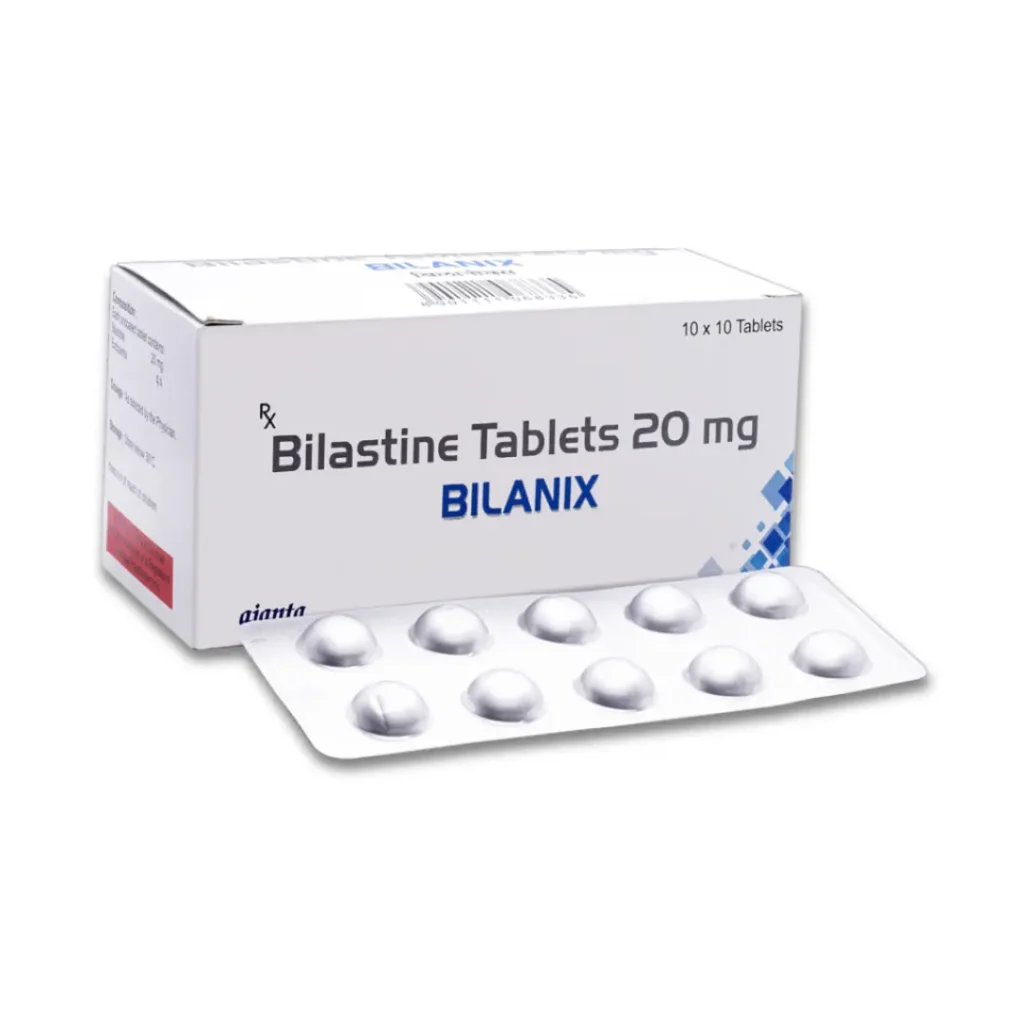

Dosage Form & Strength
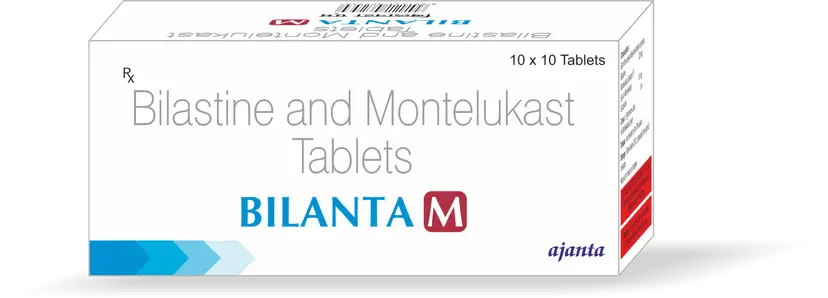
Adults and adolescents (12 years of age and over) 20 mg bilastine (1 tablet) once daily for the relief of symptoms of allergic rhinoconjunctivitis (SAR and PAR) and urticaria. The tablet should be taken one hour before or two hours after intake of food or fruit juice
Elderly No dosage adjustments are required in elderly patients Renal impairment Studies conducted in adults in special risk groups (renally impaired patients) indicate that it is not necessary to adjust the dose of bilastine in adults Hepatic impairment No dosage adjustment is required in adult patients with hepatic impairment Paediatric population – Children 6 to 11 years of age with a body weight of at least 20 kg Bilastine 10 mg orodispersible tablets and bilastine 2.5 mg/mL oral solution are appropriate for administration to thiscpopulation. – Children under 6 years of age and under 20 kg Bilastine should not be used in this age group. The safety and efficacy of bilastine in renally and hepatically impaired children have not been established. Pregnancy: As a precautionary measure, it is preferable to avoid the use during pregnancy. Breast-feeding: only if the potential benefit justifies the potential risk to the foetus.
Bilanix is indicated for the symptomatic treatment of urticaria.
Bilastine Bilastine-related adverse events included an increase in somnolence (2/197, 1.0%), an elevation of aspartate aminotransferase levels (1/197, 0.5%), an increase in γ-glutamyltransferase levels (1/197, 0.5%), nocturia (1/197, 0.5%), headaches and asteatosis (7/197, 3.6% for both)
Interaction with ketoconazole or erythromycin: Concomitant intake of bilastine 20 mg o.d. and ketoconazole 400 mg o.d. or erythromycin 500 mg t.i.d. increased bilastine AUC 2-fold and Cmax 2-3 fold. These changes can be explained by interaction with intestinal efflux transporters, since bilastine is substrate for P-gp and not metabolised These changes do not appear to affect the safety profile of bilastine and ketoconazole or erythromycin, respectively. Other medicinal products that are substrates or inhibitors of P-gp, such as cyclosporine, may likewise have the potential to increase plasma concentrations of bilastine. Interaction with diltiazem: Concomitant intake of bilastine 20 mg o.d. and diltiazem 60 mg o.d. increased Cmax of bilastine by 50%. This effect can be explained by interaction with intestinal efflux transporters, and does not appear to affect the safety profile of bilastine. Interaction with alcohol: The psychomotor performance after concomitant intake of alcohol and 20 mg bilastine o.d. was similar to that observed after intake of alcohol and placebo. Interaction with lorazepam: Concomitant intake of bilastine 20 mg o.d. and lorazepam 3 mg o.d. for 8 days did not potentiate the depressant CNS effects of lorazepam
Bilastine is a non-sedating, long-acting histamine antagonist with selective peripheral H1 receptor antagonist affinity and no affinity for muscarinic receptors. Bilastine inhibited histamine-induced wheal and flare skin reactions for 24 hours following single doses.
Absorption Bilastine is rapidly absorbed after oral administration with a time to maximum plasma concentration of around 1.3 hours. No accumulation was observed. The mean value of bilastine oral bioavailability is 61%. Distribution At therapeutic doses bilastine is 84-90% bound to plasma proteins. Biotransformation Bilastine did not induce or inhibit activity of CYP450 isoenzymes in in vitro studies. Elimination In a mass balance study performed in healthy adult volunteers, after administration of a single dose of 20 mg 14C-bilastine, almost 95% of the administered dose was recovered in urine (28.3%) and faeces (66.5%) as unchanged bilastine, confirming that bilastine is not significantly metabolized in humans. The mean elimination half-life calculated in healthy volunteers was 14.5 h.
Pregnancy: There are no or limited amount of data from the use of bilastine in pregnant women. Animal studies do not indicate direct or indirect harmful effects with respect to reproductive toxicity, parturition or postnatal development As a precautionary measure, it is preferable to avoid the use of Bilastine during pregnancy. Breast-feeding: The excretion of bilastine in milk has not been studied in humans. Available pharmacokinetic data in animals have shown excretion of bilastine in milk. A decision on whether to continue/discontinue breast-feeding or to discontinue/abstain from Ilaxten therapy must be made taking into account the benefit of breastfeeding for the child and the benefit of bilastine therapy for the mother. Fertility: There are no or limited amount of clinical data. A study in rats did not indicate any negative effect on fertility.
Renal impairment Studies conducted in adults in special risk groups (renally impaired patients) indicate that it is not necessary to adjust the dose of bilastine in adults Renal Impairement: In patients with moderate or severe renal impairment coadministration of bilastine with P-glycoprotein inhibitors, such as e.g, ketoconazole, erythromycin, cyclosporine, ritonavir or diltiazem, may increase plasmatic levels of bilastine and therefore increase the risk of adverse effects of bilastine. Therefore, coadministration of bilastine and P-glycoprotein inhibitors should be avoided in patients with moderate or severe renal impairment.
Bilastine: There is no clinical experience in adult patients with hepatic impairment. However, since bilastine is not metabolized and is eliminated as unchanged in urine and faeces, hepatic impairment is not expected to increase systemic exposure above the safety margin in adult patients. Therefore, no dosage adjustment is required in adult patients with hepatic impairment
Paediatric population Efficacy and safety of bilastine in children under 2 years of age have not been established and there is little clinical experience in children aged 2 to 5 years, therefore bilastine should not be used in these age groups. Children 6 to 11 years of age with a body weight of at least 20 kg Bilastine 10 mg orodispersible tablets and bilastine 2.5 mg/mL oral solution are appropriate for administration to this population. The safety and efficacy of bilastine in renally and hepatically impaired children have not been established.
Bilastine: Elderly No dosage adjustments are required in elderly patients
Subscribe to our newsletter and be the first to receive insights, updates, and expert tips on optimizing your financial management.