Searching...
Can't find what you're looking for. Try different keywords.


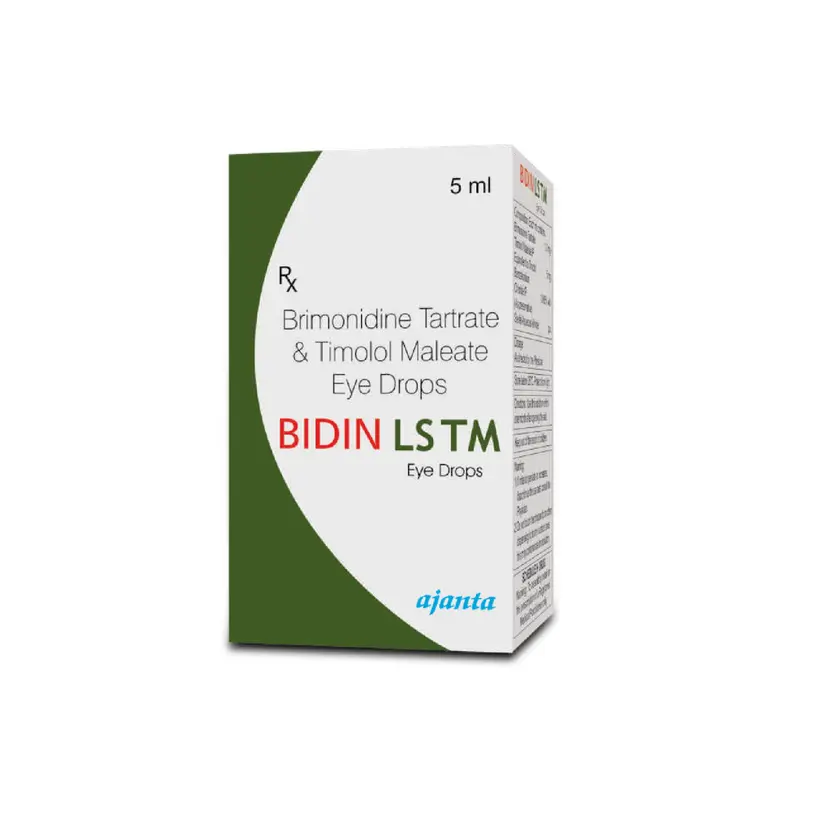

Brimonidine
0.1%
Timolol
0.5%
Dosage Form & Strength
BD approx 12 hours apart
Bidin LS TM is indicated for the treatment of Glaucoma & ocular hypertension
Brimonidine Most common adverse reactions reported in conjunction with ALT: transient conjunctival blanching (50%) and upper lid retraction (30%). Adverse reactions reported in 1% to 4% of the patients: drowsiness/tiredness, dizziness, corneal edema, and ocular irritation (encompassing foreign body sensation, ocular pain and discomfort). Timolol In clinical trials with timolol maleate ophthalmic solutions, common adverse effects aobserved were transient blurred vision upon instillation of the drop, burning and stinging upon instillation, Blepharitis, conjunctivitis, crusting, discomfort, foreign body sensation, hyperemia, pruritus and tearing.
Timolol: Some products that may interact with this drug include: oral beta-blockers (such as propranolol), clonidine, certain antidepressants (including SSRIs such as fluoxetine), digoxin, epinephrine, fingolimod, methyldopa, quinidine Brimonidine: Antihypertensives/Cardiac Glycosides: Because Brimonidine may reduce blood pressure, caution in using drugs such as antihypertensives and/or cardiac glycosides with Brimonidine is advised CNS Depressants: Although specific drug interaction studies have not been conducted with Brimonidine, the possibility of an additive or potentiating effect with CNS depressants (alcohol, barbiturates, opiates, sedatives, or anesthetics) should be considered Tricyclic Antidepressants: Tricyclic antidepressants have been reported to blunt the hypotensive effect of systemic clonidine. It is not known whether the concurrent use of these agents with Brimonidine, in humans can lead to resulting interference with the IOP lowering effect. Caution is advised in patients taking tricyclic antidepressants which can affect the metabolism and uptake of circulating amines Monoamine Oxidase Inhibitors: Monoamine oxidase (MAO) inhibitors may theoretically interfere with the metabolism of brimonidine and potentially result in an increased systemic side-effect such as hypotension Caution is advised in patients taking MAO inhibitors which can affect the metabolism and uptake of circulating amines
Brimonidine: Brimonidineis a relatively selective alpha-2 adrenergic receptor agonist with a peak ocular hypotensive effect occurring at two hours postdosing Brimonidine tartrate has a dual mechanism of action by reducing aqueous humor production and increasing uveoscleral outflow Timolol: Timolol is a beta1 and beta2 non-selective adrenergic receptor blocking agent that does not have significant intrinsic sympathomimetic, direct myocardial depressant, or local anaesthetic (membrane-stabilising) activity. Timolol lowers IOP by reducing aqueous humour formation. The precise mechanism of action is not clearly established, but inhibition of the increased cyclic AMP synthesis caused by endogenous beta-adrenergic stimulation is probable.
The half life of Brimonidine in Bidin LS TM is 3 hours, half life of Timolol in Bidin LS TM is not applicable since the plasma concentration of Timolol is negligible
Brimonidine Absorption: After ocular administration of either a 0.1% or 0.2% solution, plasma concentrations peaked within 0.5 to 2.5 hours and declined with a systemic half-life of approximately 2 hours Distribution: The protein binding of brimonidine has not been studied Metabolism: In humans, brimonidine is extensively metabolized by the liver Excretion Urinary excretion is the major route of elimination of brimonidine and its metabolites. Approximately 87% of an orally-administered radioactive dose of brimonidine was eliminated within 120 hours, with 74% found in the urine Timolol Absorption The onset of reduction in intra-ocular pressure can be detected within one-half hour after a single dose. The maximum effect occurs in one or two hours; significant lowering of IOP can be maintained for as long as 24 hours with a single dose. In some cases, a decreased therapeutic effect has been observed in long-term treatment.
Pregnancy Category B: Teratogenicity studies have been performed in animals Brimonidine tartrate was not teratogenic when given orally during gestation days 6 through 15 in rats and days 6 through 18 in rabbits. The highest doses of brimonidine tartrate in rats (2.5 mg/kg/day) and rabbits (5.0 mg/kg/day) achieved AUC exposure values 360- and 20-fold higher, or 260- and 15-fold higher, respectively, than similar values estimated in humans treated with Brimonidine 0.1% or 0.15%, 1 drop in both eyes three times daily. There are no adequate and well-controlled studies in pregnant women; however, in animal studies,brimonidine crossed the placenta and entered into the fetal circulation to a limited extent Because animal reproduction studies are not always predictive of human response, Brimonidine should be used during pregnancy only if the potential benefit to the mother justifies the potential risk to the fetus Nursing Mothers It is not known whether brimonidine tartrate is excreted in human milk, although in animal studies, brimonidine tartrate has been shown to be excreted in breast milk. Because of the potential for serious adverse reactions from brimonidine tartrate in nursing infants, a decision should be made whether to discontinue nursing or to discontinue the drug, taking into account the importance of the drug to the mother Brimonidine tartrate is contraindicated in children under the age of 2 years Geriatric Use: No overall differences in safety or effectiveness have been observed between elderly and other adult patients. Brimonidine tartratehas not been studied in patients with hepatic impairment Brimonidine tartrate has not been studied in patients with renal impairment The effect of dialysis on brimonidine pharmacokinetics in patients with renal failure is not known
Use in pediatric patients below the age of 16 years is not recommended because of potential safety concerns related to increased pigmentation following long-term chronic use. Pediatric Use Bidin-LS TM is contraindicated in children under the age of 2 years . During post-marketing surveillance, apnea, bradycardia, coma, hypotension, hypothermia, hypotonia,lethargy, pallor, respiratory depression, and somnolence have been reported in infants receiving brimonidine. The safety and effectiveness of brimonidine tartrate and timolol maleate have not been studied in children below the age of 2 years. The safety and effectiveness of Bidin-LS TM have been established in the age groups 2 – 16 years of age. Use of Bidin-LS TM in these age groups is supported by evidence from adequate and wellcontrolled studies of Bidin-LS TM in adults with additional data from a study of the concomitant use of brimonidine tartrate ophthalmic solution 0.2% and timolol maleate ophthalmic solution in pediatric glaucoma patients (ages 2 to 7 years). In this study, brimonidine tartrate ophthalmic solution 0.2% was dosed three times a day as adjunctive therapy to beta-blockers. The most commonly observed adverse reactions were somnolence (50%-83% in patients 2 to 6 years) and decreased alertness. In pediatric patients 7 years of age or older (>20 kg), somnolence appears to occur less frequently (25%). Approximately 16% of patients on brimonidine tartrate ophthalmic solution discontinued from the study due to somnolence.
Geriatric Use No overall differences in safety or effectiveness have been observed between elderly and other adult patients.
Subscribe to our newsletter and be the first to receive insights, updates, and expert tips on optimizing your financial management.