Searching...
Can't find what you're looking for. Try different keywords.


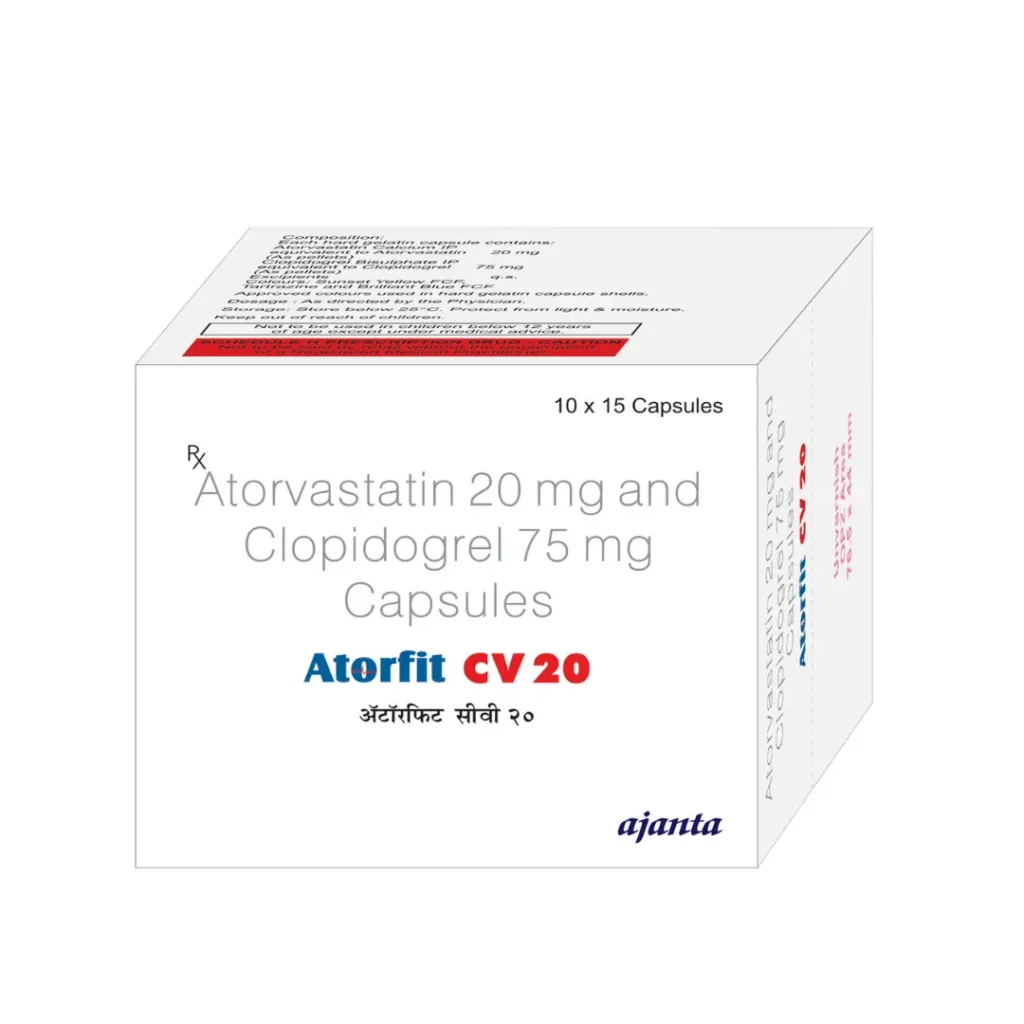

Dosage Form & Strength
One capsule daily
Atorvastatin: Renal impairment: No adjustment of dose is required Hepatic impairment: Atorvastatin should be used with caution in patients with hepatic impairment. Atorvastatin is contraindicated in patients with active liver disease. Use in the elderly: Efficacy and safety in patients older than 70 using recommended doses are similar to those seen in the general population. Paediatric use: Hypercholesterolaemia: Paediatric use should only be carried out by physicians experienced in the treatment of paediatric hyperlipidaemia and patients should be re-evaluated on a regular basis to assess progress. For patients aged 10 years and above, the recommended starting dose of atorvastatin is 10 mg per day with titration up to 20 mg per day. Titration should be conducted according to the individual response and tolerability in paediatric patients. Safety information for paediatric patients treated with doses above 20 mg, corresponding to about 0.5 mg/kg, is limited. There is limited experience in children between 6-10 years of age. Atorvastatin is not indicated in the treatment of patients below the age of 10 years Other pharmaceutical forms/strengths may be more appropriate for this population Fertility, pregnancy and lactation: Women of childbearing potential Women of child-bearing potential should use appropriate contraceptive measures during treatment Pregnancy: Atorvastatin is contraindicated during pregnancy. Safety in pregnant women has not been established. No controlled clinical trials with atorvastatin have been conducted in pregnant women. Rare reports of congenital anomalies following intrauterine exposure to HMG-CoA reductase inhibitors have been received. Animal studies have shown toxicity to reproduction. Maternal treatment with atorvastatin may reduce the fetal levels of mevalonate which is a precursor of cholesterol biosynthesis. Atherosclerosis is a chronic process, and ordinarily discontinuation of lipid-lowering medicinal products during pregnancy should have little impact on the long-term risk associated with primary hypercholesterolaemia. For these reasons, atorvastatin should not be used in women who are pregnant, trying to become pregnant or suspect they are pregnant. Treatment with atorvastatin should be suspended for the duration of pregnancy or until it has been determined that the woman is not pregnant. Breastfeeding: It is not known whether atorvastatin or its metabolites are excreted in human milk. In rats, plasma concentrations of atorvastatin and its active metabolites are similar to those in milk. Because of the potential for serious adverse reactions, women taking atorvastatin should not breast-feed their infants. Atorvastatin is contraindicated during breastfeeding Fertility: In animal studies atorvastatin had no effect on male or female fertility Clopidogrel: Pregnancy: As no clinical data on exposure to clopidogrel during pregnancy are available, it is preferable not to use clopidogrel during pregnancy as a precautionary measure Animal studies do not indicate direct or indirect harmful effects with respect to pregnancy, embryonal/foetal development, parturition or postnatal development Breast-feeding: It is unknown whether clopidogrel is excreted in human breast milk. Animal studies have shown excretion of clopidogrel in breast milk. As a precautionary measure, breast-feeding should not be continued during treatment with Clopidogrel Fertility: Clopidogrel was not shown to alter fertility in animal studies Renal impairment: Therapeutic experience with clopidogrel is limited in patients with renal impairment. Therefore clopidogrel should be used with caution in these patients Hepatic impairment: Experience is limited in patients with moderate hepatic disease who may have bleeding diatheses. Clopidogrel should therefore be used with caution in this population
Atorfit CV is indicated for the treatment of atherothrombotic complications
Atorvastatin is contraindicated in patients: − with hypersensitivity to the active substance or to any of the excipients of this medicinal product − with active liver disease or unexplained persistent elevations of serum transaminases exceeding 3 times the upper limit of normal − during pregnancy, while breast-feeding and in women of child-bearing potential not using appropriate contraceptive measures Clopidogrel: Hypersensitivity to the active substance or to any of its excipients Severe hepatic impairment Active pathological bleeding such as peptic ulcer or intracranial haemorrhage
Atorvastatin Most common adverse reactions (incidence ≥2%) in patients treated with atorvastatin in placebo-controlled trials regardless of causality were: nasopharyngitis, arthralgia, diarrhea, pain in extremity, and urinary tract infection. Clopidogrel Bleeding, including life-threatening and fatal bleeding, is the most commonly reported adverse reaction with clopidogrel
Atorvastatin: Effect of co-administered medicinal products on atorvastatin: Atorvastatin is metabolized by cytochrome P450 3A4 (CYP3A4) and is a substrate to transport proteins e.g. the hepatic uptake transporter OATP1B1. Concomitant administration of medicinal products that are inhibitors of CYP3A4 or transport proteins may lead to increased plasma concentrations of atorvastatin and an increased risk of myopathy. The risk might also be increased at concomitant administration of atorvastatin with other medicinal products that have a potential to induce myopathy, such as fibric acid derivates and ezetimibe CYP3A4 inhibitors Potent CYP3A4 inhibitors have been shown to lead to markedly increased concentrations of atorvastatin. Co-administration of potent CYP3A4 inhibitors (e.g. ciclosporin, telithromycin, clarithromycin, delavirdine, stiripentol, ketoconazole, voriconazole, itraconazole, posaconazole and HIV protease inhibitors including ritonavir, lopinavir, atazanavir, indinavir, darunavir, etc.) should be avoided if possible. In cases where co-administration of these medicinal products with atorvastatin cannot be avoided lower starting and maximum doses of atorvastatin should be considered and appropriate clinical monitoring of the patient is recommended. Moderate CYP3A4 inhibitors (e.g. erythromycin, diltiazem, verapamil and fluconazole) may increase plasma concentrations of atorvastatin. An increased risk of myopathy has been observed with the use of erythromycin in combination with statins. Interaction studies evaluating the effects of amiodarone or verapamil on atorvastatin have not been conducted. Both amiodarone and verapamil are known to inhibit CYP3A4 activity and co-administration with atorvastatin may result in increased exposure to atorvastatin. Therefore, a lower maximum dose of atorvastatin should be considered and appropriate clinical monitoring of the patient is recommended when concomitantly used with moderate CYP3A4 inhibitors. Appropriate clinical monitoring is recommended after initiation or following dose adjustments of the inhibitor. CYP3A4 inducers Concomitant administration of atorvastatin with inducers of cytochrome P450 3A (e.g. efavirenz, rifampin, St. John’s Wort) can lead to variable reductions in plasma concentrations of atorvastatin. Due to the dual interaction mechanism of rifampin, (cytochrome P450 3A induction and inhibition of hepatocyte uptake transporter OATP1B1), simultaneous co-administration of atorvastatin with rifampin is recommended, as delayed administration of atorvastatin after administration of rifampin has been associated with a significant reduction in atorvastatin plasma concentrations. The effect of rifampin on atorvastatin concentrations in hepatocytes is, however, unknown and if concomitant administration cannot be avoided, patients should be carefully monitored for efficacy. Transport protein inhibitors Inhibitors of transport proteins (e.g. ciclosporin) can increase the systemic exposure of atorvastatin. The effect of inhibition of hepatic uptake transporters on atorvastatin concentrations in hepatocytes is unknown. If concomitant administration cannot be avoided, a dose reduction and clinical monitoring for efficacy is recommended Digoxin When multiple doses of digoxin and 10 mg atorvastatin were co-administered, steady-state digoxin concentrations increased slightly. Patients taking digoxin should be monitored appropriately. Oral contraceptives Co-administration of atorvastatin with an oral contraceptive produced increases in plasma concentrations of norethindrone and ethinyl oestradiol. Warfarin In a clinical study in patients receiving chronic warfarin therapy, coadministration of atorvastatin 80 mg daily with warfarin caused a small decrease of about 1.7 seconds in prothrombin time during the first 4 days of dosing which returned to normal within 15 days of atorvastatin treatment. Although only very rare cases of clinically significant anticoagulant interactions have been reported, prothrombin time should be determined before starting atorvastatin in patients taking coumarin anticoagulants and frequently enough during early therapy to ensure that no significant alteration of prothrombin time occurs. Once a stable prothrombin time has been documented, prothrombin times can be monitored at the intervals usually recommended for patients on coumarin anticoagulants. If the dose of atorvastatin is changed or discontinued, the same procedure should be repeated. Atorvastatin therapy has not been associated with bleeding or with changes in prothrombin time in patients not taking anticoagulants Clopidogrel: Oral anticoagulants: The concomitant administration of clopidogrel with oral anticoagulants is not recommended since it may increase the intensity of bleedings Although the administration of clopidogrel 75 mg/day did not modify the pharmacokinetics of S-warfarin or International Normalised Ratio (INR) in patients receiving long-term warfarin therapy, coadministration of clopidogrel with warfarin increases the risk of bleeding because of independent effects on hemostasis. Glycoprotein IIb/IIIa inhibitors: clopidogrel should be used with caution in patients who receive concomitant glycoprotein IIb/IIIa inhibitors Acetylsalicylic acid (ASA): ASA did not modify the clopidogrel-mediated inhibition of ADP-induced platelet aggregation, but clopidogrel potentiated the effect of ASA on collagen-induced platelet aggregation. However, concomitant administration of 500 mg of ASA twice a day for one day did not significantly increase the prolongation of bleeding time induced by clopidogrel intake. A pharmacodynamic interaction between clopidogrel and acetylsalicylic acid is possible, leading to increased risk of bleeding. Therefore, concomitant use should be undertaken with caution. However, clopidogrel and ASA have been administered together for up to one year Heparin: In a clinical study conducted in healthy subjects, clopidogrel did not necessitate modification of the heparin dose or alter the effect of heparin on coagulation. Co-administration of heparin had no effect on the inhibition of platelet aggregation induced by clopidogrel. A pharmacodynamic interaction between clopidogrel and heparin is possible, leading to increased risk of bleeding. Therefore, concomitant use should be undertaken with caution Thrombolytics: The safety of the concomitant administration of clopidogrel, fibrin or non-fibrin specific thrombolytic agents and heparins was assessed in patients with acute myocardial infarction. The incidence of clinically significant bleeding was similar to that observed when thrombolytic agents and heparin are co-administered with ASA NSAIDs: In a clinical study conducted in healthy volunteers, the concomitant administration of clopidogrel and naproxen increased occult gastrointestinal blood loss. However, due to the lack of interaction studies with other NSAIDs it is presently unclear whether there is an increased risk of gastrointestinal bleeding with all NSAIDs. Consequently, NSAIDs including Cox-2 inhibitors and clopidogrel should be co-administered with caution (see section 4.4). SSRIs: since SSRIs affect platelet activation and increase the risk of bleeding, the concomitant administration of SSRIs with clopidogrel should be undertaken with caution Other concomitant therapy: Since clopidogrel is metabolised to its active metabolite partly by CYP2C19, use of medicinal products that inhibit the activity of this enzyme would be expected to result in reduced drug levels of the active metabolite of clopidogrel. The clinical relevance of this interaction is uncertain. As a precaution concomitant use of strong or moderate CYP2C19 inhibitors should be discouraged Proton Pump Inhibitors (PPI): Omeprazole 80 mg once daily administered either at the same time as clopidogrel or with 12 hours between the administrations of the two drugs decreased the exposure of the active metabolite by 45% (loading dose) and 40% (maintenance dose). The decrease was associated with a 39% (loading dose) and 21% (maintenance dose) reduction of inhibition of platelet aggregation. Esomeprazole is expected to give a similar interaction with clopidogrel Inconsistent data on the clinical implications of this pharmacokinetic (PK)/pharmacodynamic (PD) interaction in terms of major cardiovascular events have been reported from both observational and clinical studies. As a precaution, concomitant use of omeprazole or esomeprazole should be discouraged Less pronounced reductions of metabolite exposure has been observed with pantoprazole or lansoprazole The plasma concentrations of the active metabolite was 20% reduced (loading dose) and 14% reduced (maintenance dose) during concomitant treatment with pantoprazole 80 mg once daily This was associated with a reduction of the mean inhibition of platelet aggregation by 15% and 11%, respectively. These results indicate that clopidogrel can be administered with pantoprazole. There is no evidence that other medicinal products that reduce stomach acid such as H2 blockers or antacids interfere with antiplatelet activity of clopidogrel Other medicinal products: A number of other clinical studies have been conducted with clopidogrel and other concomitant medicinal products to investigate the potential for pharmacodynamic and pharmacokinetic interactions. No clinically significant pharmacodynamic interactions were observed when clopidogrel was co-administered with atenolol, nifedipine, or both atenolol and nifedipine. Furthermore, the pharmacodynamic activity of clopidogrel was not significantly influenced by the co-administration of phenobarbital or oestrogen. The pharmacokinetics of digoxin or theophylline were not modified by the co-administration of clopidogrel. Antacids did not modify the extent of clopidogrel absorption. Data from the CAPRIE study indicate that phenytoin and tolbutamide which are metabolised by CYP2C9 can be safely co-administered with clopidogrel
Atorvastatin is a selective, competitive inhibitor of HMG-CoA reductase, the rate-limiting enzyme responsible for the conversion of 3-hydroxy-3-methyl-glutaryl-coenzyme A to mevalonate, a precursor of sterols, including cholesterol Atorvastatin lowers plasma cholesterol and lipoprotein serum concentrations by inhibiting HMG-CoA reductase and subsequently cholesterol biosynthesis in the liver and increases the number of hepatic LDL receptors on the cell surface for enhanced uptake and catabolism of LDL Atorvastatin reduces LDL production and the number of LDL particles. Atorvastatin produces a profound and sustained increase in LDL receptor activity coupled with a beneficial change in the quality of circulating LDL particles Atorvastatin has been shown to reduce concentrations of total-C (30% – 46%), LDL-C (41% – 61%), apolipoprotein B (34% – 50%), and triglycerides (14% – 33%) while producing variable increases in HDL-C and apolipoprotein A1 in a dose response study. These results are consistent in patients with heterozygous familial hypercholesterolaemia, nonfamilial forms of hypercholesterolaemia, and mixed hyperlipidaemia, including patients with noninsulin-dependent diabetes mellitus. Reductions in total-C, LDL-C, and apolipoprotein B have been proven to reduce risk for cardiovascular events and cardiovascular mortality Clopidogrel Clopidogrel selectively inhibits the binding of adenosine diphosphate (ADP) to its platelet receptor, and the subsequent ADP-mediated activation of the GPIIb/IIIa complex, thereby inhibiting platelet aggregation. Biotransformation of clopidogrel is necessary to produce inhibition of platelet aggregation. Clopidogrel also inhibits platelet aggregation induced by other agonists by blocking the amplification of platelet activation by released ADP. Clopidogrel acts by irreversibly modifying the platelet ADP receptor
The half life of Atorvastatin in Atorfit CV is 14 hours; half life of Clopidogrel in Atiorfit CV is 8 hours
Atorvastatin Absorption: Atorvastatin is rapidly absorbed after oral administration; maximum plasma concentrations (Cmax) occur within 1 to 2 hours. Extent of absorption increases in proportion to atorvastatin dose. After oral administration, atorvastatin film-coated tablets are 95% to 99% bioavailable compared to the oral solution. The absolute bioavailability of atorvastatin is approximately 12% and the systemic availability of HMG-CoA reductase inhibitory activity is approximately 30%. The low systemic availability is attributed to presystemic clearance in gastrointestinal mucosa and/or hepatic first-pass metabolism. Distribution: Mean volume of distribution of atorvastatin is approximately 381 l. Atorvastatin is ≥98% bound to plasma proteins. Biotransformation: Atorvastatin is metabolized by cytochrome P450 3A4 to ortho- and parahydroxylated derivatives and various beta-oxidation products. Apart from other pathways these products are further metabolized via glucuronidation. In vitro, inhibition of HMG-CoA reductase by ortho- and parahydroxylated metabolites is equivalent to that of atorvastatin. Approximately 70% of circulating inhibitory activity for HMG-CoA reductase is attributed to active metabolites Excretion: Atorvastatin is eliminated primarily in bile following hepatic and/or extrahepatic metabolism. However, atorvastatin does not appear to undergo significant enterohepatic recirculation. Mean plasma elimination half-life of atorvastatin in humans is approximately 14 hours. The half-life of inhibitory activity for HMG-CoA reductase is approximately 20 to 30 hours due to the contribution of active metabolites Clopidogrel: Absorption: After single and repeated oral doses of 75 mg per day, clopidogrel is rapidly absorbed. Mean peak plasma levels of unchanged clopidogrel (approximately 2.2-2.5 ng/ml after a single 75 mg oral dose) occurred approximately 45 minutes after dosing. Absorption is at least 50%, based on urinary excretion of clopidogrel metabolites Distribution: Clopidogrel and the main circulating (inactive) metabolite bind reversibly in vitro to human plasma proteins (98% and 94% respectively). The binding is non-saturable in vitro over a wide concentration range Biotransformation: Clopidogrel is extensively metabolised by the liver. In vitro and in vivo, clopidogrel is metabolised according to two main metabolic pathways: one mediated by esterases and leading to hydrolysis into its inactive carboxylic acid derivative (85% of circulating metabolites), and one mediated by multiple cytochromes P450. Clopidogrel is first metabolised to a 2-oxo-clopidogrel intermediate metabolite Subsequent metabolism of the 2-oxo-clopidogrel intermediate metabolite results in formation of the active metabolite, a thiol derivative of clopidogrel. In vitro, this metabolic pathway is mediated by CYP3A4, CYP2C19, CYP1A2 and CYP2B6. The active thiol metabolite which has been isolated in vitro, binds rapidly and irreversibly to platelet receptors, thus inhibiting platelet aggregation The Cmax of the active metabolite is twice as high following a single 300-mg clopidogrel loading dose as it is after four days of 75-mg maintenance dose. Cmax occurs approximately 30 to 60 minutes after dosing Elimination: Following an oral dose of 14C-labelled clopidogrel in man, approximately 50% was excreted in the urine and approximately 46% in the faeces in the 120-hour interval after dosing. After a single oral dose of 75 mg, clopidogrel has a half-life of approximately 6 hours The elimination half-life of the main circulating (inactive) metabolite was 8 hours after single and repeated administration
Atorvastatin: Pregnancy: Atorvastatin is contraindicated during pregnancy. Safety in pregnant women has not been established. No controlled clinical trials with atorvastatin have been conducted in pregnant women. Rare reports of congenital anomalies following intrauterine exposure to HMG-CoA reductase inhibitors have been received. Animal studies have shown toxicity to reproduction. Maternal treatment with atorvastatin may reduce the fetal levels of mevalonate which is a precursor of cholesterol biosynthesis. Atherosclerosis is a chronic process, and ordinarily discontinuation of lipid-lowering medicinal products during pregnancy should have little impact on the long-term risk associated with primary hypercholesterolaemia. For these reasons, atorvastatin should not be used in women who are pregnant, trying to become pregnant or suspect they are pregnant. Treatment with atorvastatin should be suspended for the duration of pregnancy or until it has been determined that the woman is not pregnant. Breastfeeding: It is not known whether atorvastatin or its metabolites are excreted in human milk. In rats, plasma concentrations of atorvastatin and its active metabolites are similar to those in milk. Because of the potential for serious adverse reactions, women taking atorvastatin should not breast-feed their infants. Atorvastatin is contraindicated during breastfeeding Fertility: In animal studies atorvastatin had no effect on male or female fertility Clopidogrel: Pregnancy: As no clinical data on exposure to clopidogrel during pregnancy are available, it is preferable not to use clopidogrel during pregnancy as a precautionary measure Animal studies do not indicate direct or indirect harmful effects with respect to pregnancy, embryonal/foetal development, parturition or postnatal development Breast-feeding: It is unknown whether clopidogrel is excreted in human breast milk. Animal studies have shown excretion of clopidogrel in breast milk. As a precautionary measure, breast-feeding should not be continued during treatment with Clopidogrel Fertility: Clopidogrel was not shown to alter fertility in animal studies
The systemic availability and half-life of metoprolol in patients with renal failure do not differ to a clinically significant degree from those in normal subjects. No reduction in dosage is needed in patients with chronic renal failure
Atorvastatin: Hepatic impairment: Atorvastatin should be used with caution in patients with hepatic impairment. Atorvastatin is contraindicated in patients with active liver disease. Clopidogrel: Hepatic impairment: Experience is limited in patients with moderate hepatic disease who may have bleeding diatheses. Clopidogrel should therefore be used with caution in this population
Atorvastatin: Paediatric use: Hypercholesterolaemia: Paediatric use should only be carried out by physicians experienced in the treatment of paediatric hyperlipidaemia and patients should be re-evaluated on a regular basis to assess progress. For patients aged 10 years and above, the recommended starting dose of atorvastatin is 10 mg per day with titration up to 20 mg per day. Titration should be conducted according to the individual response and tolerability in paediatric patients. Safety information for paediatric patients treated with doses above 20 mg, corresponding to about 0.5 mg/kg, is limited. There is limited experience in children between 6-10 years of age. Atorvastatin is not indicated in the treatment of patients below the age of 10 years Clopidogrel: Clopidogrel should not be used in children because of efficacy concerns
Atorvastatin: Use in the elderly: Efficacy and safety in patients older than 70 using recommended doses are similar to those seen in the general population.
Subscribe to our newsletter and be the first to receive insights, updates, and expert tips on optimizing your financial management.